
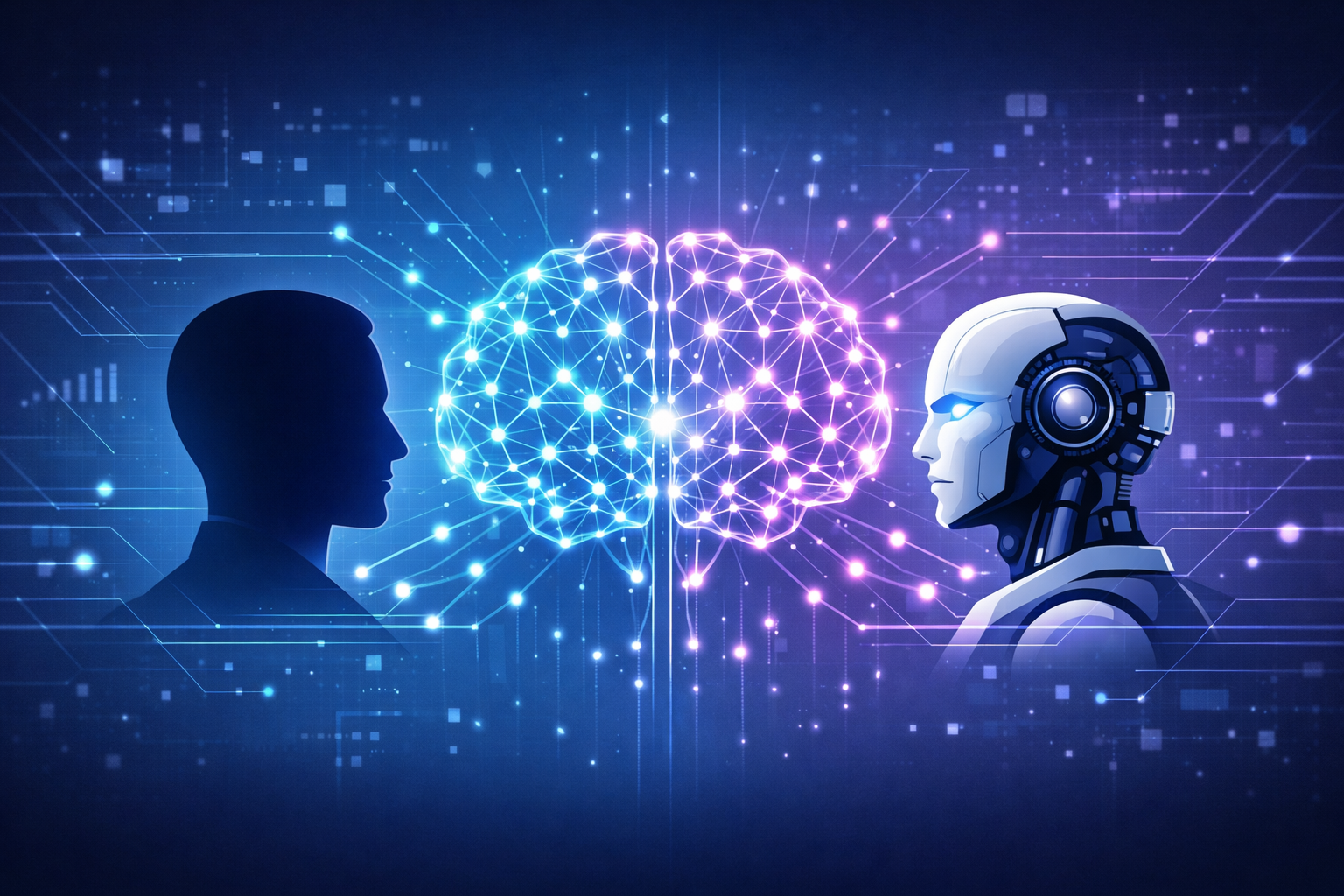
Artificial intelligence is one of the most important technologies shaping the modern world. From voice assistants and recommendation systems to self-driving cars and AI chatbots, artificial intelligence is transforming how people work, communicate, and solve problems.
Although AI is mentioned everywhere today, many people still wonder what it actually means and how it works.
In simple terms, AI allows computers to perform tasks that normally require human intelligence. These tasks include learning from data, recognizing patterns, understanding language, solving problems, and making decisions.
In this beginner-friendly guide, you will learn:
- what artificial intelligence is
- how AI works
- the technologies behind modern AI
- real-world examples of AI
- the advantages and limitations of AI
- what the future of AI may look like
No technical background required.
Artificial Intelligence Definition (Quick Answer)
Artificial intelligence (AI) is a branch of computer science focused on creating machines capable of performing tasks that normally require human intelligence. These tasks include learning from data, recognizing patterns, understanding language, solving problems, and making decisions.
Modern AI systems rely on technologies such as machine learning, neural networks, natural language processing, and computer vision to analyze large amounts of information and improve their performance over time.
Today, artificial intelligence powers many everyday technologies including voice assistants, recommendation systems, fraud detection systems, autonomous vehicles, and generative AI tools.
What Is Artificial Intelligence?
Artificial intelligence refers to computer systems designed to simulate certain aspects of human intelligence. Unlike traditional software that follows fixed instructions, AI systems can learn from data and improve over time.
For example, artificial intelligence is used when:
- Netflix recommends movies you might enjoy
- Google Maps predicts traffic conditions
- voice assistants answer questions
- spam filters detect unwanted emails
All of these technologies rely on artificial intelligence.
Organizations such as IBM and Stanford AI research describe AI as systems capable of performing tasks that normally require human intelligence, including learning, reasoning, and decision-making.
Artificial intelligence is considered one of the most transformative technologies of the modern era because it allows machines to process massive amounts of data and identify patterns much faster than humans.
Organizations such as IBM define artificial intelligence as computer systems capable of performing tasks that normally require human intelligence, including learning, reasoning, and decision-making.
How Artificial Intelligence Works
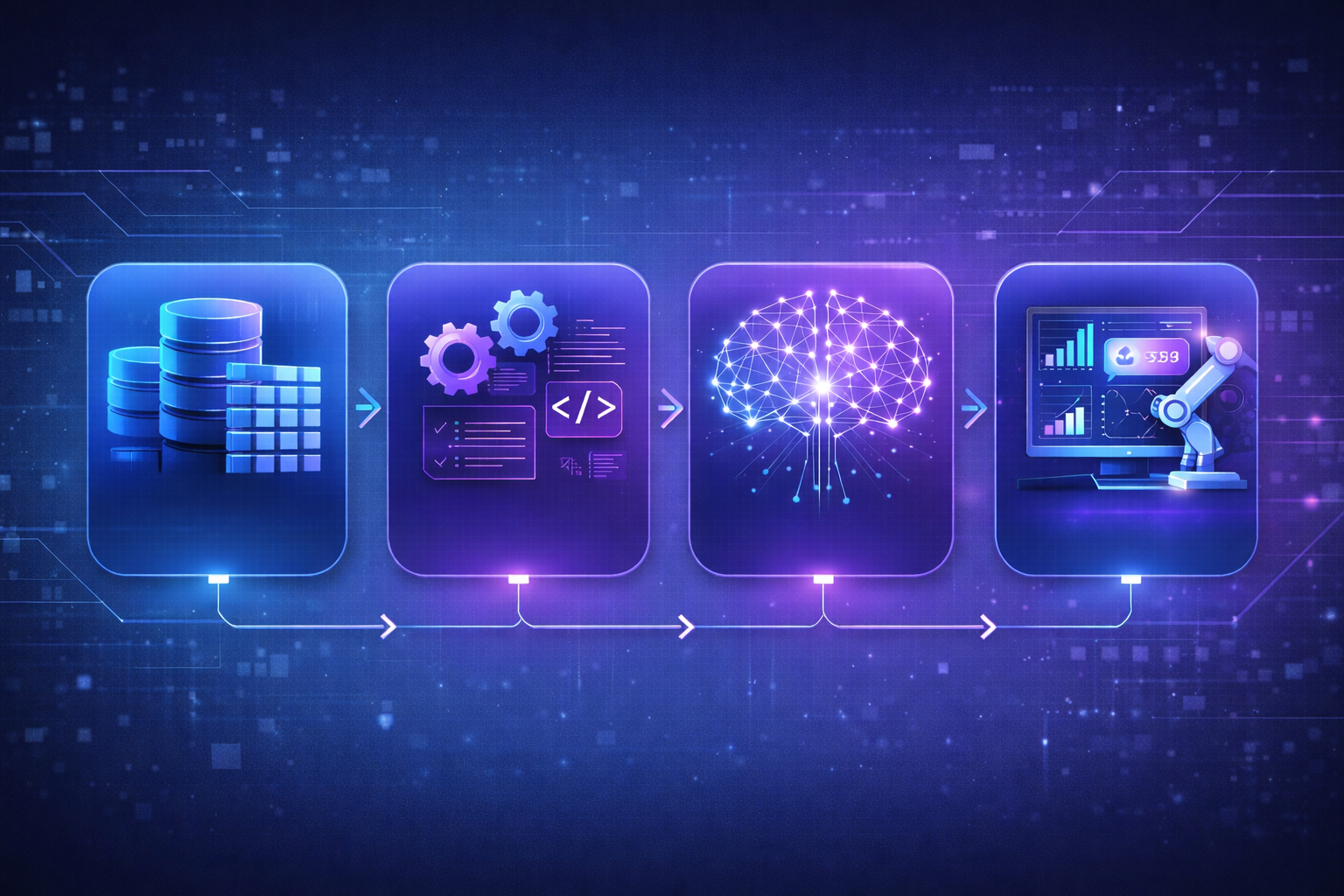
Although AI may seem complex, most artificial intelligence systems follow a simple process.
1. Data Collection
AI systems require data in order to learn.
This data may include:
- images
- text
- audio
- videos
- sensor readings
- user behavior
The more high-quality data available, the better an AI system can learn patterns.
2. Training the AI Model
During training, algorithms analyze data to discover patterns and relationships.
For example, an AI system trained on thousands of images of cats can learn the visual patterns that distinguish cats from other animals.
This process is known as machine learning.
3. Making Predictions
After training, AI systems can apply what they learned to new data.
Examples include:
- detecting fraud in financial transactions
- identifying objects in images
- recommending products to customers
- translating languages
4. Continuous Improvement
Many AI systems improve over time as they process additional data.
By analyzing new information, the system adjusts its internal models and becomes more accurate.
👉 See: How Artificial Intelligence Works
Key Technologies Behind Artificial Intelligence
Several technologies power modern AI systems.
Machine Learning
Machine learning allows computers to learn patterns from data without being explicitly programmed.
Machine learning is used in applications such as recommendation systems, fraud detection, and predictive analytics.
👉 See: Machine Learning Explained
Neural Networks
Artificial neural networks are computing systems inspired by the structure of the human brain.
They consist of interconnected nodes that process information across multiple layers.
Neural networks power technologies like:
- image recognition
- speech recognition
- language translation
- generative AI models
👉 See: Neural Networks Explained
Deep Learning
Deep learning is a specialized form of machine learning that uses multi-layer neural networks.
It is especially effective for analyzing complex data such as images, audio, and video.
👉 See: Deep Learning 101
Natural Language Processing (NLP)
Natural language processing allows computers to understand and generate human language.
It powers technologies such as:
- chatbots
- voice assistants
- translation tools
- AI writing assistants
👉 See: Natural Language Processing Explained
Computer Vision
Computer vision enables machines to analyze and interpret images and video.
Applications include:
- facial recognition
- medical imaging
- autonomous vehicles
- security monitoring
👉 See: Computer Vision Explained
Main Types of Artificial Intelligence
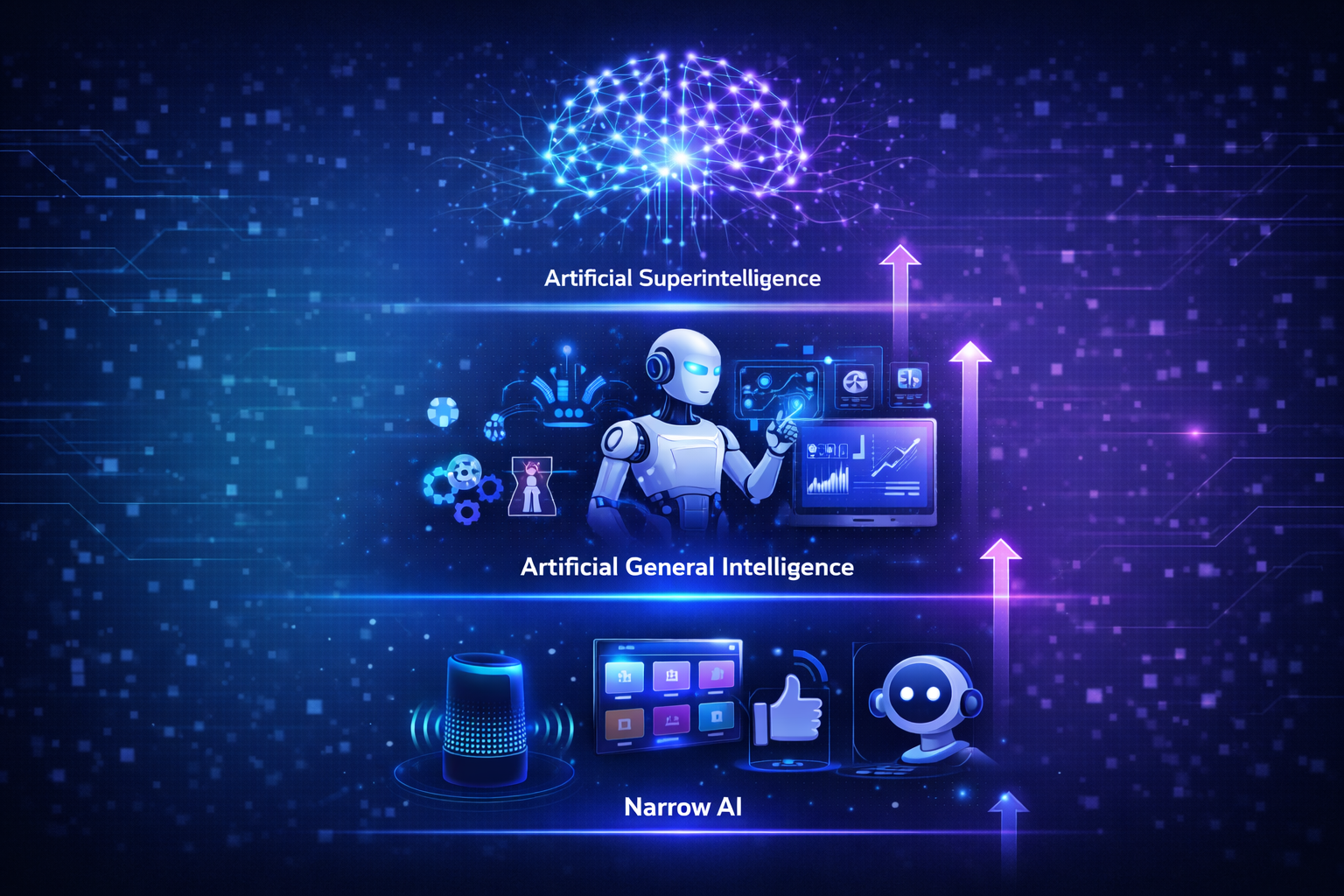
AI systems are commonly divided into three categories.
Narrow AI (Weak AI)
Narrow AI is designed to perform specific tasks.
Examples include recommendation systems, spam filters, and voice assistants.
Nearly all AI systems used today fall into this category.
Artificial General Intelligence (AGI)
Artificial General Intelligence refers to a theoretical AI system capable of performing any intellectual task a human can perform.
AGI has not yet been achieved.
Superintelligent AI
Superintelligent AI refers to hypothetical machines that could surpass human intelligence in every domain.
This concept is often discussed in research and science fiction.
👉 See: Types of Artificial Intelligence
Artificial Intelligence vs Machine Learning vs Deep Learning
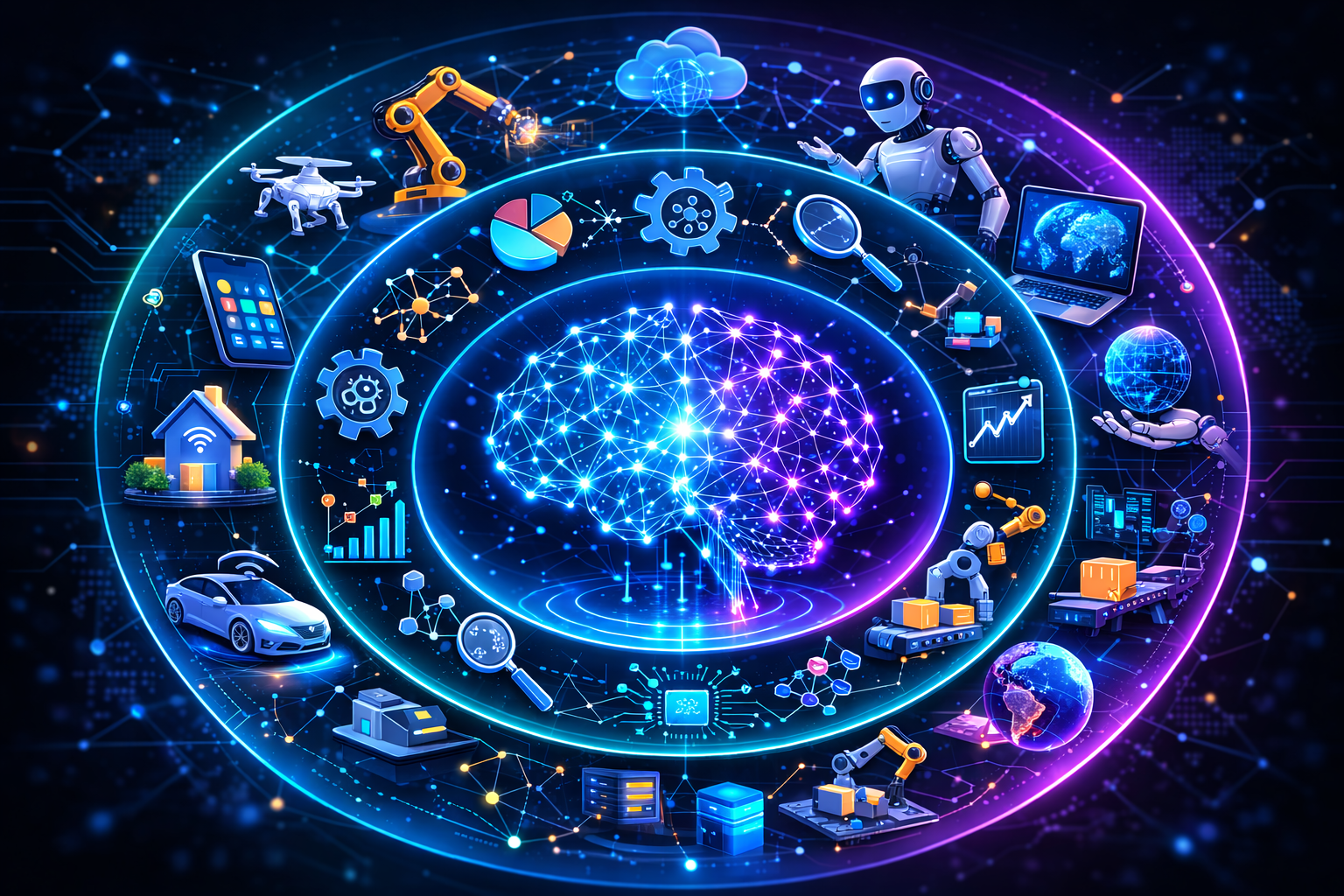
| Technology | What It Means | Example |
| Artificial Intelligence | The broad field of building intelligent machines | Self-driving cars |
| Machine Learning | A subset of AI where systems learn from data | Recommendation algorithms |
| Deep Learning | A type of machine learning using neural networks | Image recognition |
👉 Read more: AI vs Machine Learning vs Deep Learning
Real-World Examples of Artificial Intelligence
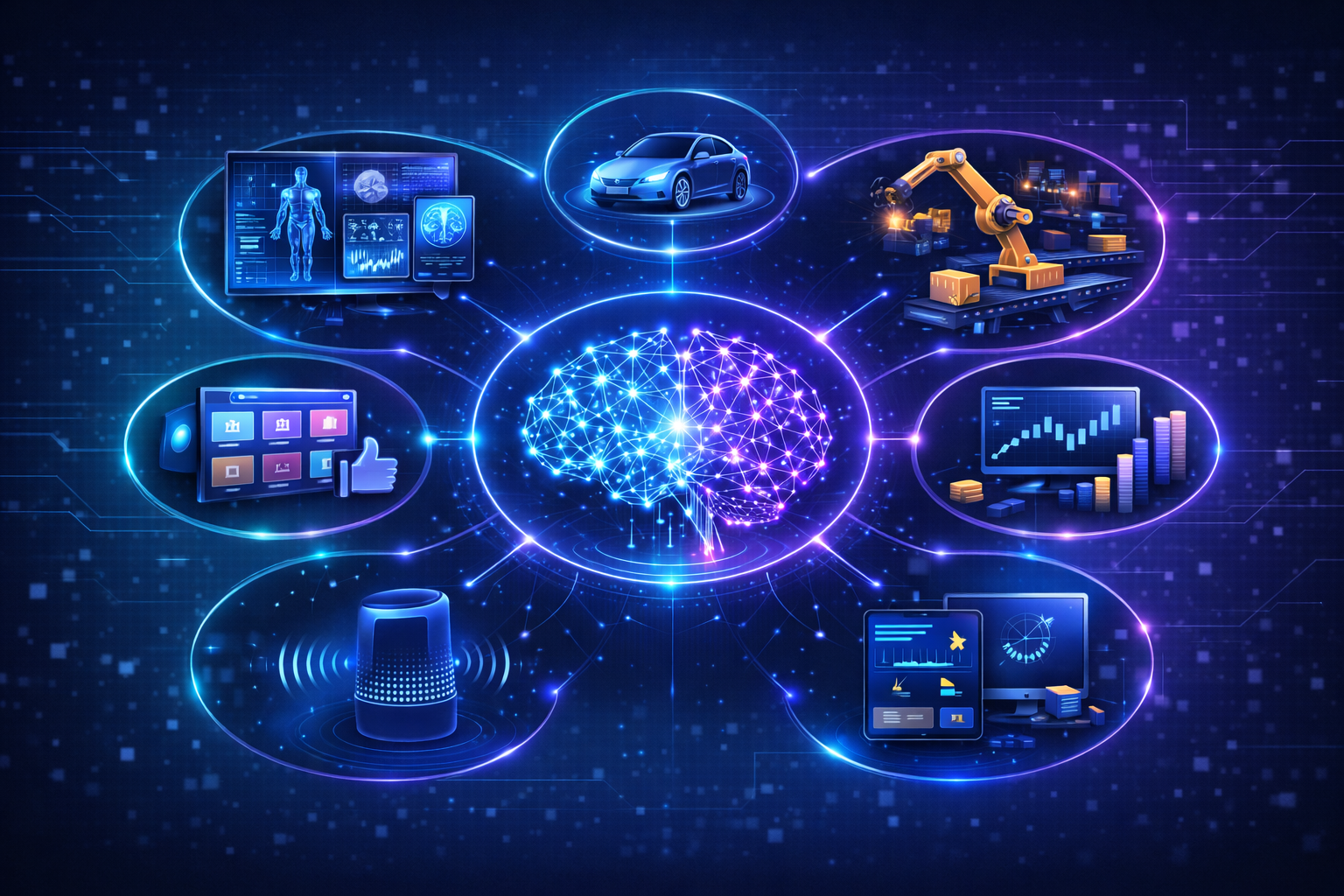
AI is already used in many industries.
Healthcare
AI helps doctors analyze medical images, detect diseases earlier, and predict patient outcomes.
👉 Related: AI in Healthcare
Business and Marketing
Companies use AI to analyze customer behavior, automate customer support, and improve decision-making.
👉 Related: AI in Business
Autonomous Vehicles
Self-driving cars use AI technologies such as computer vision and reinforcement learning to interpret road conditions.
Recommendation Systems
Platforms like Netflix, YouTube, and Spotify use AI algorithms to recommend content based on user behavior.
Generative AI
Generative AI models can create new content including text, images, music, and code.
👉 See: What Is Generative AI
Why Artificial Intelligence Matters Today
Artificial intelligence has become essential for analyzing the massive amounts of data generated in the digital age.
Organizations rely on AI to:
- improve efficiency
- automate repetitive tasks
- identify patterns in large datasets
- improve decision-making
AI is transforming industries such as healthcare, finance, retail, and transportation.
Because of its ability to process vast amounts of information quickly, artificial intelligence is expected to remain one of the most influential technologies of the 21st century.
Advantages of Artificial Intelligence
AI offers several benefits.
Improved efficiency
AI automates repetitive tasks and speeds up complex processes.
Better decision-making
AI can analyze large datasets and detect patterns quickly.
Personalization
Many services use AI to customize experiences for individual users.
24/7 operation
AI systems can operate continuously without fatigue.
Common Misconceptions About Artificial Intelligence
Artificial intelligence is often misunderstood.
AI is not conscious
Modern AI systems do not possess awareness or emotions.
AI will not replace all jobs
While AI may automate certain tasks, it also creates new opportunities.
AI is not always perfect
AI systems depend heavily on training data and may produce inaccurate results if the data is flawed.
Limitations and Risks of Artificial Intelligence
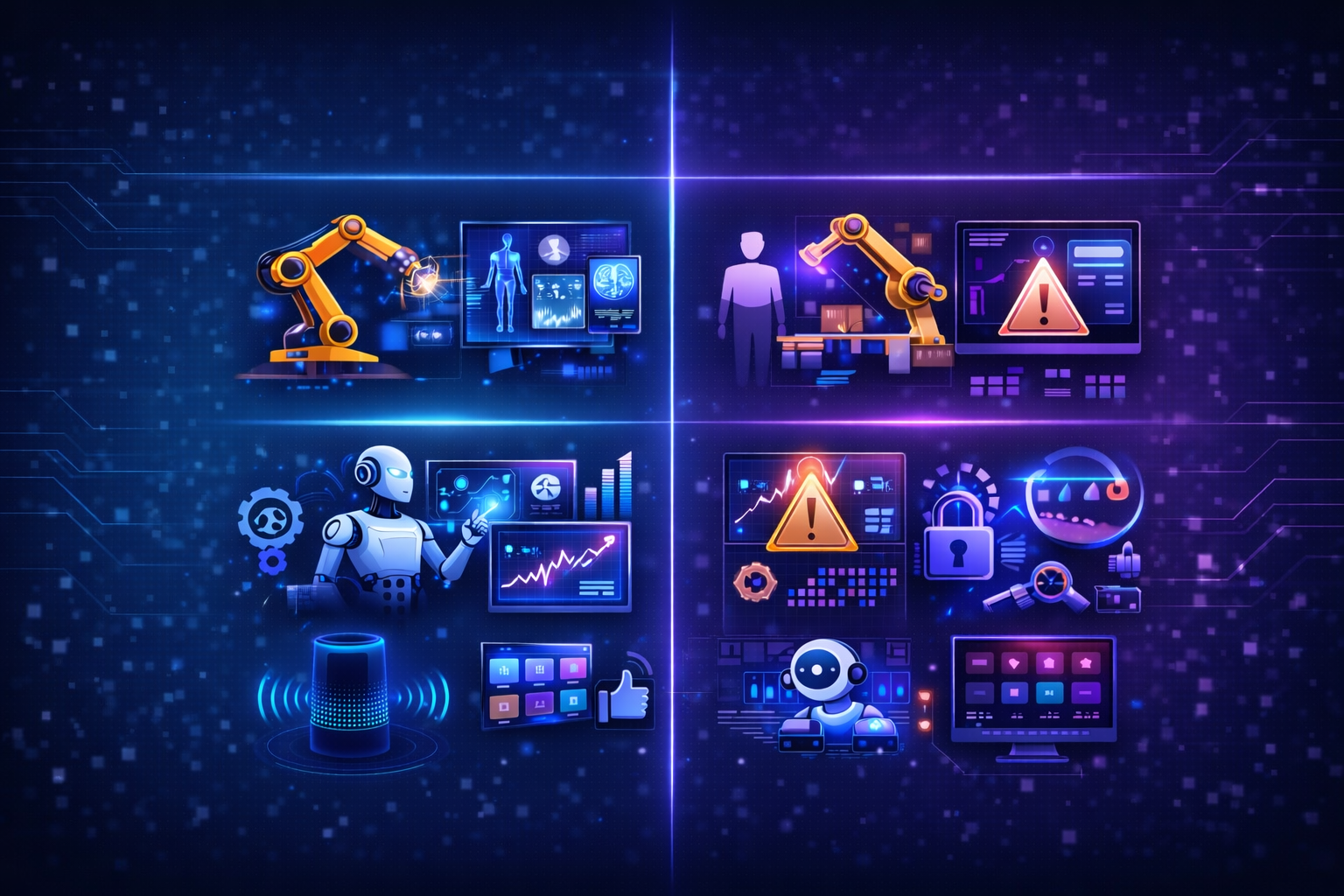
Despite its advantages, AI also presents challenges.
Data bias
AI systems may produce biased results if training data contains bias.
Privacy concerns
Many AI systems rely on large datasets containing personal information.
Job disruption
Automation may replace certain repetitive jobs.
Lack of transparency
Some advanced AI models are difficult to interpret.
The Future of Artificial Intelligence
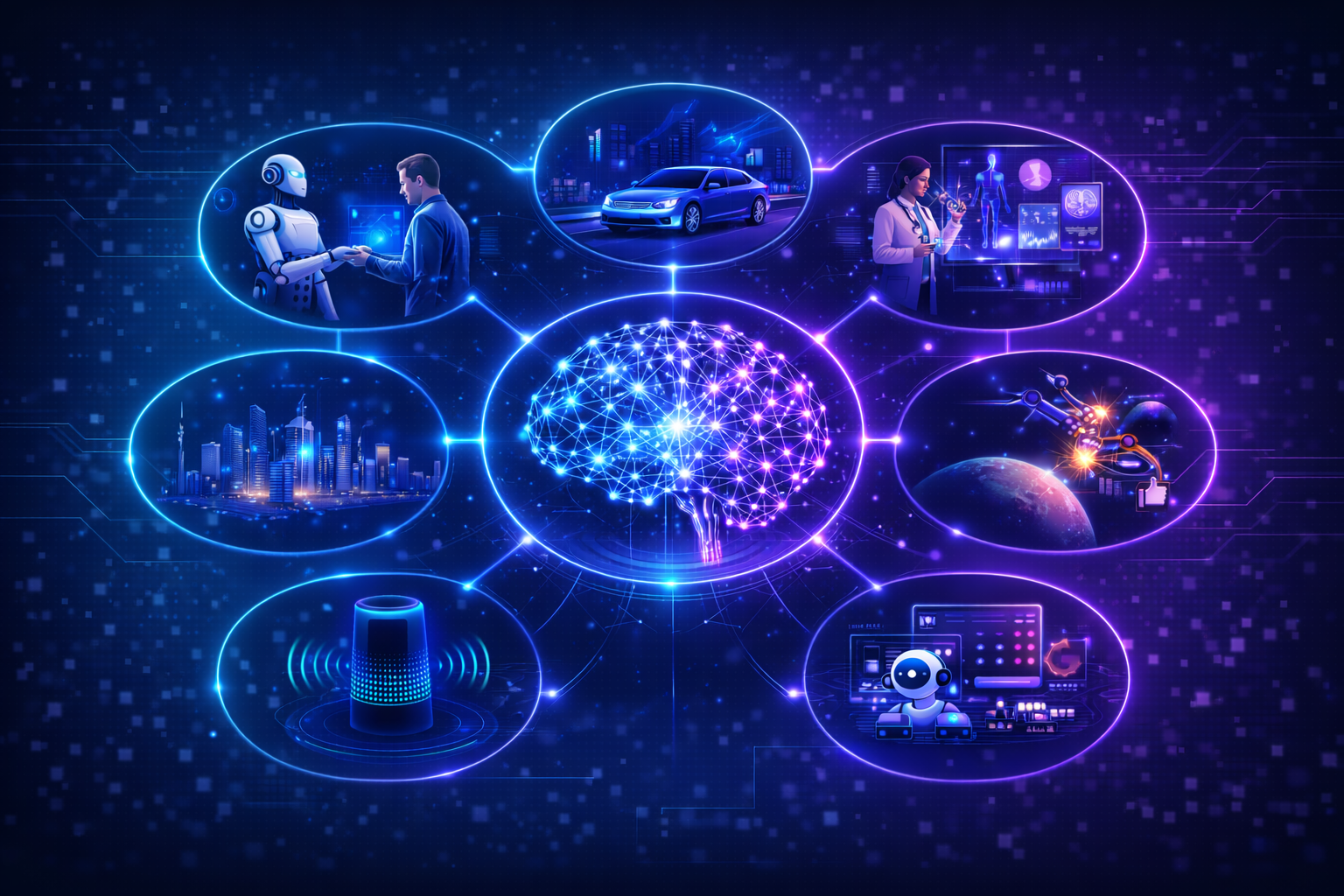
AI will likely become even more integrated into everyday life.
Future developments may include:
- smarter AI assistants
- improved medical diagnostics
- advanced robotics
- autonomous transportation systems
- more ethical and transparent AI systems
Many experts believe AI will become one of the most influential technologies of the coming decades.
Research institutions such as Stanford AI Lab continue to study how artificial intelligence will shape industries, education, and society in the coming decades.
How Beginners Can Start Learning Artificial Intelligence
Beginners can start learning AI by understanding key concepts such as:
- machine learning
- neural networks
- deep learning
- data analysis
Helpful beginner guides include:
- Machine Learning Explained
- Neural Networks Explained
- Supervised Learning Explained
- Unsupervised Learning Explained
- Reinforcement Learning Explained
Learning these concepts builds a strong foundation in artificial intelligence.
Explore More Artificial Intelligence Guides
If you want to learn more about AI, explore these beginner guides.
Machine Learning
Neural Networks
Deep Learning
Supervised Learning
👉 Supervised Learning Explained
Unsupervised Learning
👉 Unsupervised Learning Explained
Reinforcement Learning
👉 Reinforcement Learning Explained
Natural Language Processing
👉 Natural Language Processing Explained
Computer Vision
Generative AI
Conclusion
Artificial intelligence is the science of building machines capable of performing tasks that normally require human intelligence.
From recommendation systems to medical diagnostics, AI technologies are transforming industries across the world.
Understanding the fundamentals of artificial intelligence helps individuals and organizations adapt to a rapidly evolving technological landscape.
As AI continues to advance, learning the basics today provides valuable insight into the future of technology.
Frequently Asked Questions
What is artificial intelligence in simple terms?
Artificial intelligence is technology that allows computers to perform tasks that normally require human intelligence such as learning, recognizing patterns, and making decisions.
⸻
Is artificial intelligence the same as machine learning?
No. Machine learning is a subset of artificial intelligence that focuses on learning patterns from data.
⸻
Where is artificial intelligence used?
AI is used in healthcare, finance, marketing, transportation, cybersecurity, and many other industries.
⸻
Can artificial intelligence think like humans?
Current AI systems simulate certain aspects of intelligence but do not truly think or understand the world like humans.
⸻
What is the future of artificial intelligence?
The future of AI includes smarter automation, improved robotics, better healthcare technology, and deeper integration into everyday life.