
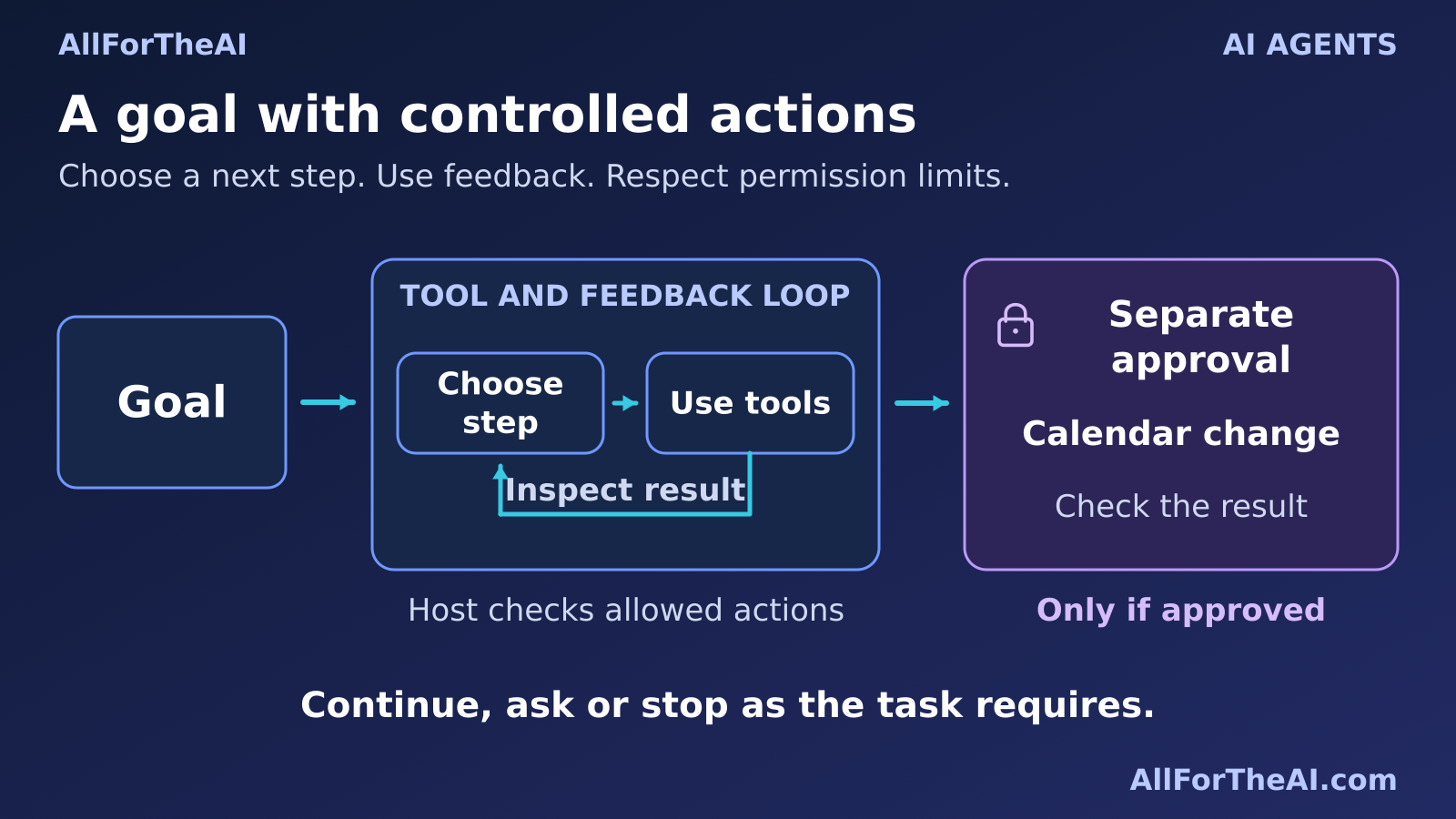
AI Agents Explained for Beginners
Learn how AI agents use tools, respond to results and work toward goals. Compare chatbots and workflows, with a simple example and clear safety limits.
AI Agents Explained for Beginners Read More »
Beginner-friendly guides covering what AI is, how it works, types of AI, and the biggest concepts behind modern artificial intelligence. Start here if you’re new to AI.
Learn how AI agents use tools, respond to results and work toward goals. Compare chatbots and workflows, with a simple example and clear safety limits.
AI Agents Explained for Beginners Read More »
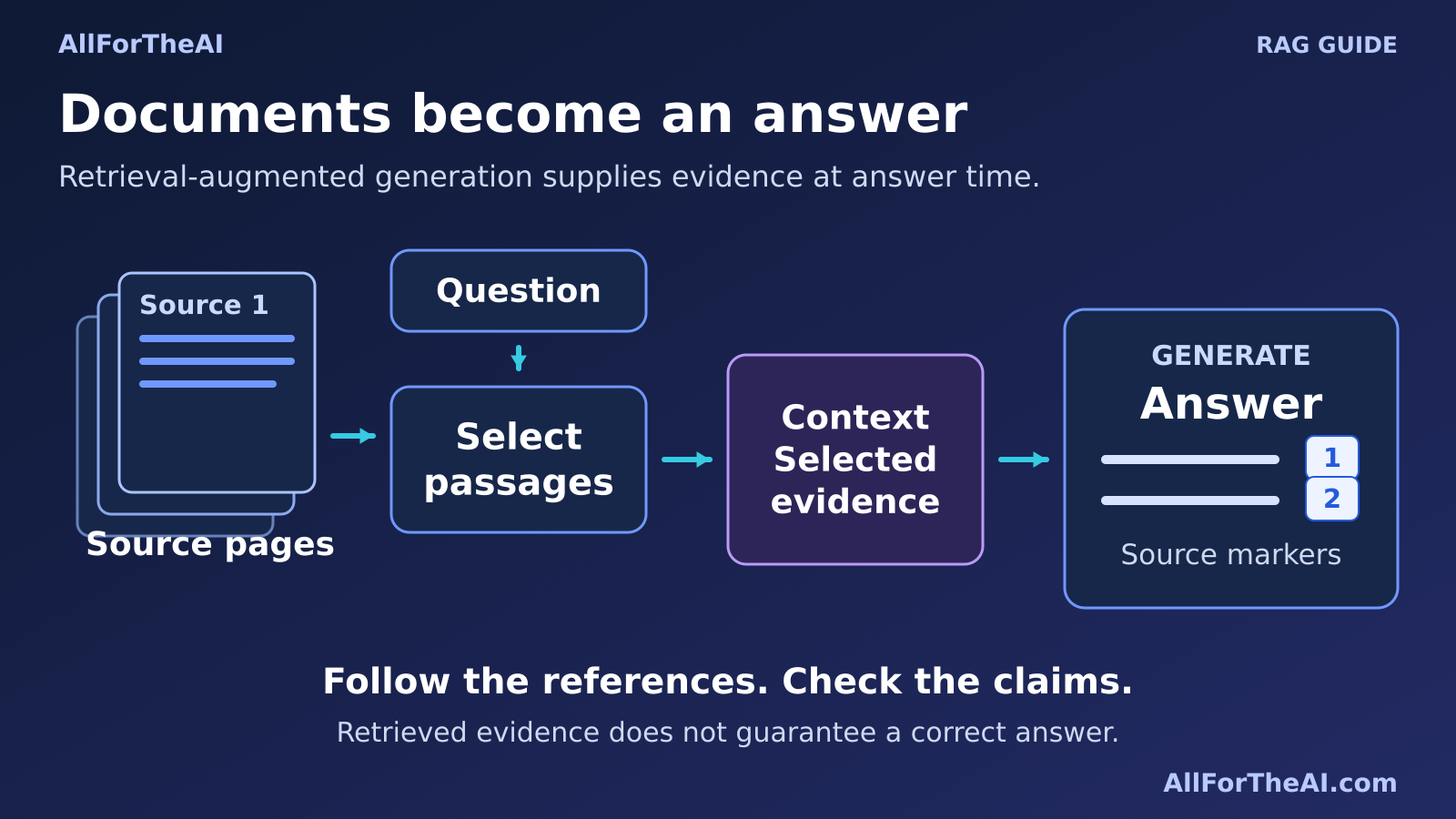
Learn how retrieval-augmented generation helps AI answer from documents, how it differs from training, and why sources still need checking. See a clear example.
Retrieval-Augmented Generation (RAG) Explained for Beginners Read More »

Structured and unstructured data describe how information is organized, but they are not absolute categories of usefulness or intelligence. Structured data follows an explicit schema or predictable fields. Unstructured data does not naturally fit a fixed row-and-column model. Between them sits semi-structured data, which has some machine-readable organization without a rigid relational schema. Modern AI
Structured vs Unstructured Data: What’s the Difference? Read More »

Real-world applications of AI use capabilities such as perception, language processing, prediction, generation, planning, and decision support to perform practical tasks. This guide explains where those capabilities are used, what can go wrong, and which AllForTheAI industry guide to explore next. Reviewed: October 3, 2026 · This guide was checked for scope, responsible-AI framing, learning-path
Real-World Applications of AI: Examples and Industry Uses Read More »
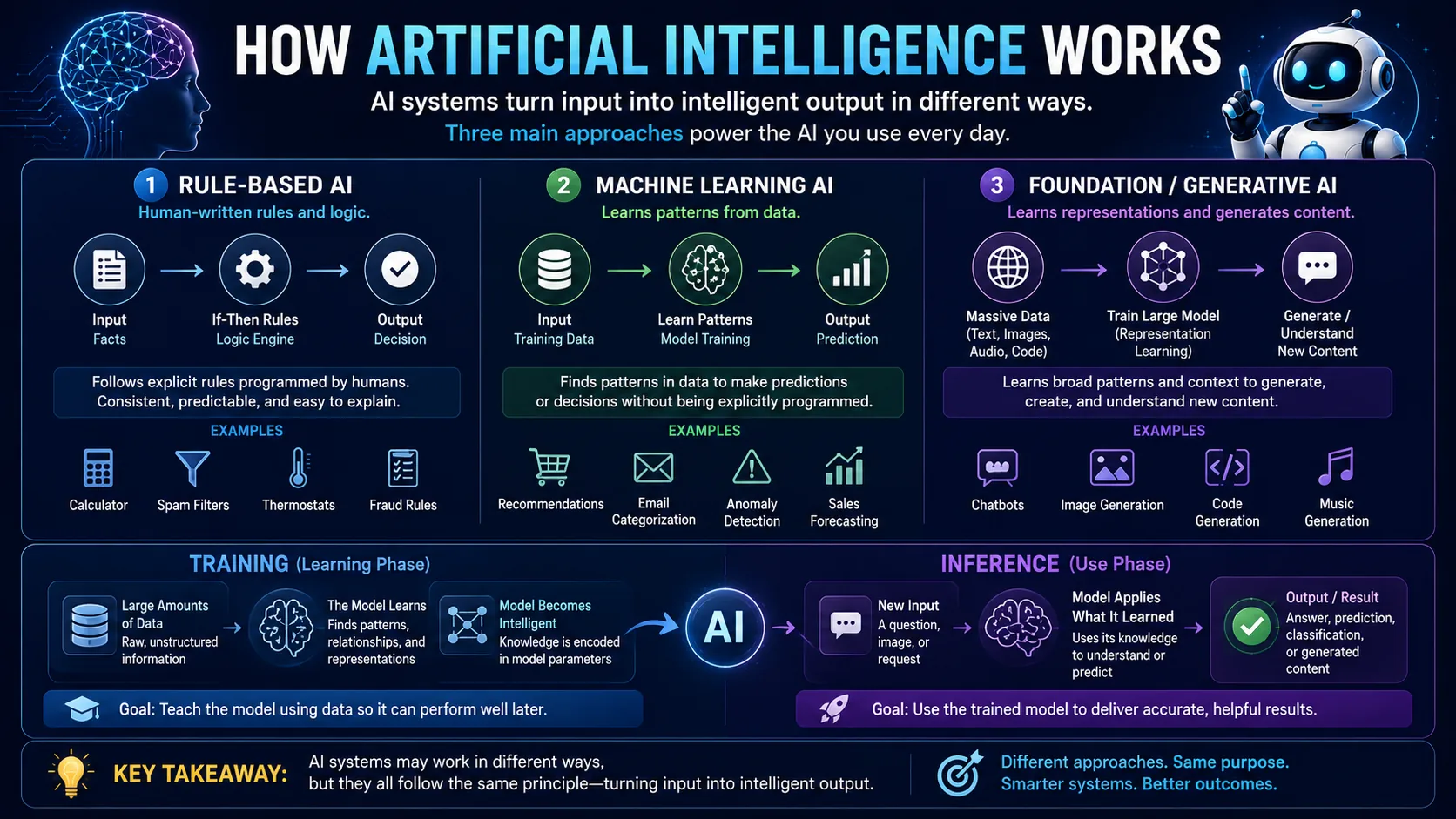
Last reviewed and updated: September 4, 2026. Artificial intelligence does not work through one universal process. Different AI systems use different combinations of rules, algorithms, learned models, search, retrieval, optimization, external tools, and human-designed controls. A useful way to understand modern AI is to separate how a system is built or trained from what happens
How Artificial Intelligence Works: A Beginner’s Guide Read More »
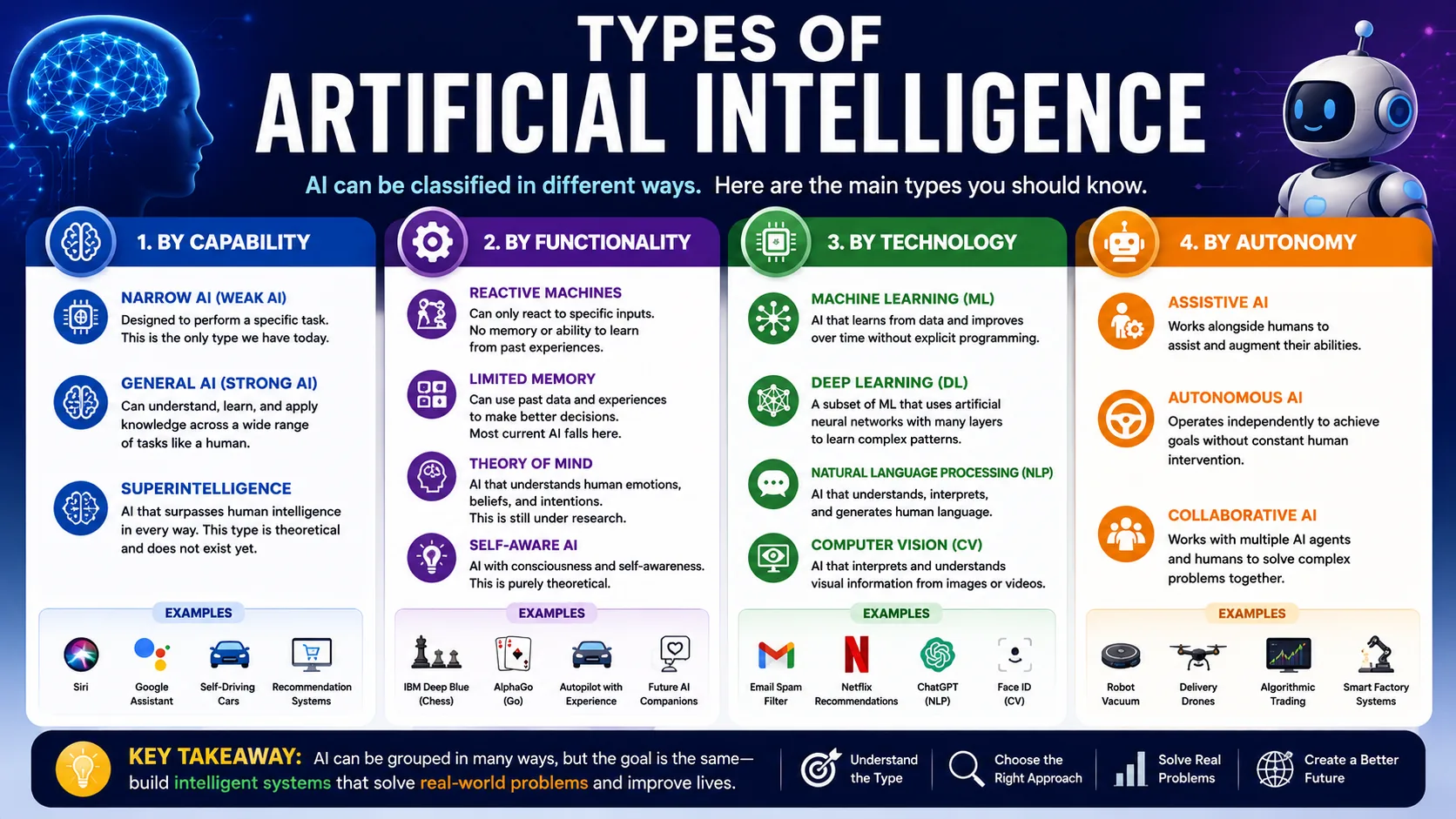
AI Foundations — Supporting GuideLast reviewed and updated: September 4, 2026. Artificial intelligence is often divided into “types,” but there is no single master taxonomy. Some labels describe a system’s scope of capability; others describe its runtime behavior, technical approach, task, modality, autonomy, or application domain. Keeping those dimensions separate prevents a misleading “ladder” of
Types of Artificial Intelligence Explained Read More »
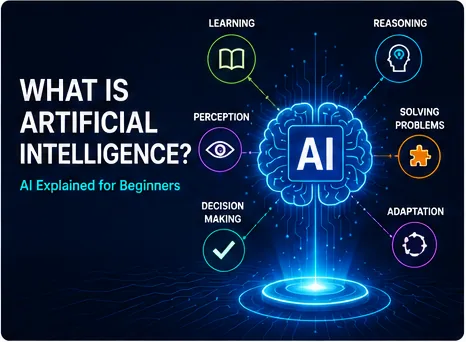
Artificial intelligence, or AI, is the field of building computer systems that can perform tasks that normally require aspects of human intelligence, such as recognizing patterns, understanding language, making predictions, solving problems, generating content, or selecting actions. AI is not one single technology. It is an umbrella term covering many approaches, from rule-based systems that
What Is Artificial Intelligence? AI Explained for Beginners Read More »
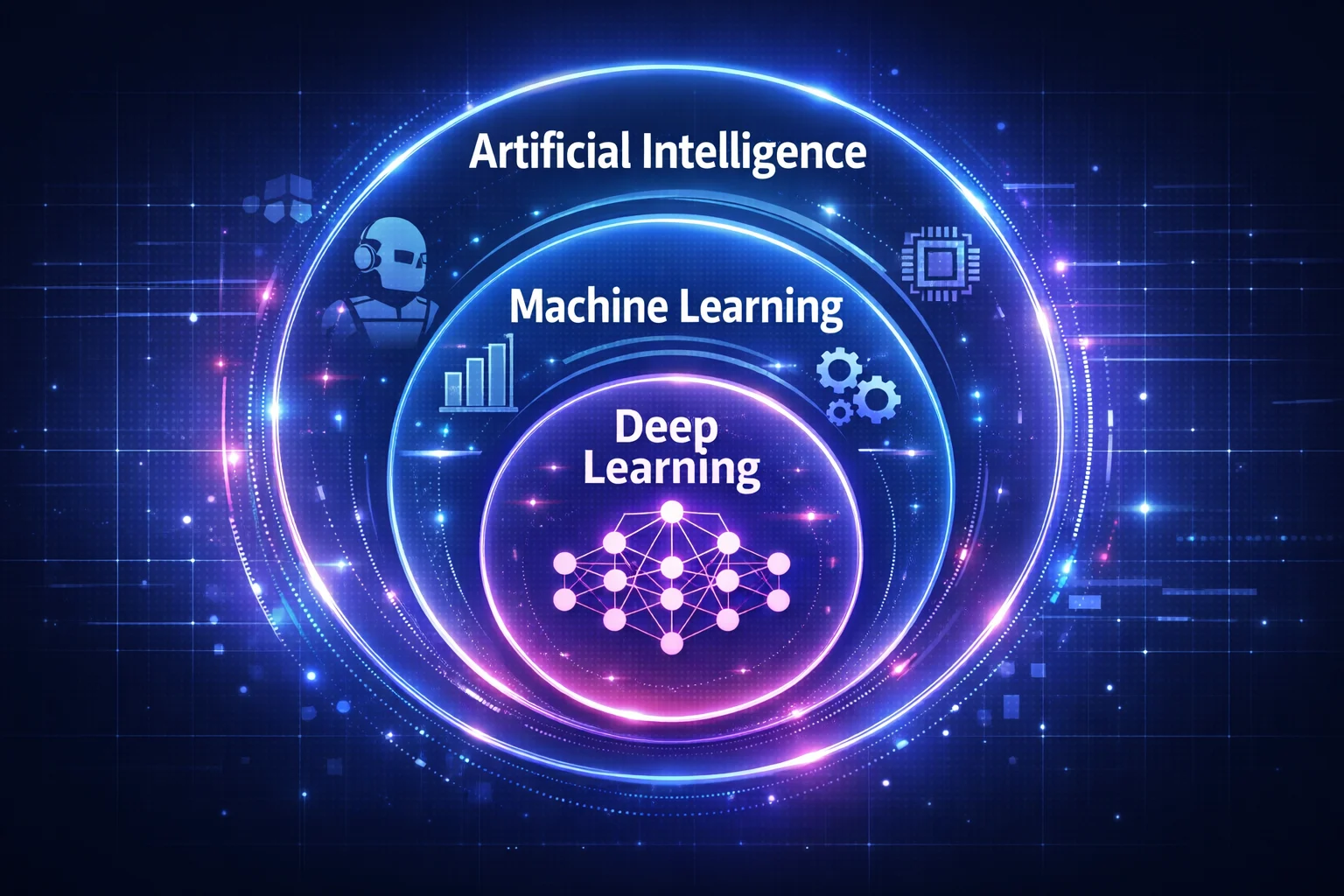
Artificial intelligence, machine learning, and deep learning are related, but they are not interchangeable. Artificial intelligence is the broad field. Machine learning is one major approach within AI. Deep learning is one approach within machine learning. That hierarchy matters because not every AI system learns from data, and not every machine-learning system uses deep neural
AI vs Machine Learning vs Deep Learning: What’s the Difference? Read More »
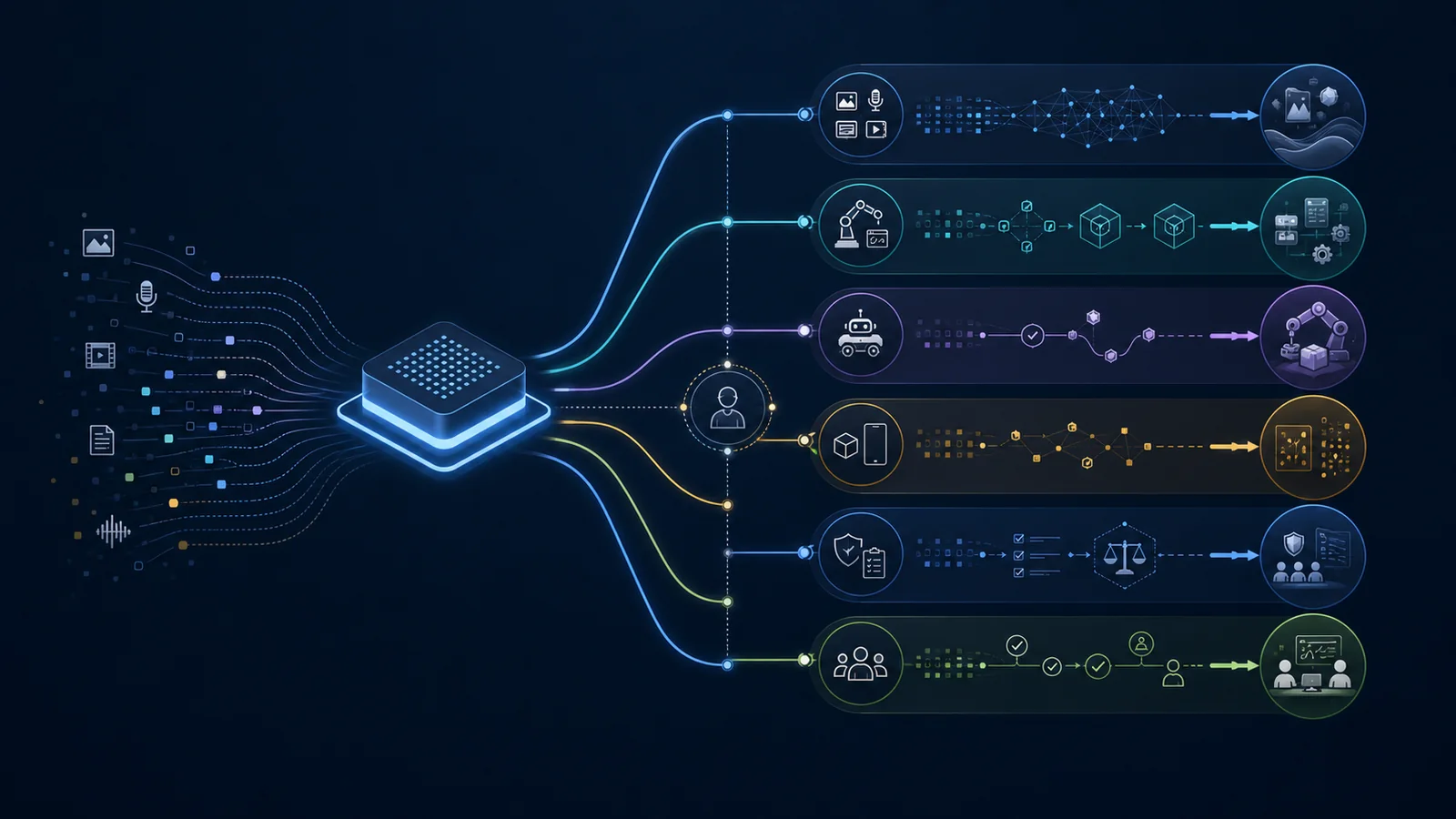
Last reviewed: October 22, 2026 The future of artificial intelligence is uncertain. Some developments are already visible: wider enterprise adoption, increasingly capable multimodal models, growing use of generative AI, expanding regulation, and early deployment of AI agents. Other claims about artificial general intelligence, mass job displacement, fully autonomous companies, or exact technological timelines remain forecasts
The Future of Artificial Intelligence: Trends and Scenarios for the Next 10 Years Read More »
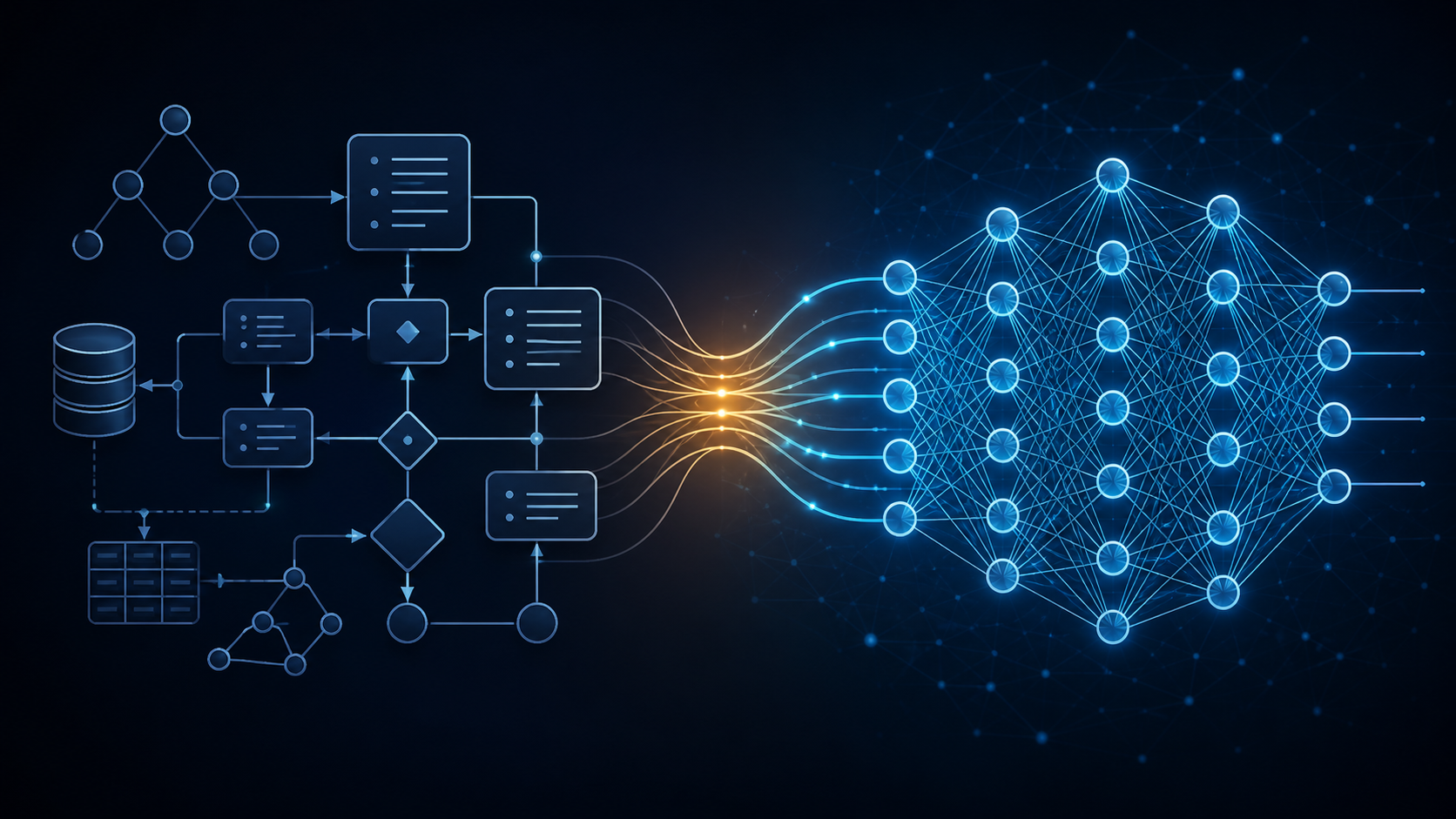
Symbolic AI and neural networks represent two major traditions in AI, rather than an exhaustive division of the field. Symbolic approaches use explicit rules, logic, symbols, and structured knowledge. Neural networks learn distributed numerical representations from data. The difference is not simply “old AI” versus “modern AI.” Both remain useful, and many practical systems combine
Symbolic AI vs Neural Networks: What’s the Difference? Read More »