
Artificial Intelligence

Beginner-friendly guides covering what AI is, how it works, types of AI, and the biggest concepts behind modern artificial intelligence. Start here if you’re new to AI.

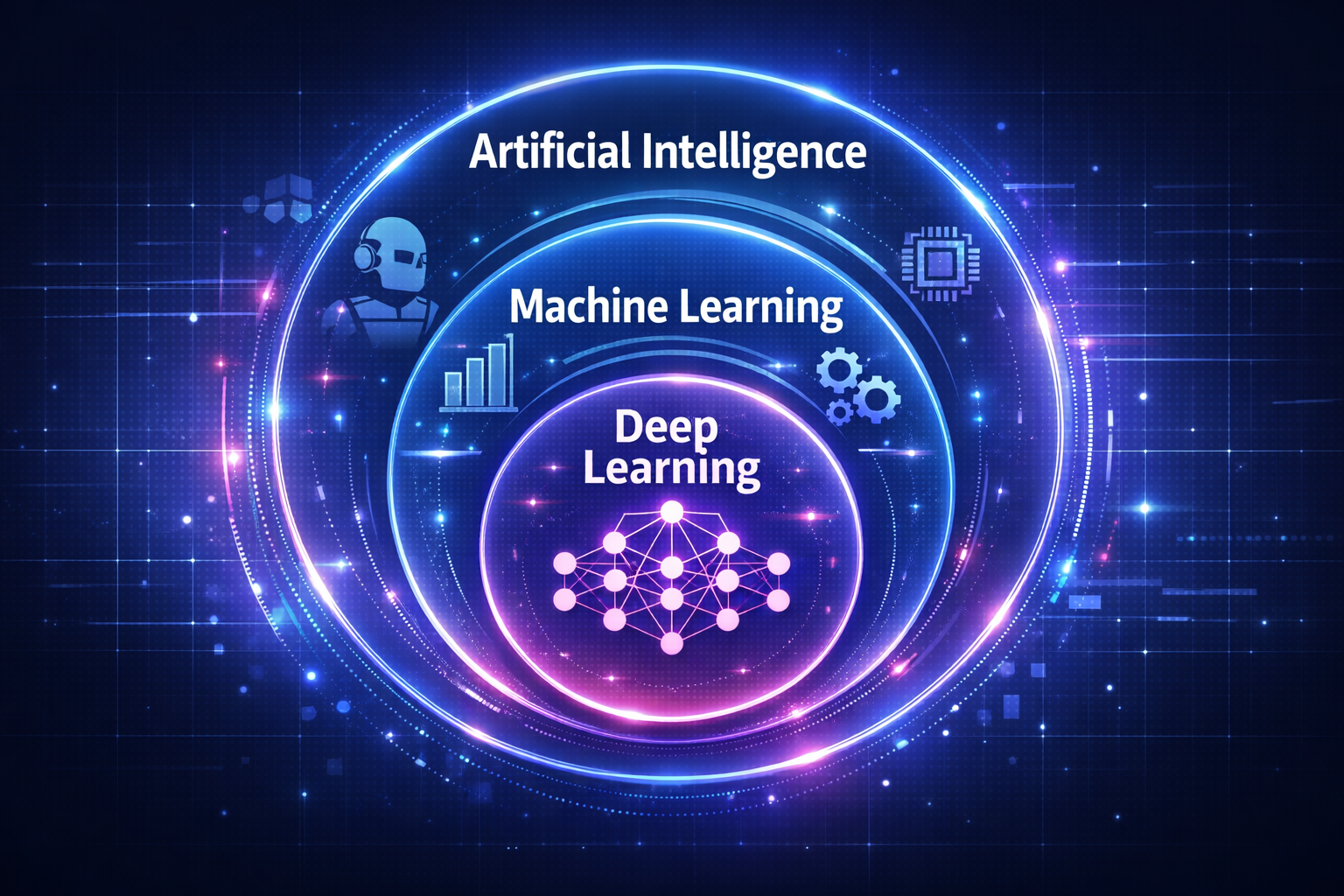
Illustration explaining the difference between artificial intelligence, machine learning, and deep learning

AI vs Machine Learning vs Deep Learning (Beginner Guide)

Artificial intelligence, machine learning, and deep learning are often used interchangeably — but they are not the same thing. Understanding the difference between AI vs machine learning vs deep learning is one of the most important foundations for anyone learning modern AI. In this beginner-friendly guide, you’ll learn what each term means, how they relate […]

AI vs Machine Learning vs Deep Learning (Beginner Guide) Read More »

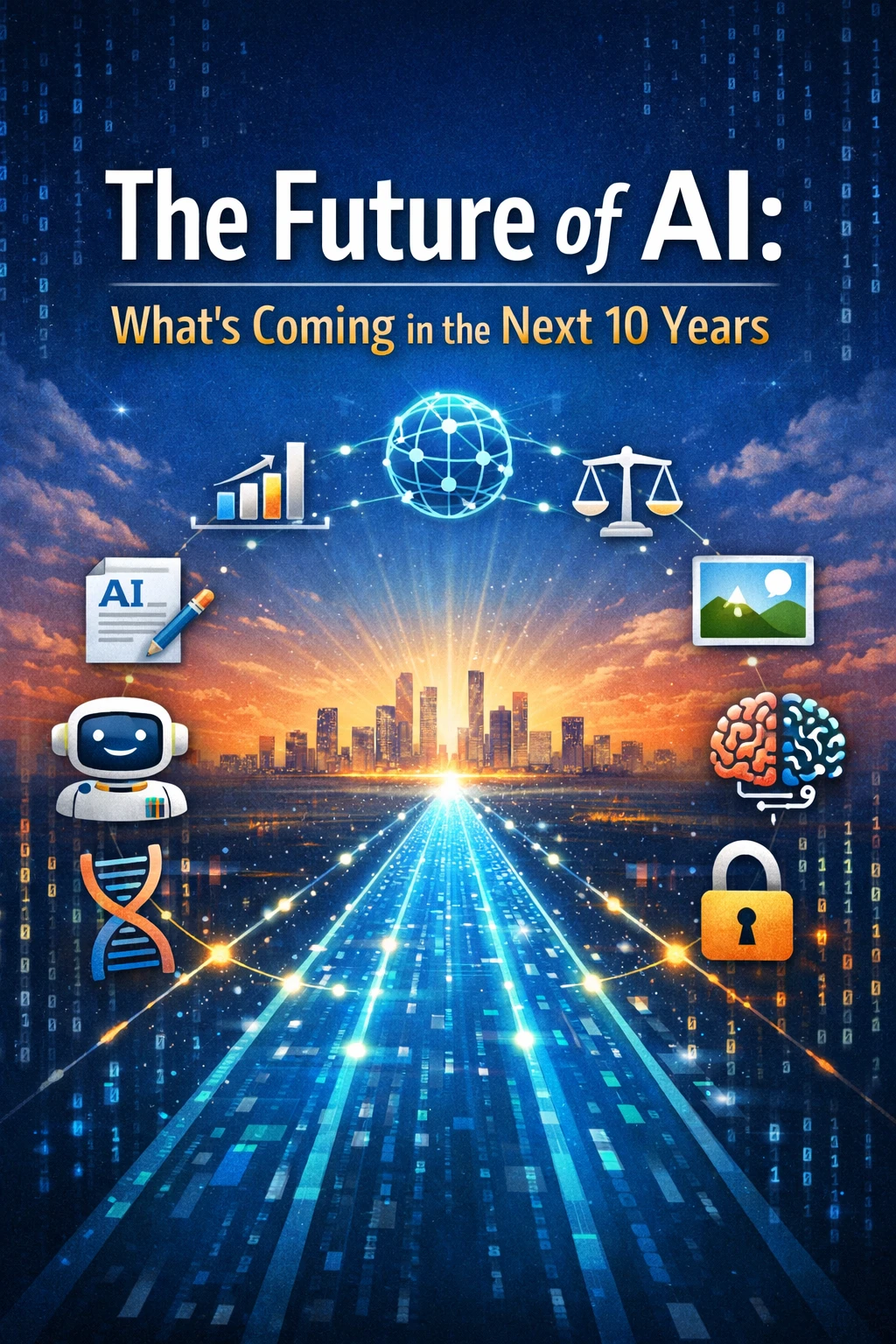
Future of AI predictions showing how artificial intelligence may evolve over the next 10 years

The Future of Artificial Intelligence: Trends, Predictions, and the Next 10 Years

Artificial intelligence is advancing at an unprecedented pace. From generative AI tools and autonomous systems to breakthroughs in healthcare and robotics, the future of artificial intelligence will reshape how we work, learn, communicate, and innovate. In this beginner-friendly guide, we’ll explore the future of AI over the next 5–10 years, the major trends driving innovation,

The Future of Artificial Intelligence: Trends, Predictions, and the Next 10 Years Read More »

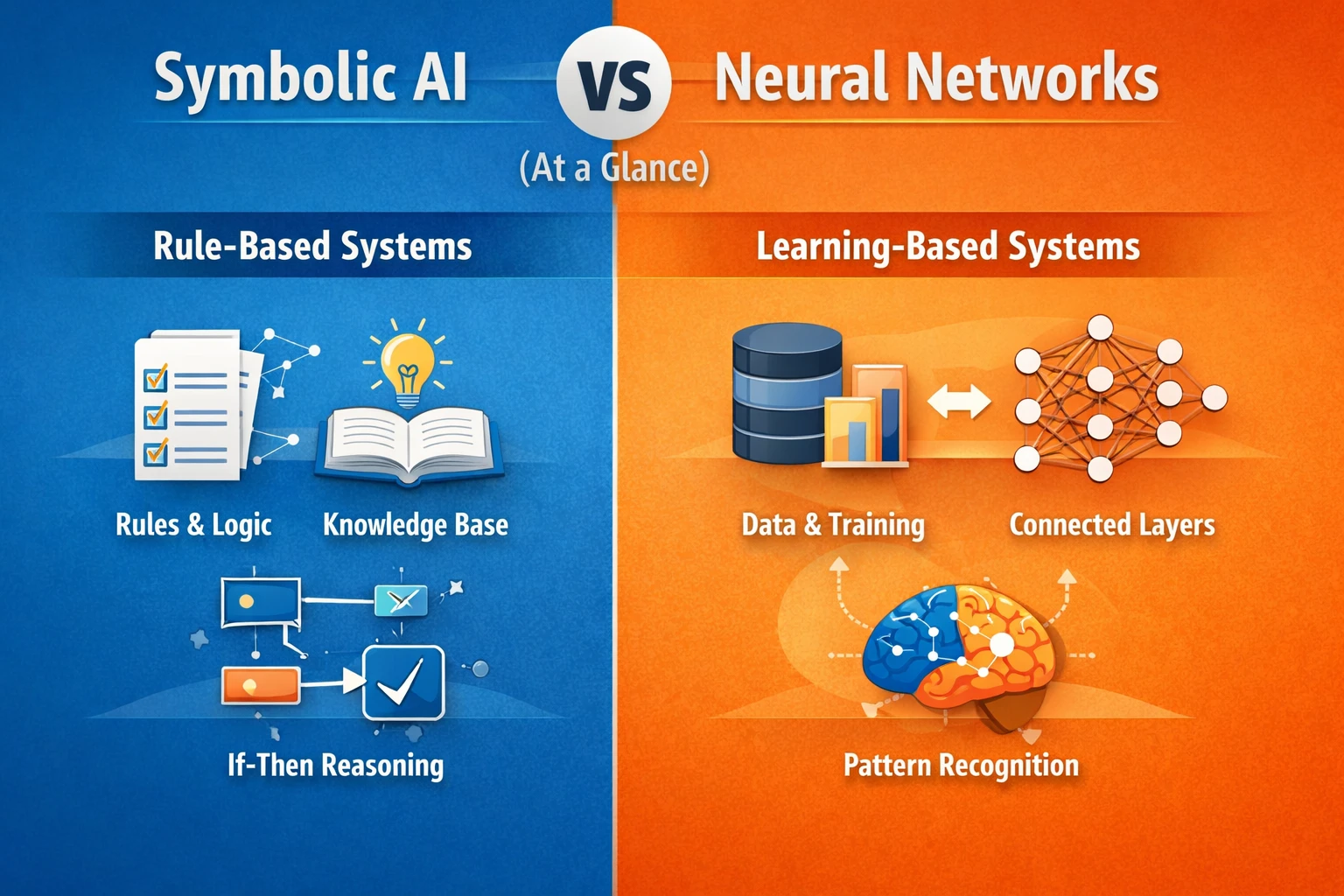
Symbolic AI vs neural networks explained with a side-by-side comparison of rule-based AI and learning-based AI

Symbolic AI vs Neural Networks: What’s the Difference?

Artificial intelligence isn’t built on just one approach. In fact, there are two very different philosophies behind how AI systems work: Symbolic AI and Neural Networks. Symbolic AI represents the original vision of artificial intelligence — machines that reason using logic and rules. Neural networks represent the modern wave of AI — machines that learn

Symbolic AI vs Neural Networks: What’s the Difference? Read More »

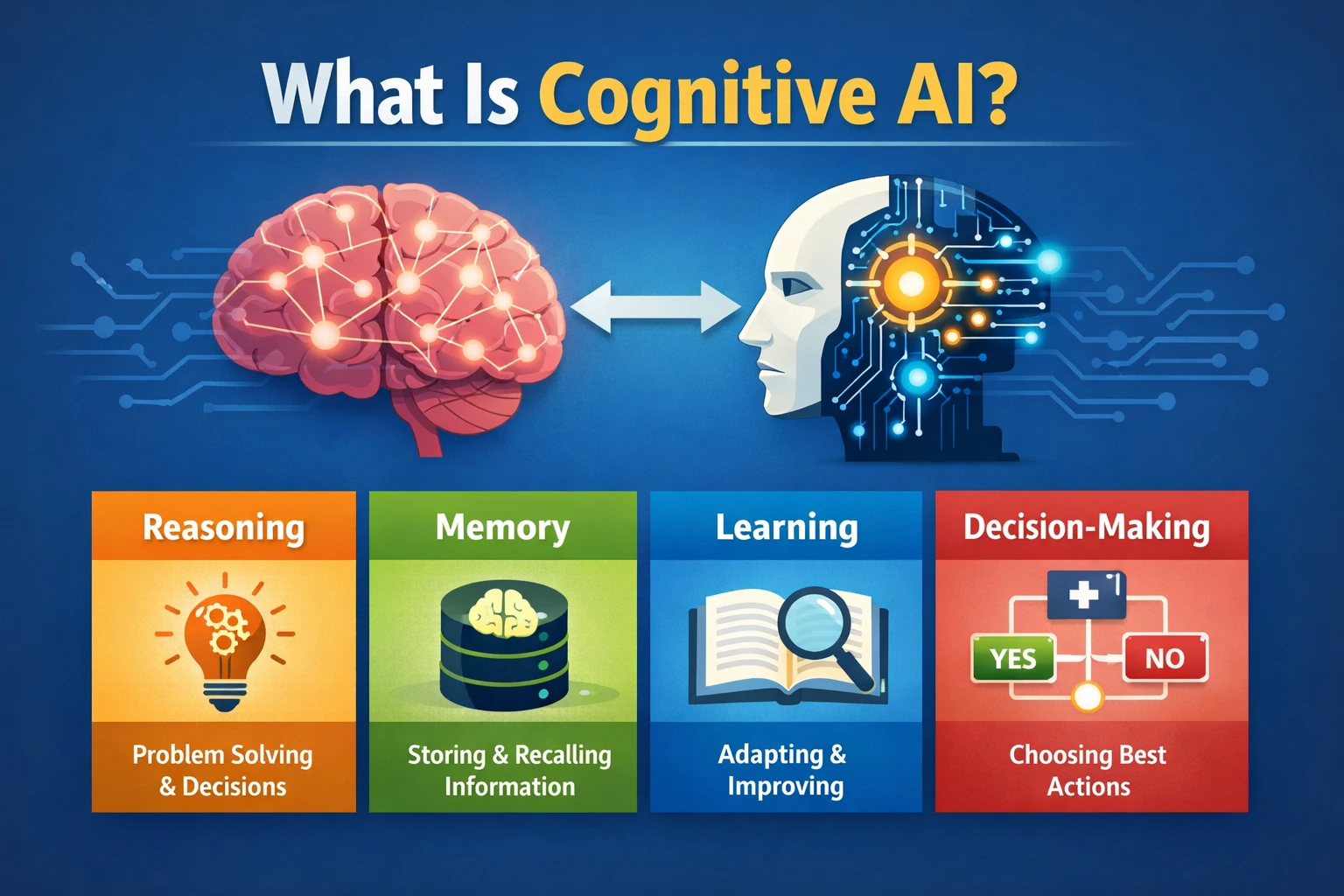
Diagram explaining what cognitive AI is, showing how artificial intelligence mimics human reasoning, memory, learning, and decision-making.

Cognitive AI Explained: How AI “Thinks” Like Humans

Artificial intelligence has evolved from simple rule-based systems into models that learn, adapt, and generate content. But a newer category of AI goes even further — Cognitive AI. Cognitive AI focuses on enabling machines to reason, remember, understand context, and make decisions in ways that more closely resemble human thinking. If you already understand concepts

Cognitive AI Explained: How AI “Thinks” Like Humans Read More »

Futuristic visual representing artificial intelligence and human-AI collaboration

What Is Artificial Intelligence? AI Explained for Beginners (2026 Guide)

What is artificial intelligence, and why is it transforming nearly every industry? Artificial intelligence (AI) refers to computer systems designed to perform tasks that typically require human intelligence, such as learning, reasoning, and decision-making. In this beginner-friendly guide, we’ll explain what artificial intelligence is, how artificial intelligence works, the main types of artificial intelligence, and

What Is Artificial Intelligence? AI Explained for Beginners (2026 Guide) Read More »

quantum computing

Quantum Computing: Unveiling the Quantum Domain

Quantum computing represents a paradigm shift in our computational capabilities, transcending the limitations of classical computing to solve complex problems with unprecedented efficiency. At its core, quantum computing harnesses the principles of quantum mechanics, the fundamental theory in physics that describes nature at the most minor scales, such as particles at the atomic and subatomic

Quantum Computing: Unveiling the Quantum Domain Read More »

Knowledge Representation and Engineering

Crafting Intelligence: The Art of Knowledge Representation and Engineering in AI

At the heart of artificial intelligence (AI) lies the concept of knowledge representation, a complex yet foundational element that enables machines to process, understand, and mimic human cognitive functions. Knowledge representation is not just about storing data; it’s about structuring it in such a way that AI systems can use it effectively, making it possible

Crafting Intelligence: The Art of Knowledge Representation and Engineering in AI Read More »

Cognitive AI

Mind Over Machine: Unraveling the Potential of Cognitive AI

Cognitive AI represents a significant leap forward in the quest to imbue machines with human-like understanding and reasoning capabilities. At its core, AI seeks to simulate human thought processes in a computerized model, enabling machines to solve complex problems, make decisions, and learn from experiences in a way that mirrors human cognition. This advanced form

Mind Over Machine: Unraveling the Potential of Cognitive AI Read More »

Scroll to Top