Artificial Intelligence

Beginner-friendly guides covering what AI is, how it works, types of AI, and the biggest concepts behind modern artificial intelligence. Start here if you’re new to AI.

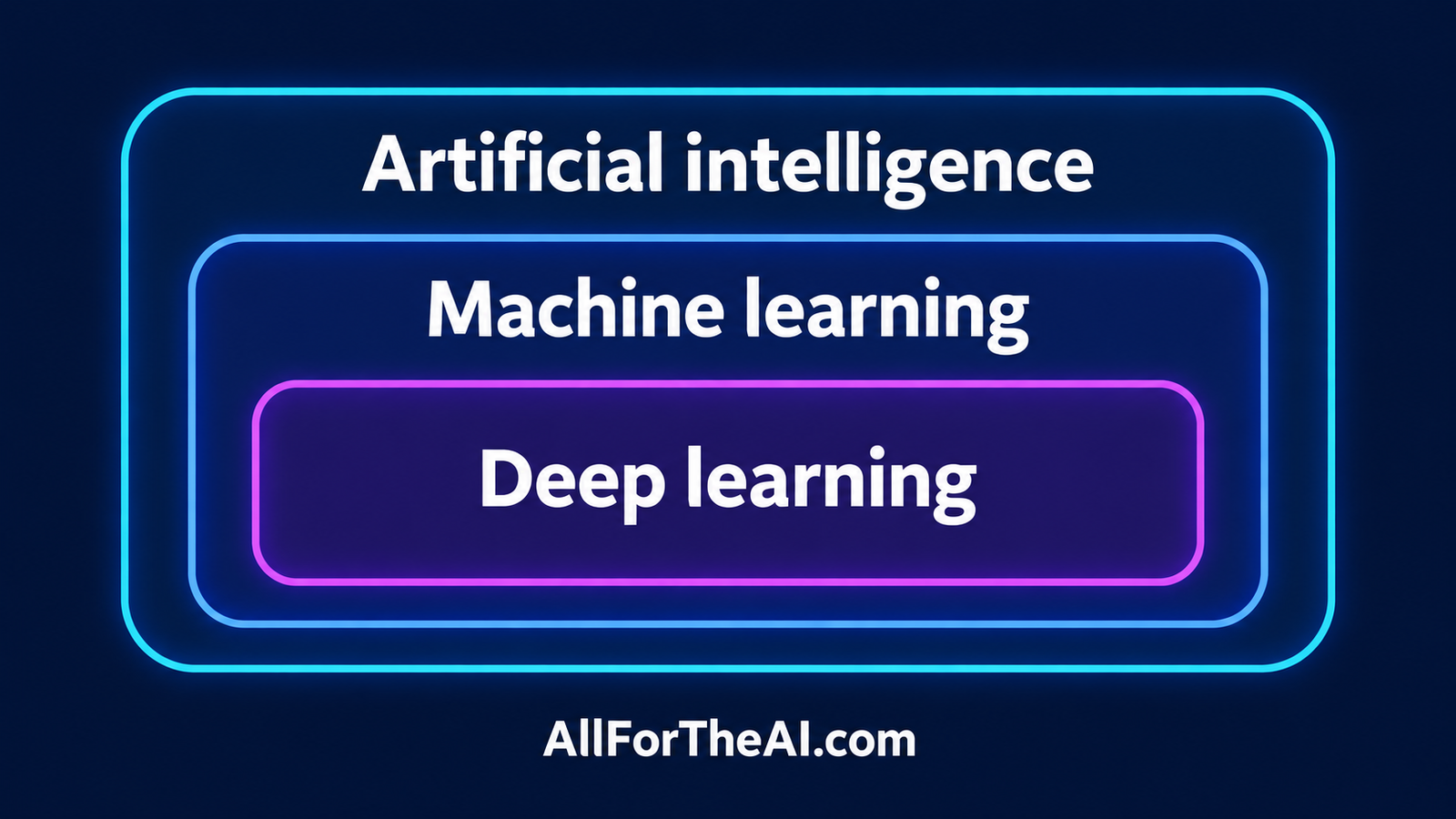
Nested boxes show deep learning inside machine learning, and machine learning inside artificial intelligence.

AI vs Machine Learning vs Deep Learning: What’s the Difference?

Artificial intelligence, machine learning, and deep learning are related, but they are not interchangeable. Artificial intelligence is the broad field. Machine learning is one major approach within AI. Deep learning is one approach within machine learning. That hierarchy matters because not every AI system learns from data, and not every machine-learning system uses deep neural

AI vs Machine Learning vs Deep Learning: What’s the Difference? Read More »
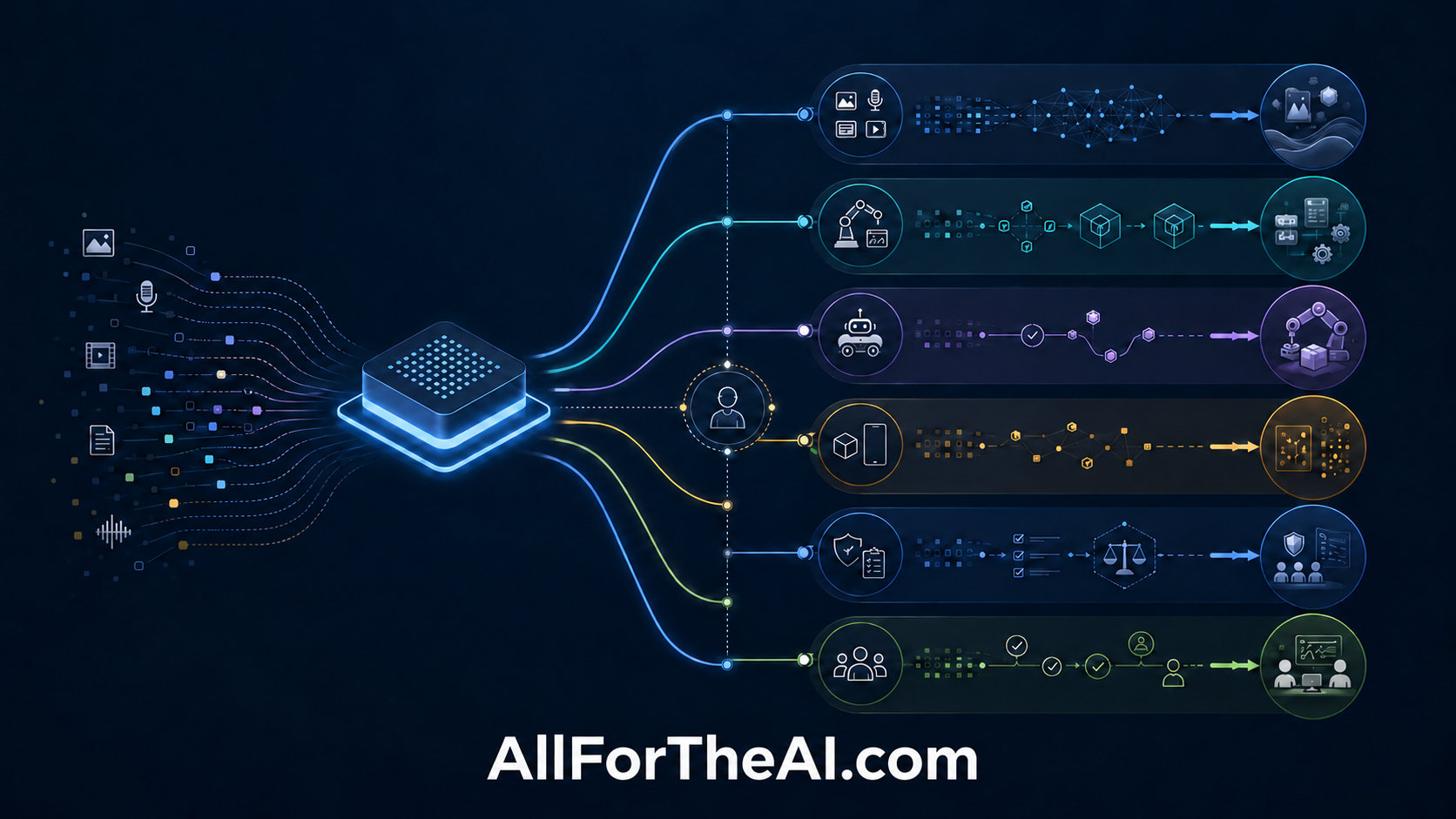
Illustration of possible AI uses with people retaining oversight.

The Future of Artificial Intelligence: Trends and Scenarios for the Next 10 Years

Last reviewed: October 22, 2026 The future of artificial intelligence is uncertain. Some developments are already visible: wider enterprise adoption, increasingly capable multimodal models, growing use of generative AI, expanding regulation, and early deployment of AI agents. Other claims about artificial general intelligence, mass job displacement, fully autonomous companies, or exact technological timelines remain forecasts

The Future of Artificial Intelligence: Trends and Scenarios for the Next 10 Years Read More »

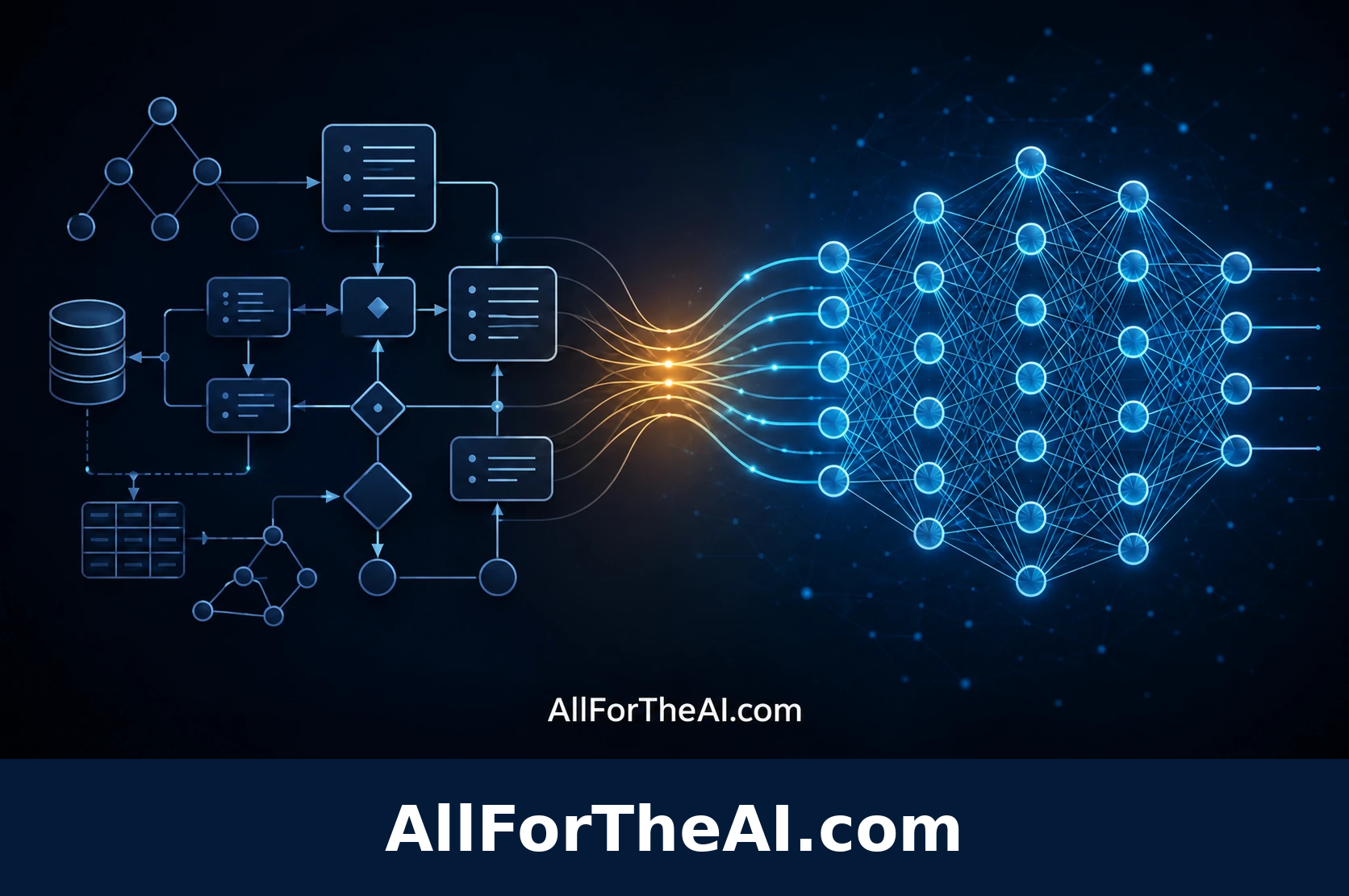
Conceptual symbolic rules and structured reasoning connected with a neural network.

Symbolic AI vs Neural Networks: What’s the Difference?

Symbolic AI and neural networks represent two major traditions in AI, rather than an exhaustive division of the field. Symbolic approaches use explicit rules, logic, symbols, and structured knowledge. Neural networks learn distributed numerical representations from data. The difference is not simply “old AI” versus “modern AI.” Both remain useful, and many practical systems combine

Symbolic AI vs Neural Networks: What’s the Difference? Read More »
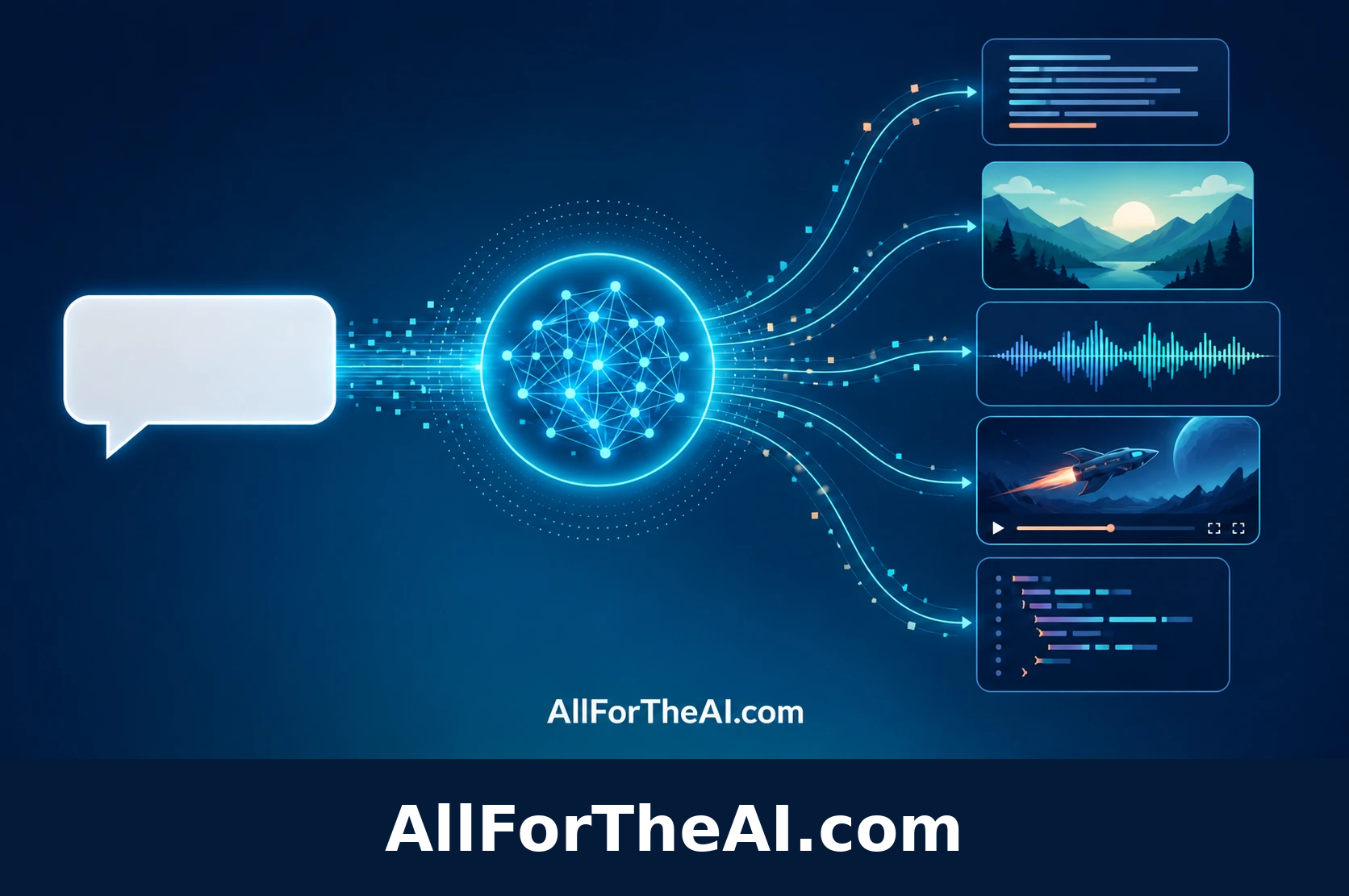
Inputs, knowledge stores, learned models and rules lead to human review.

Cognitive AI Explained: Capabilities, Limits and How It Differs From Generative AI

A conceptual illustration of combined AI functions and human review. Systems described as cognitive AI can use different combinations of these components. Cognitive AI is a broad industry and research framing for systems that combine capabilities such as perception, language processing, learning, reasoning, memory-like context handling and decision support. It is not a single standardized

Cognitive AI Explained: Capabilities, Limits and How It Differs From Generative AI Read More »

Conceptual prompt entering a generative model and producing text, images, audio, video and code.

What Is Generative AI? A Beginner’s Guide

Generative AI refers to models and systems that produce new outputs—such as text, images, audio, video, or code—from patterns learned during training. The result may be useful or novel-looking, but generation does not guarantee truth, originality, safety, or ownership. Generative AI is part of the broader field of artificial intelligence. Modern generative AI is largely

What Is Generative AI? A Beginner’s Guide Read More »

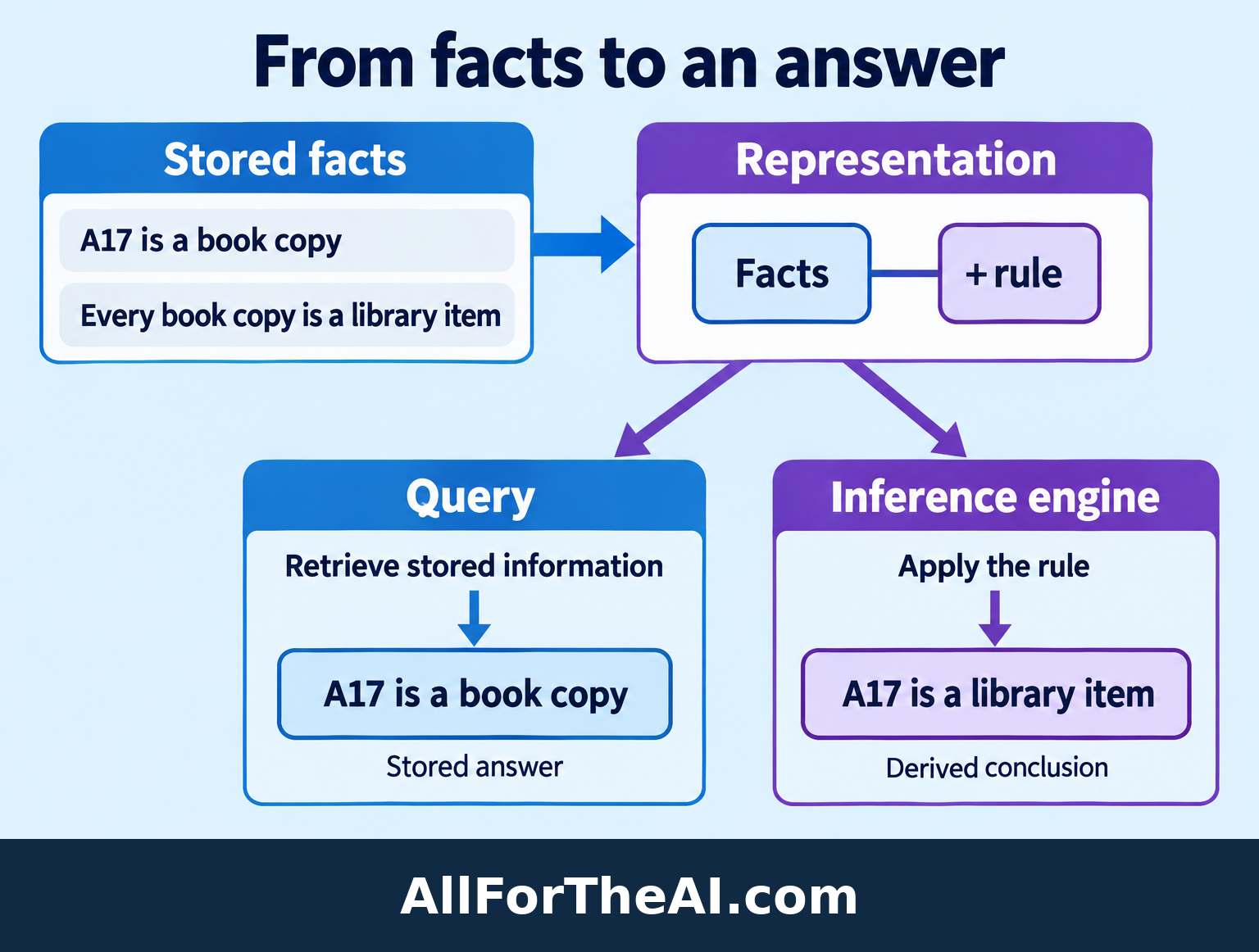
Knowledge representation in AI: stored facts and a rule allow an inference engine to identify book copy A17 as a library item.

Knowledge Representation in AI: A Beginner-Friendly Guide

Knowledge representation in AI means encoding entities, concepts, relationships, rules and constraints in forms a computer can store, query or reason over. It gives information a defined structure and meaning for a particular task. A library system, for example, might represent books, their authors, individual copies and borrowing rules. Those representations help software answer questions

Knowledge Representation in AI: A Beginner-Friendly Guide Read More »

Scroll to Top