
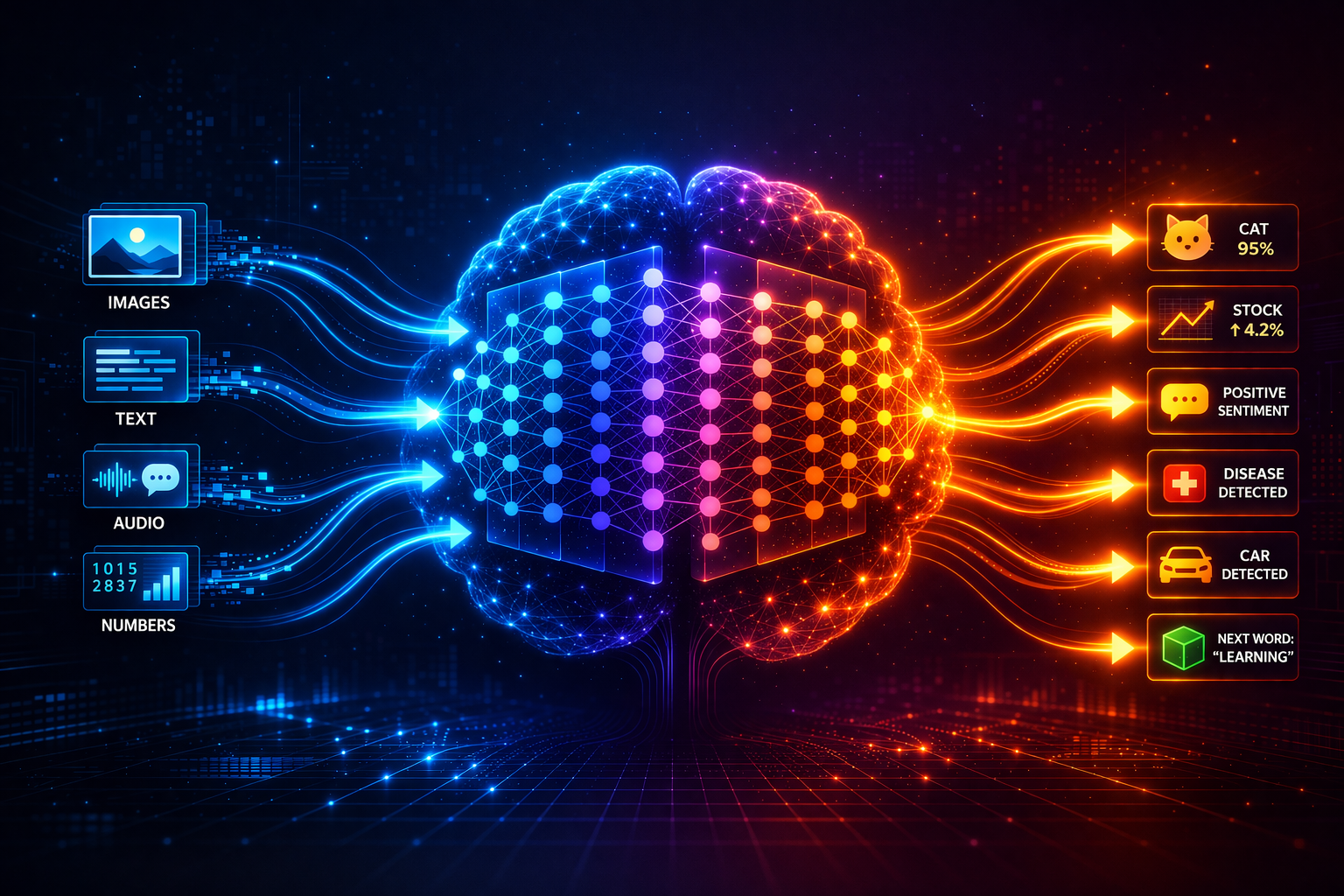
Deep learning is one of the most powerful technologies in modern artificial intelligence, powering tools like ChatGPT, self-driving cars, and voice assistants. It powers tools like ChatGPT, self-driving cars, voice assistants, and advanced image recognition systems.
But what exactly is deep learning, and how does it work?
In this beginner-friendly guide, you’ll learn what deep learning is, how it works step-by-step, and real-world examples of how it’s used today.
Deep learning is a type of machine learning that uses multi-layered neural networks to automatically learn patterns from large amounts of data. It enables computers to perform complex tasks such as image recognition, speech processing, and natural language understanding without needing manual programming
What Is Deep Learning?
Deep learning is a subset of machine learning, which you can explore in our Machine Learning Explained guide.
This itself is part of artificial intelligence, where you could start with Artificial Intelligence Explained.
In simple terms:
- Artificial Intelligence = machines that mimic human intelligence
- Machine Learning = systems that learn from data
- Deep Learning = systems that learn using layered neural networks
Unlike traditional machine learning, DL models can learn directly from raw data, making them highly effective for complex tasks like recognizing images or understanding language.
Why Is It Called “Deep” Learning?
The word “deep” refers to the many layers in a neural network.
Each layer learns something new, building from simple patterns to complex understanding.
Simple Analogy
Think of DL like learning to recognize faces:
- First, you notice basic shapes
- Then facial features
- Eventually, you recognize full identities
DL follows the same layered learning process.
When Should You Use Deep Learning?
DL is not always the best solution. It works best in specific situations.
Use DL when:
- You have large datasets
- The problem is complex (images, speech, language)
- High accuracy is required
Avoid DL when:
- You have small datasets
- You need simple, explainable models
- Speed and low cost are important
How Deep Learning Works (Step-by-Step)
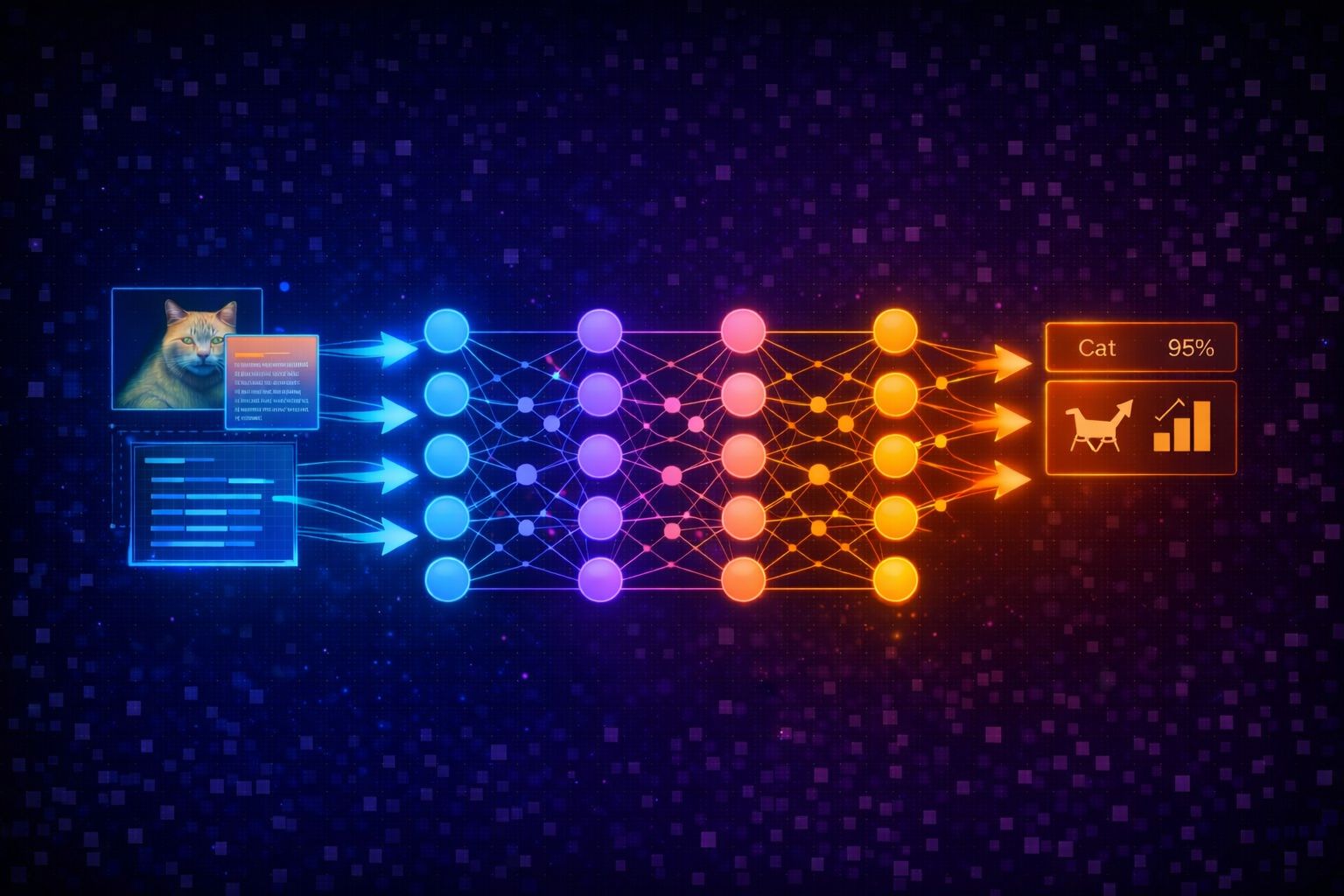
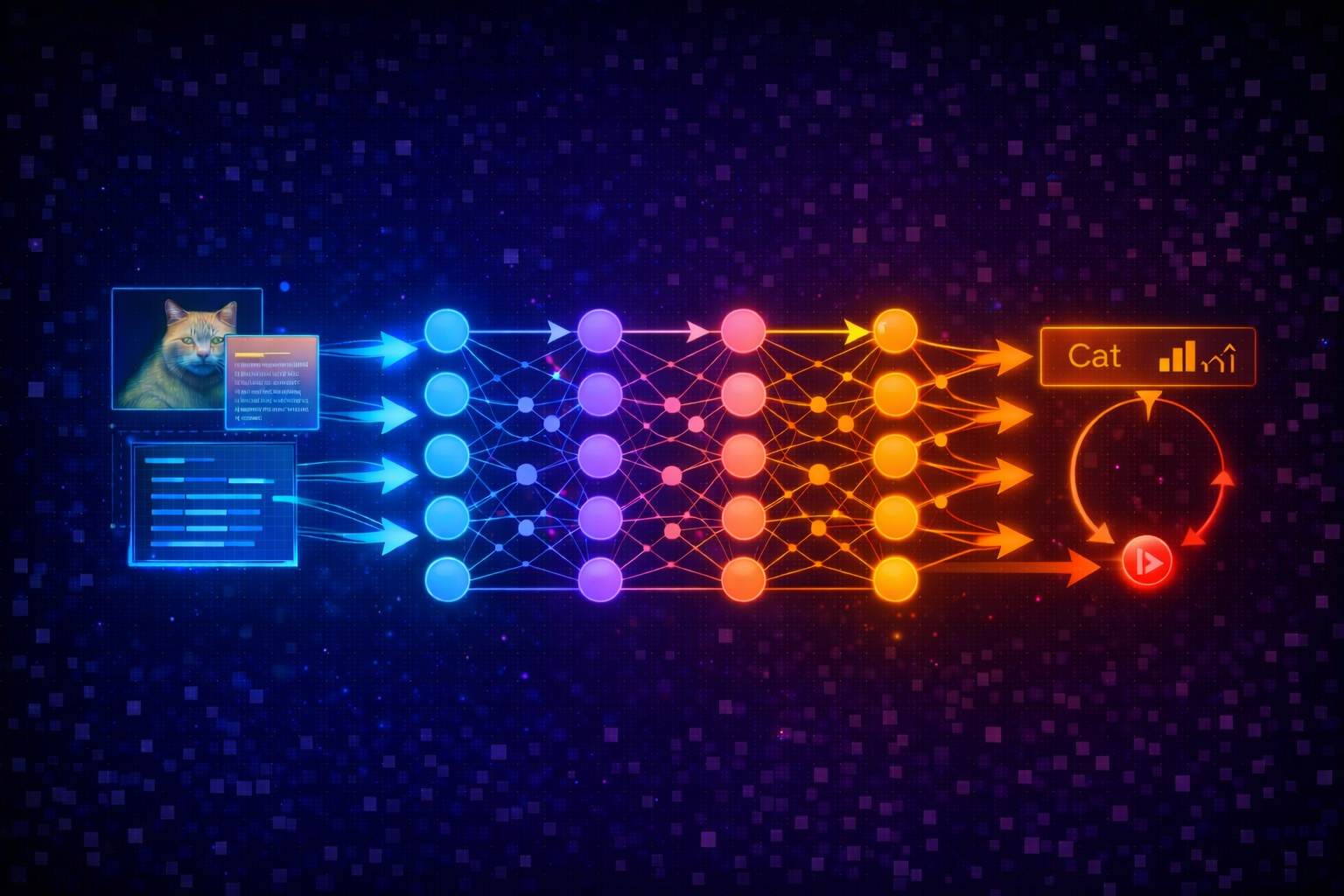
DL models are built using neural networks. You can explore more on this in Neural Networks Explained. This process has data through multiple layers.
Step 1: Input Data
The model receives raw data such as:
- Images (pixels)
- Text (words)
- Audio (sound waves)
Step 2: Layered Processing
The data moves through layers:
Input Layer
Receives raw data
Hidden Layers
Extract patterns and features
Output Layer
Produces a final prediction
Example: Image Recognition
| Layer | What It Detects |
| Layer 1 | Edges |
| Layer 2 | Shapes |
| Layer 3 | Objects |
| Layer 4+ | Full scenes |
Step 3: Prediction
The model makes an initial prediction.
Step 4: Error Calculation
The prediction is compared to the correct answer.
Step 5: Learning (Backpropagation)
The model adjusts its internal parameters to improve accuracy.
Key Concepts Beginners Must Understand
Neural Networks
The core technology behind deep learning.
Training Data
DL requires large datasets to learn effectively.
Parameters (Weights)
Values that are adjusted during training.
Activation Functions
Help the model learn complex patterns.
Overfitting vs Generalization
- Overfitting = memorizing data
- Generalization = learning patterns
Types of Deep Learning Models
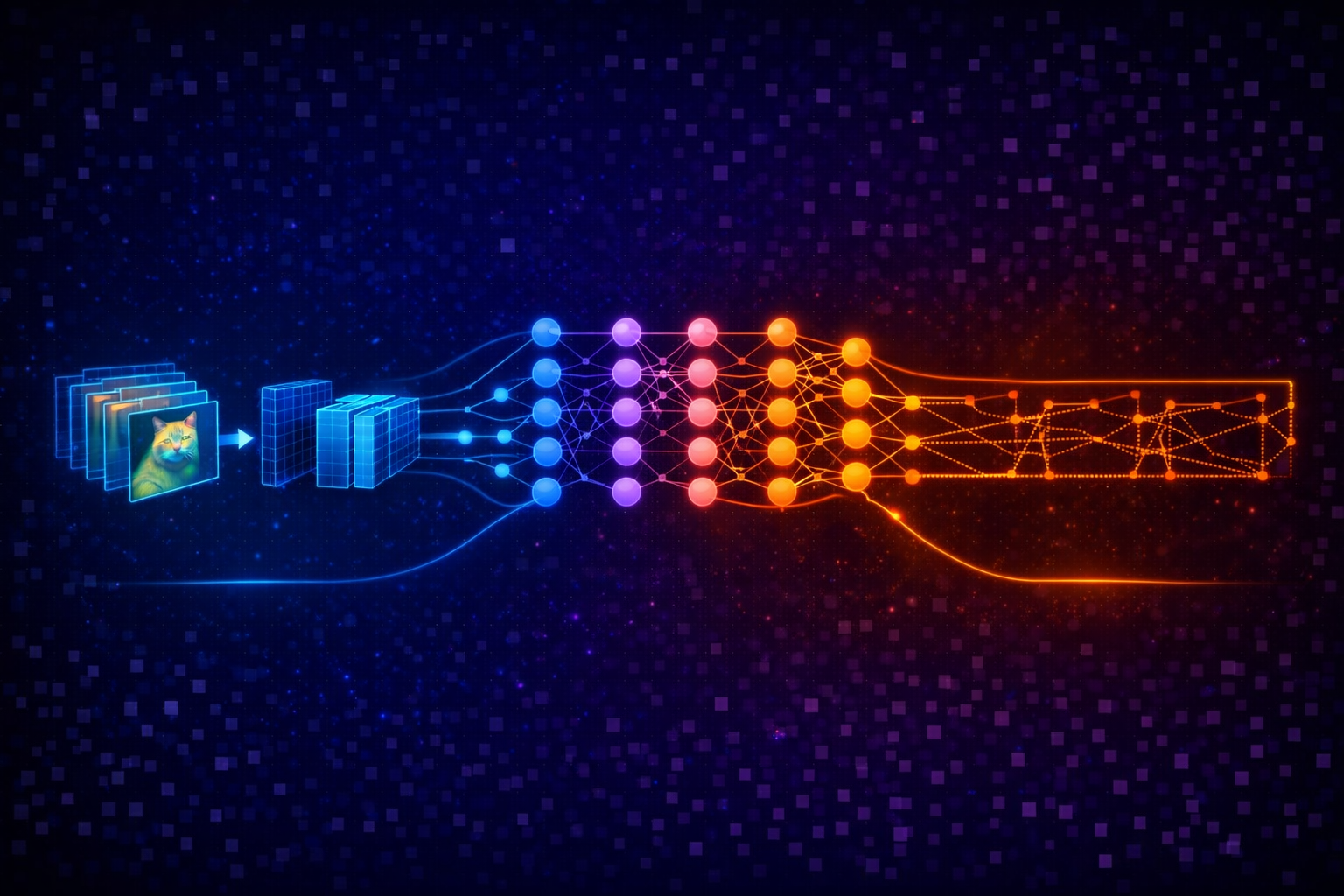
Convolutional Neural Networks (CNNs)
Used for image processing.
Recurrent Neural Networks (RNNs)
Used for sequential data.
Transformers
Used in modern AI systems like ChatGPT.
Deep Learning vs AI vs Machine Learning
| Concept | Description |
| Artificial Intelligence | Broad field of intelligent systems |
| Machine Learning | Systems that learn from data |
| Deep Learning | Neural networks with many layers |
Deep Learning vs Machine Learning
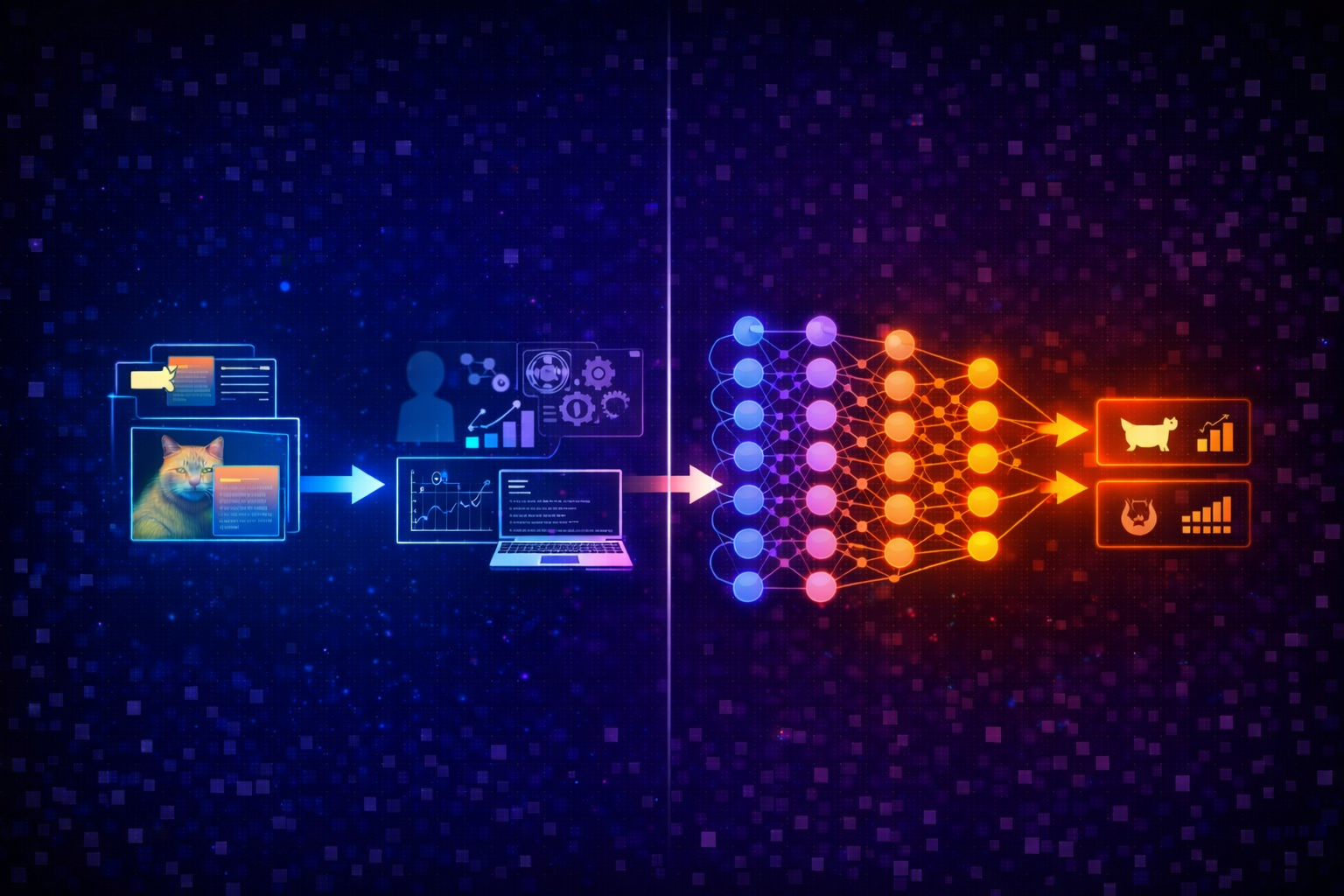
| Feature | Machine Learning | Deep Learning |
| Feature engineering | Manual | Automatic |
| Data requirements | Moderate | Very large |
| Performance | Good | Very high |
| Complexity | Lower | High |
For deeper understanding, explore:
Real-World Applications of Deep Learning
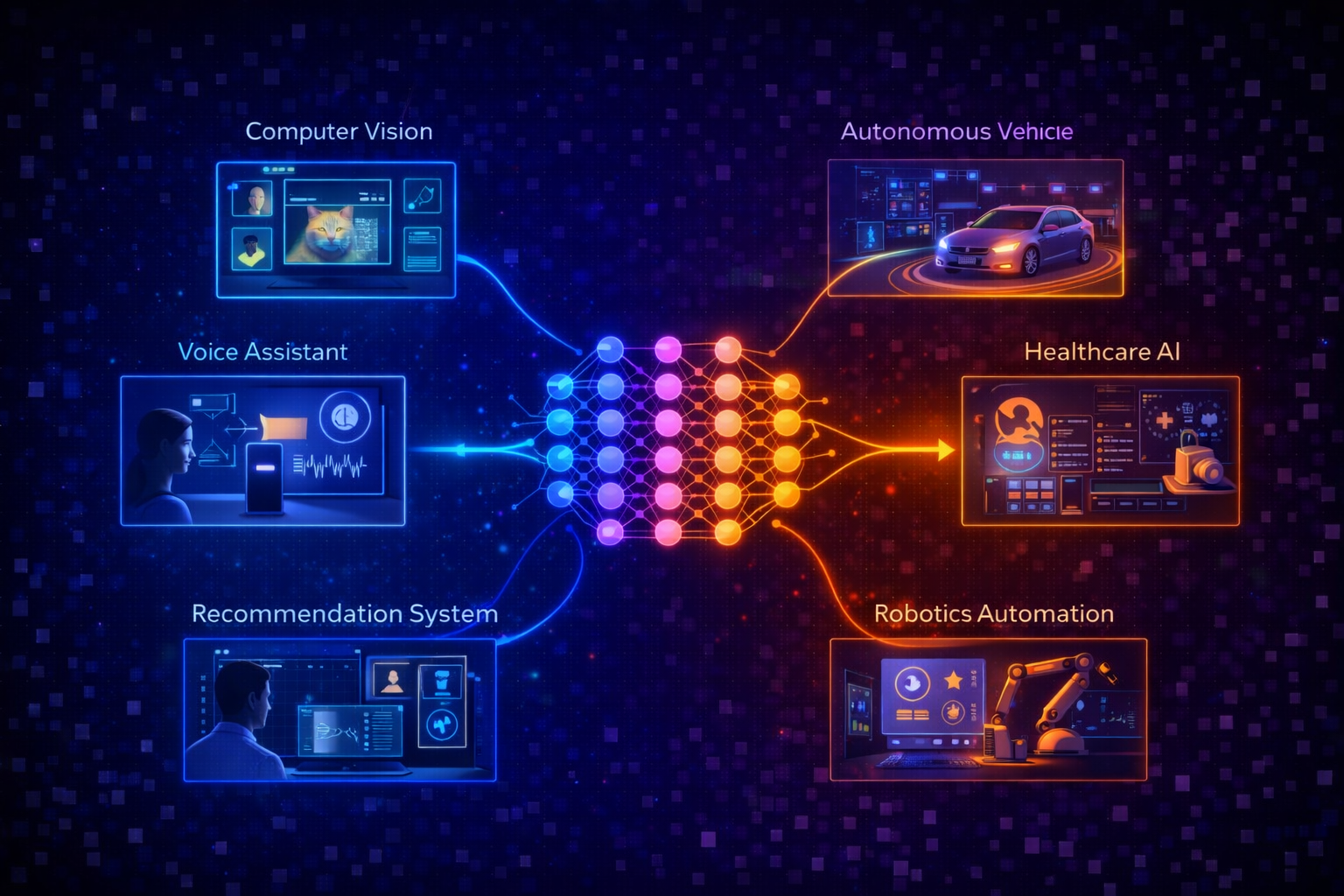
Image Recognition
Used in:
- Facial recognition
- Medical imaging
- Security systems
Natural Language Processing
Used in:
- ChatGPT
- Translation tools
- AI chatbots
Voice Assistants
Power systems like:
- Siri
- Alexa
- Google Assistant
Self-Driving Cars
Used to:
- Detect objects
- Understand road conditions
- Navigate safely
Healthcare
Used for:
- Disease detection
- Drug discovery
- Predictive diagnostics
Advantages of Deep Learning
Automatic Feature Learning
No manual feature design needed.
High Accuracy
Performs extremely well in complex tasks.
Scalability
Improves with more data and computing power.
Limitations of Deep Learning
Large Data Requirements
Needs large datasets.
High Computational Cost
Requires GPUs or specialized hardware.
Black Box Problem
Hard to interpret how decisions are made.
Bias Risk
Can learn bias from training data.
Future of Deep Learning
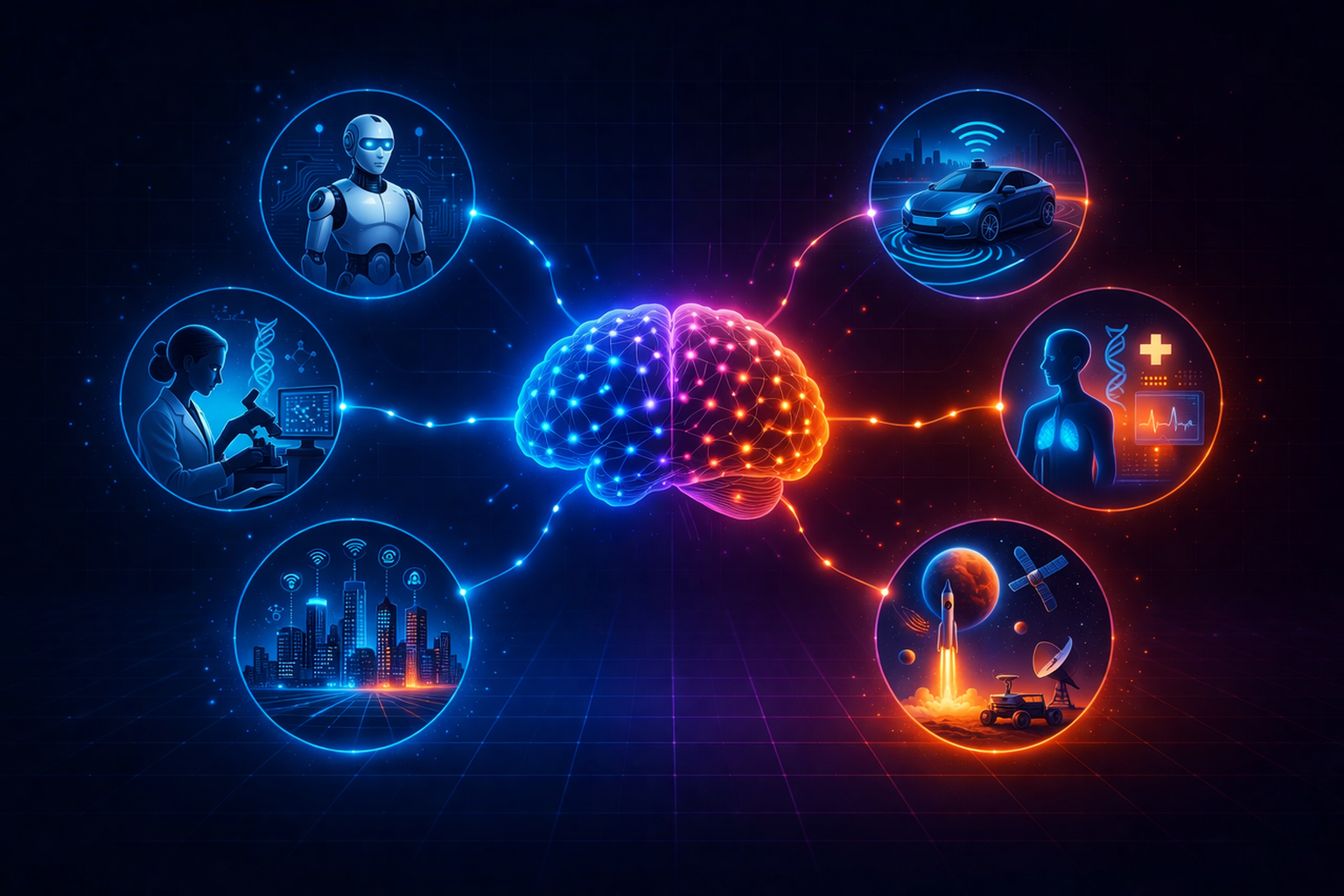
Larger Models
AI models are becoming more powerful.
Multimodal AI
Combining text, images, and audio.
AI Agents
Systems capable of autonomous actions.
Edge AI
Running AI on devices like smartphones.
External Resources
Learn more from trusted sources:
Key Takeaways
- Deep learning is a subset of machine learning
- It uses neural networks with many layers
- It automatically learns patterns from data
- It excels in image, speech, and language tasks
- It requires large datasets and computing power
Frequently Asked Questions (FAQ)
What is deep learning in simple terms?
Deep learning is a way for computers to learn patterns from data using neural networks.
Is deep learning part of AI?
Yes, it is a subset of machine learning within artificial intelligence.
What is a neural network?
A system of connected nodes that processes data.
Why is deep learning important?
It powers modern AI technologies.
Is deep learning better than machine learning?
It depends on the problem and dataset size.
What industries use deep learning?
Healthcare, finance, transportation, and technology.
How does deep learning learn?
By adjusting internal parameters based on errors.
Can deep learning work with small data?
Usually not — it performs best with large datasets.
What are examples of deep learning?
Examples include image recognition, voice assistants, recommendation systems, and AI chatbots like ChatGPT.
Conclusion
DL is transforming how machines understand and interact with the world. From recognizing images to powering AI assistants, it is at the core of modern artificial intelligence.
This article is part of the structured learning system at AllForTheAI.com, designed to help you build AI knowledge step-by-step and connect concepts across topics.