Model Evaluation & Optimization

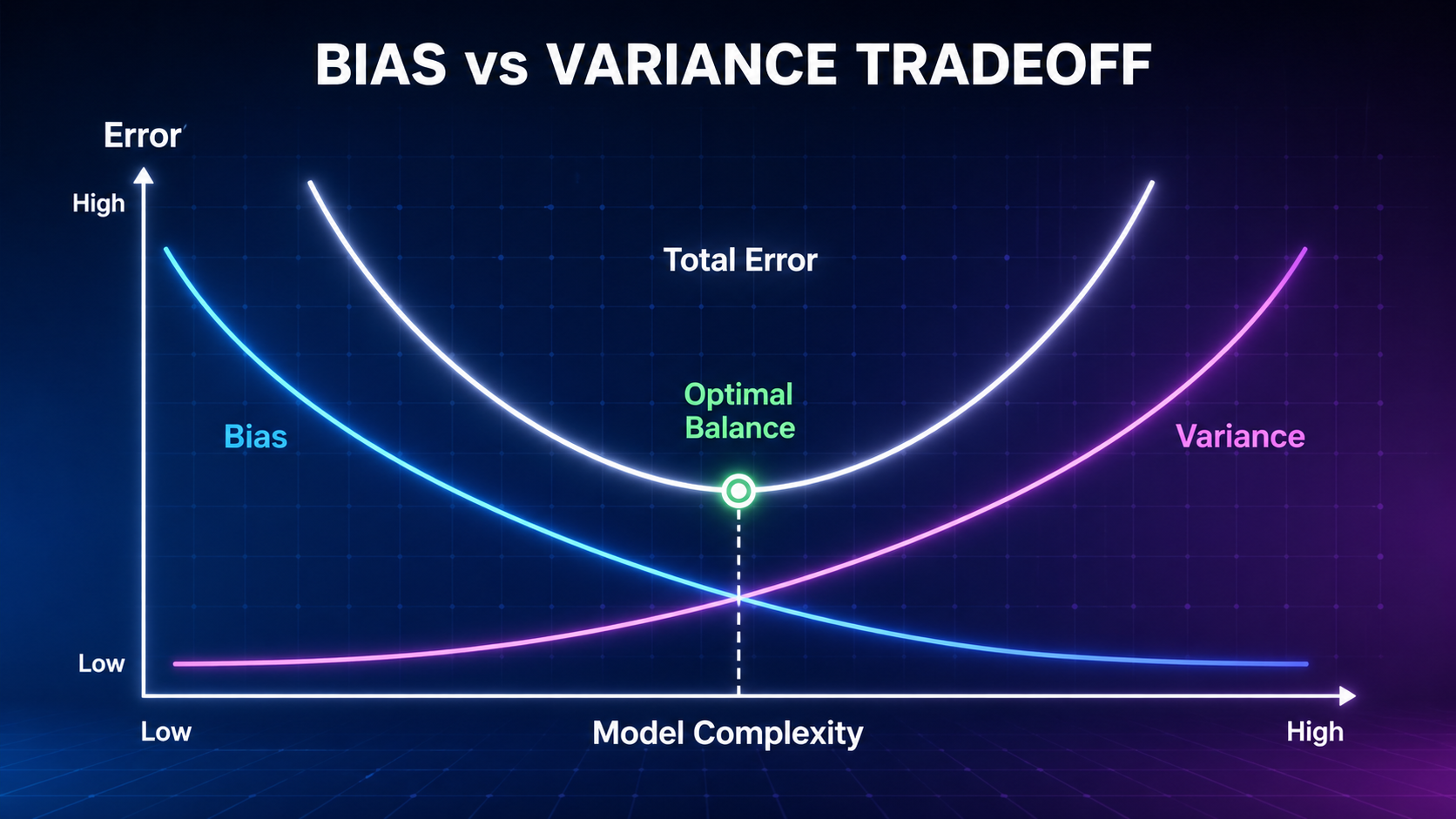
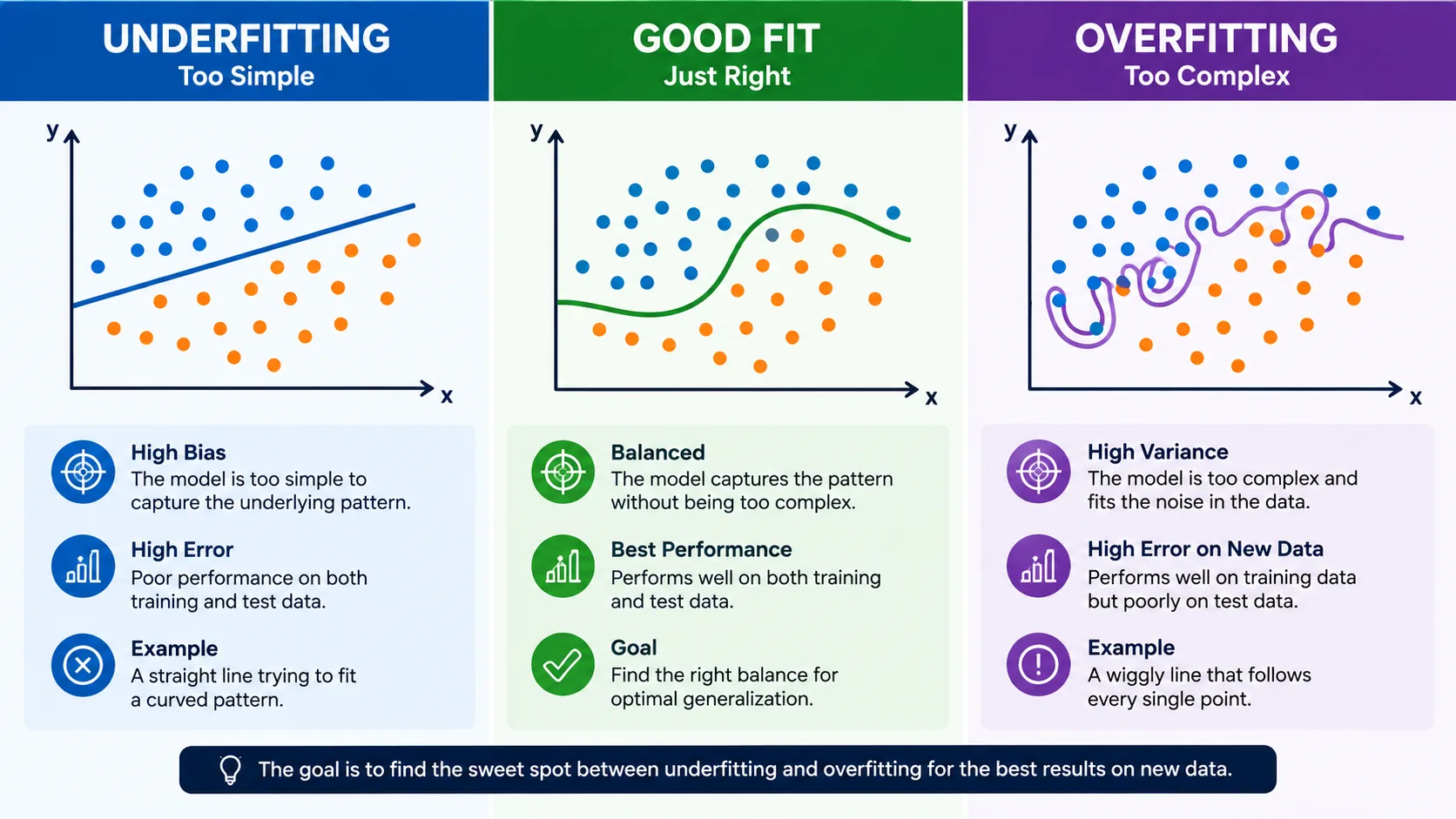
Visual comparison of underfitting, overfitting, and ideal model fit in machine learning

Overfitting vs Underfitting (Beginner-Friendly Guide)

Introduction to Overfitting vs Underfitting Overfitting vs Underfitting refers to two common problems in machine learning where a model either learns too much from training data (overfitting) or too little (underfitting). Overfitting leads to poor performance on new data, while underfitting results in inaccurate predictions even on training data. Overfitting and underfitting are important concepts

Overfitting vs Underfitting (Beginner-Friendly Guide) Read More »

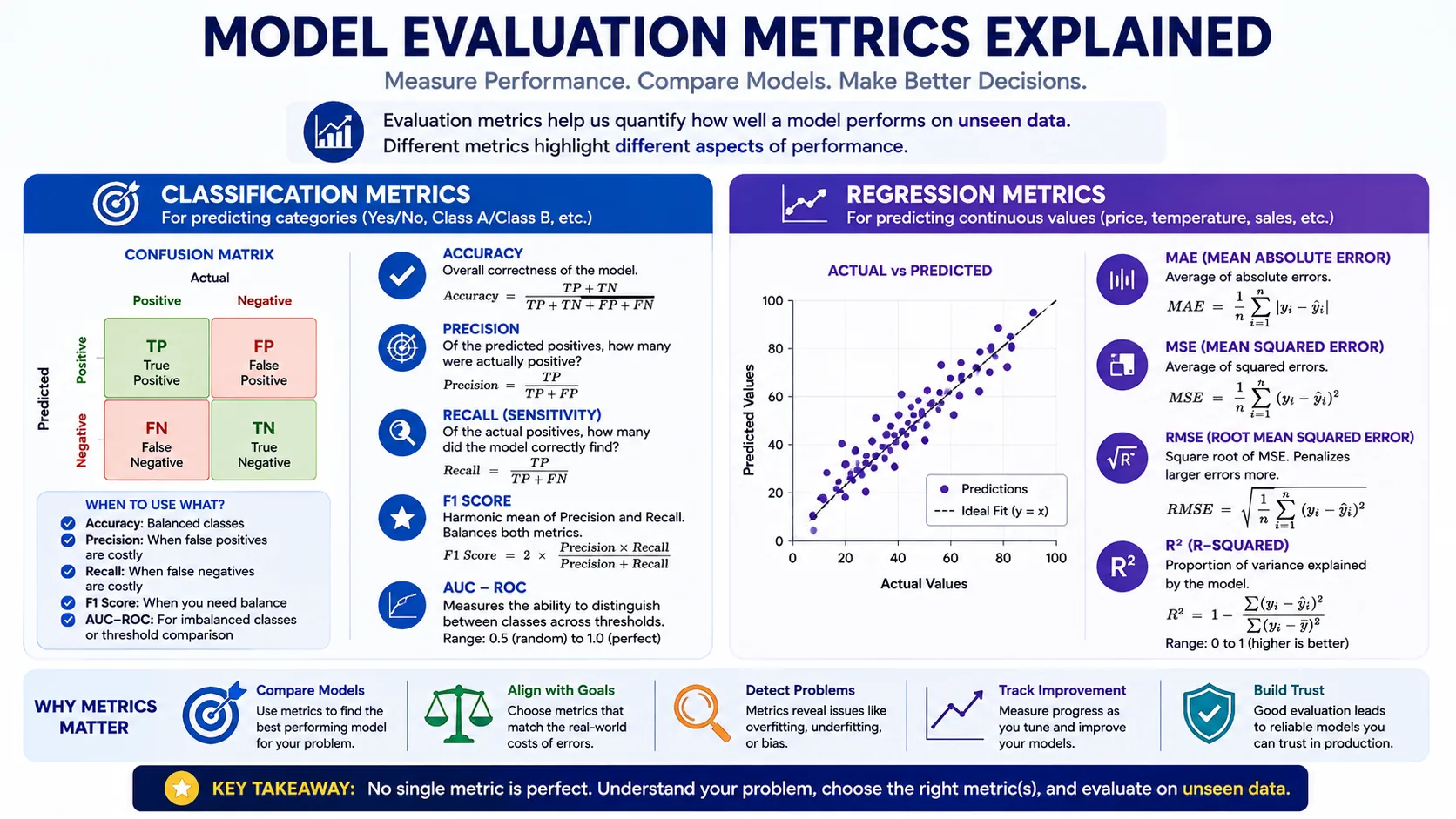
Overview diagram of model evaluation metrics including accuracy, precision, recall, F1 score, and ROC curve

Model Evaluation Metrics Explained (Beginner-Friendly Guide)

Introduction: Why Model Evaluation Matters Imagine building an AI model that claims 95% accuracy… but still fails when it matters most. For example: This is why model evaluation metrics are essential. They help you go beyond simple accuracy and truly understand: What Are Model Evaluation Metrics? Model evaluation metrics are essential in machine learning and

Model Evaluation Metrics Explained (Beginner-Friendly Guide) Read More »

Illustration comparing accuracy vs precision vs recall using target board examples

Accuracy vs Precision vs Recall (Complete Beginner-Friendly Guide)

Introduction Here’s something that surprises most beginners: 👉 A model can be 95% accurate—and still be completely useless. Why? Because accuracy alone doesn’t tell the full story. That’s why understanding accuracy vs precision vs recall is critical in machine learning. These metrics are widely used in: In this guide, you’ll learn: What Is Accuracy vs

Accuracy vs Precision vs Recall (Complete Beginner-Friendly Guide) Read More »

Confusion matrix explained overview showing true positives, true negatives, false positives, and false negatives

Confusion Matrix Explained (Beginner-Friendly Guide)

Introduction: Why Accuracy Isn’t Enough Imagine a medical AI that claims to be 95% accurate at detecting a disease. Sounds impressive… right? But what if that same model misses most of the actual disease cases? Suddenly, that “95% accuracy” doesn’t feel so reliable. This is exactly why we need tools like the confusion matrix. Instead

Confusion Matrix Explained (Beginner-Friendly Guide) Read More »

Scroll to Top