
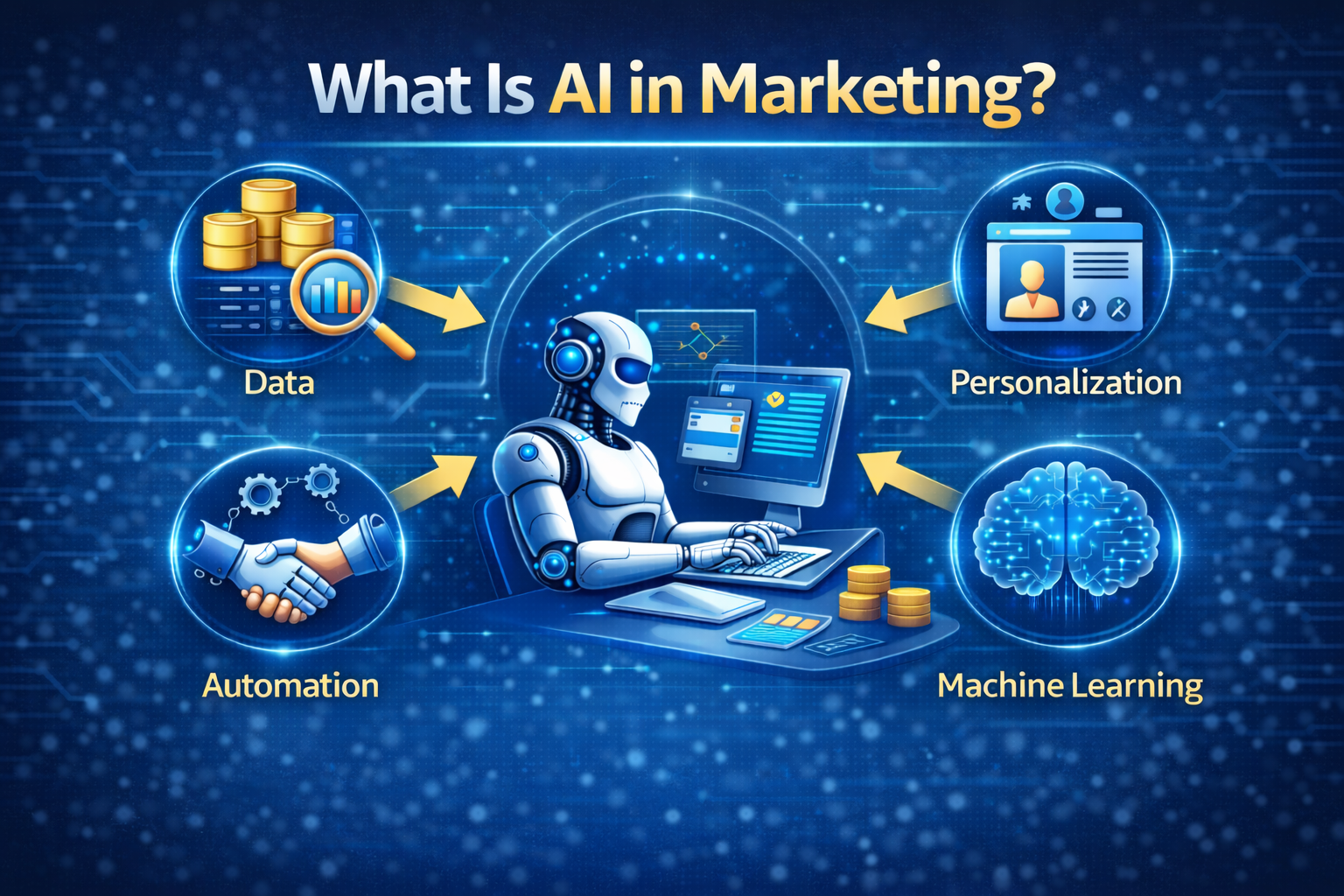
Artificial intelligence is reshaping marketing — not by replacing marketers, but by helping them work smarter, faster, and more strategically.
From personalized recommendations to automated ad targeting and content creation, AI is now deeply embedded in how companies attract, engage, and retain customers. What once required large teams and manual analysis can now be handled with intelligent systems that learn from data.
In this beginner-friendly guide, you’ll learn:
- what AI in marketing actually means
- how companies use AI for marketing today
- real-world AI marketing examples
- the benefits and risks of AI-driven marketing
- whether AI will replace marketers
- how beginners and small businesses can get started
No marketing or technical background required.
What Is AI in Marketing?
AI in marketing refers to the use of artificial intelligence systems to analyze customer data, automate marketing tasks, personalize experiences, and support better decision-making.
Instead of relying only on intuition or manual analysis, marketers use AI to:
- identify patterns in customer behavior
- predict outcomes
- optimize campaigns
- personalize messaging at scale
Most businesses do not build AI models themselves. Instead, they use AI-powered tools built into marketing software platforms.
If you’re new to AI overall, it helps to start with the basics in
👉 What Is Artificial Intelligence?
Why Marketers Are Adopting AI So Quickly
AI adoption in marketing has accelerated because of one core reason: data.
Modern marketing generates massive amounts of data from:
- websites
- social media
- ads
- email campaigns
- customer interactions
AI systems can process this data faster and more accurately than humans, making them ideal for marketing environments that change quickly.
Marketers use AI to:
- save time
- reduce costs
- improve targeting
- increase conversion rates
- scale personalization
How AI Is Used in Marketing Today
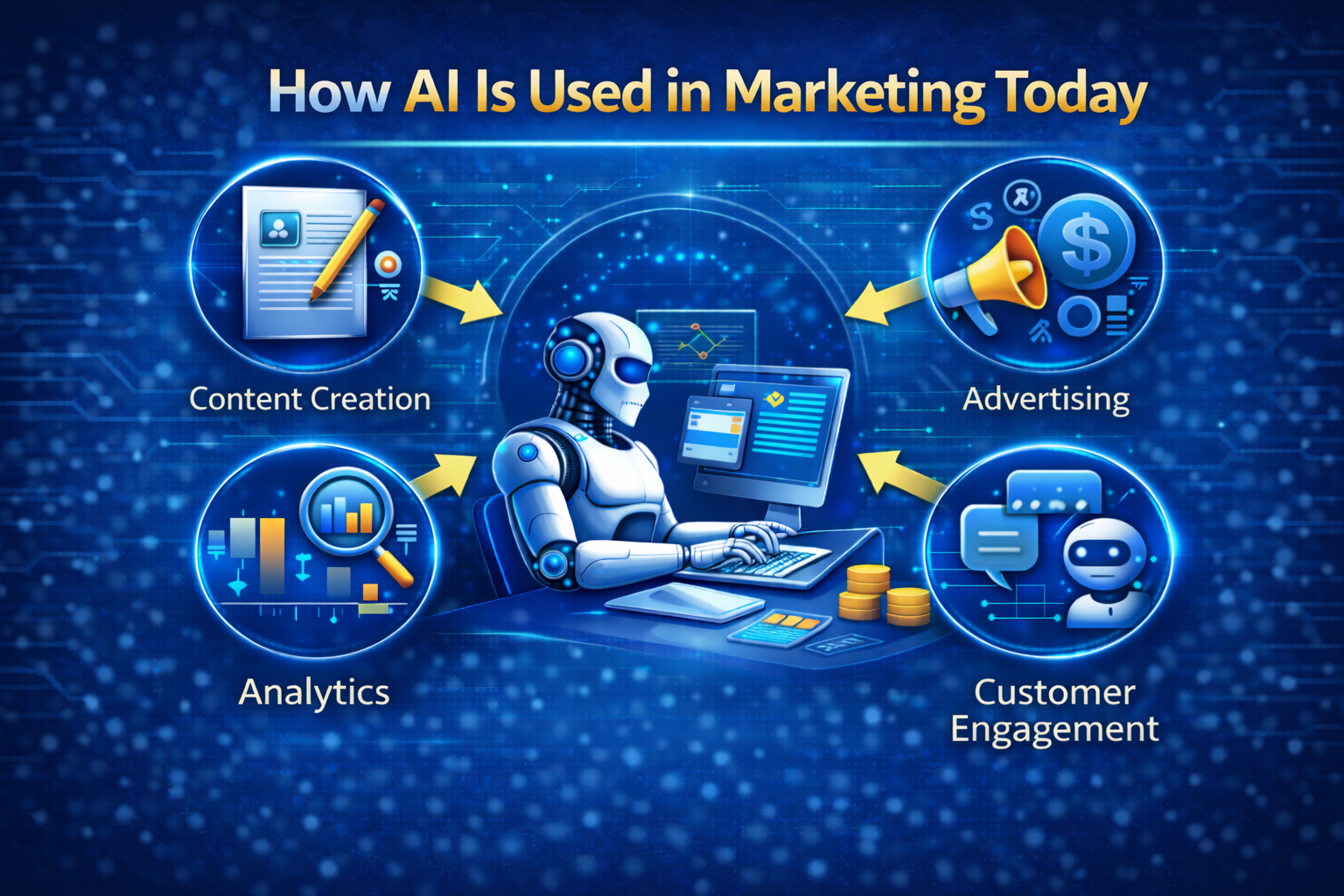
AI is already embedded across nearly every part of modern marketing.
AI for Personalization & Customer Experience
Personalization is one of the strongest uses of AI in marketing.
AI helps marketers:
- recommend products or content
- personalize emails and websites
- tailor offers to individual users
- predict customer preferences
This allows brands to deliver relevant messages at the right time, instead of generic campaigns.
AI for Content Creation & Optimization
AI tools now assist with creating and optimizing marketing content.
Common uses include:
- generating ad copy and headlines
- drafting blog outlines
- suggesting social media captions
- optimizing content for SEO
Many of these tools rely on generative models, explained in
AI doesn’t replace creativity — it accelerates it.
AI for Advertising & Campaign Optimization
AI plays a major role in digital advertising.
Use cases include:
- audience targeting
- bid optimization
- A/B testing
- performance prediction
AI systems analyze campaign data in real time and adjust strategies automatically to improve results.
These capabilities are powered by machine learning. Learn how that works in
AI for Customer Insights & Analytics
Understanding customers is central to marketing.
AI helps by:
- identifying behavior patterns
- segmenting audiences
- predicting churn
- measuring campaign effectiveness
Instead of relying only on dashboards, marketers use AI-generated insights to guide decisions.
Real-World Examples of AI in Marketing
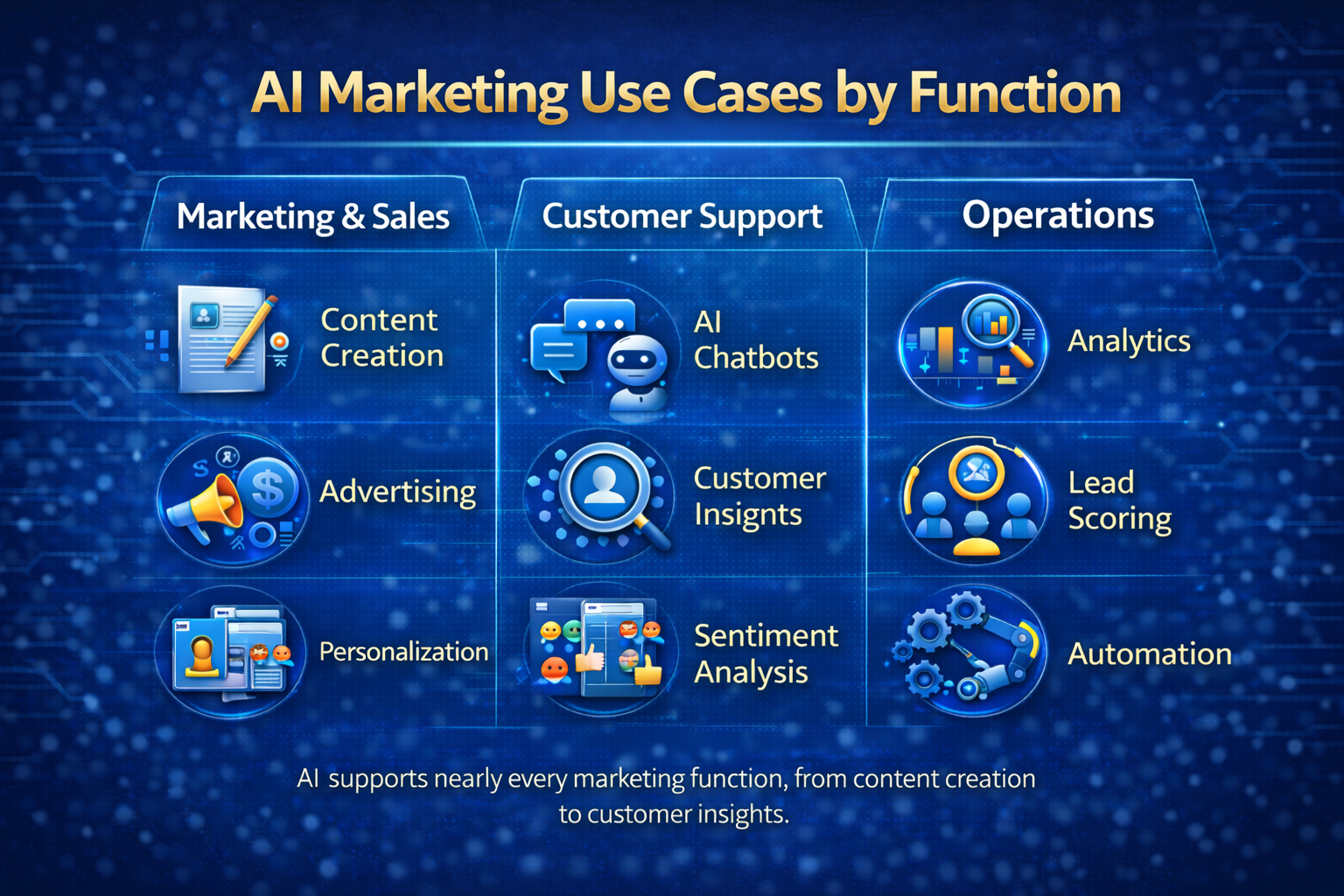
AI marketing is already widespread across industries.
Examples include:
- e-commerce recommendations
- personalized email campaigns
- AI-powered chatbots for lead capture
- social media ad optimization
- customer sentiment analysis
These systems scale marketing efforts while keeping humans in control.
Benefits of AI in Marketing
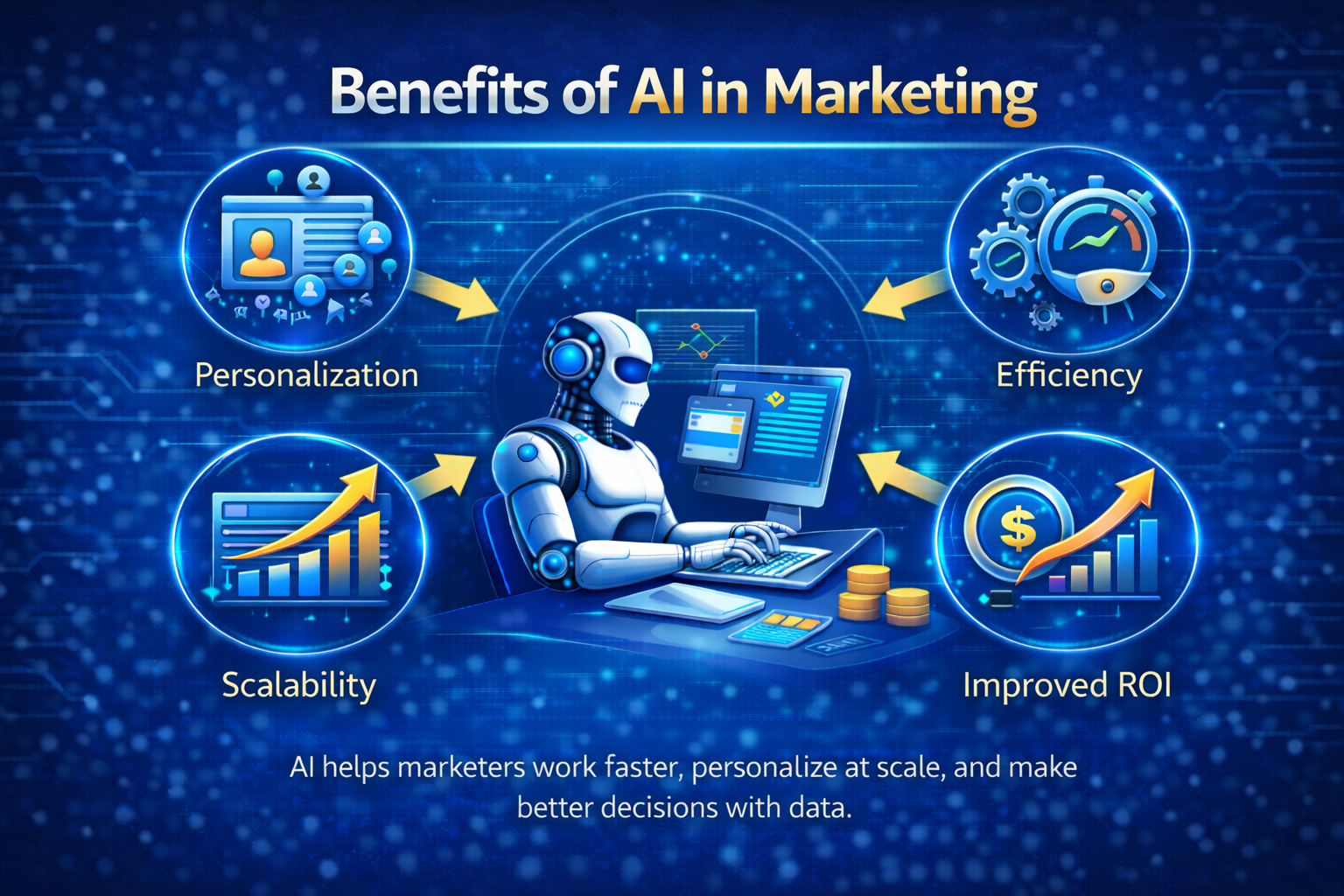
When used responsibly, AI offers powerful advantages.
Better Personalization
AI enables one-to-one marketing at scale, improving relevance and engagement.
Increased Efficiency
Automation reduces manual work, freeing marketers to focus on strategy.
Improved Decision-Making
AI analyzes large datasets to uncover insights humans might miss.
Higher ROI
Optimized targeting and personalization often lead to better campaign performance.
Scalability
AI allows marketing teams to grow impact without growing headcount at the same pace.
Risks & Challenges of AI in Marketing
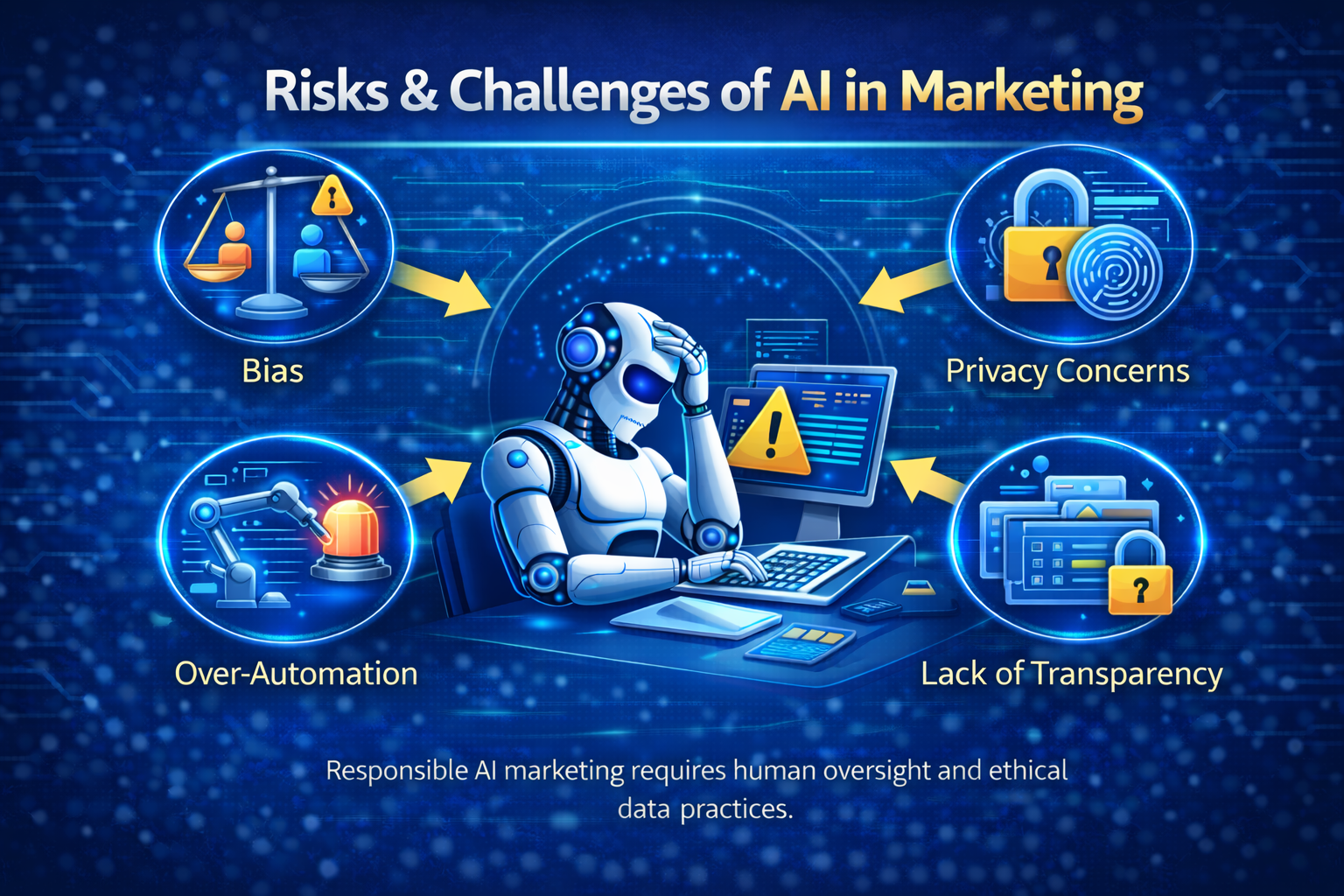
AI marketing also comes with important challenges.
Data Privacy & Compliance
Marketers must protect customer data and comply with privacy regulations.
Bias & Data Quality
AI systems reflect the data they’re trained on. Poor data leads to poor outcomes.
Over-Automation
Too much automation can harm brand authenticity and trust.
Explainability & Transparency
Some AI decisions are hard to explain, which can reduce trust.
This challenge is explored in
👉 Symbolic AI vs Neural Networks
Will AI Replace Marketers?
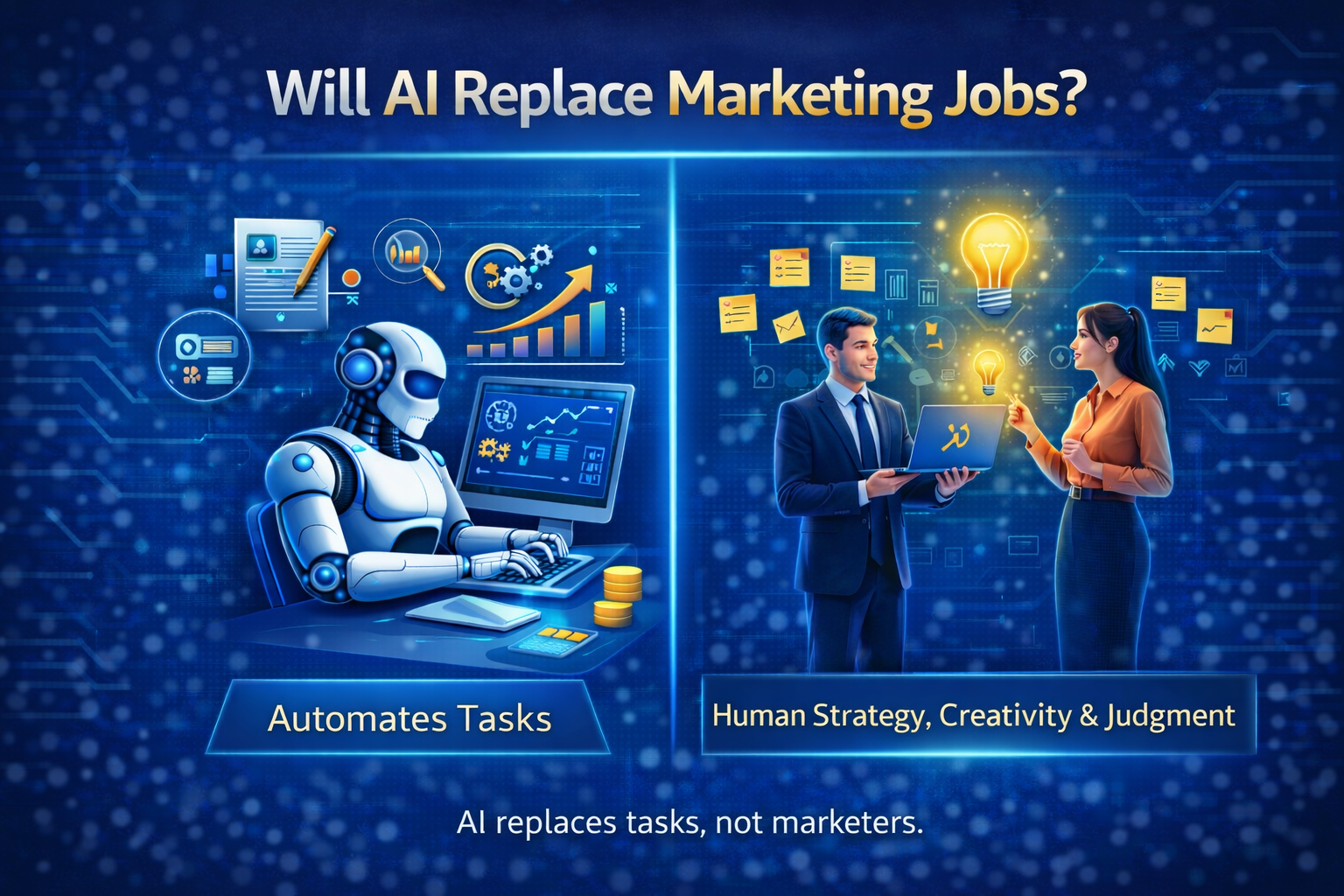
No.
AI replaces tasks, not creativity, strategy, or human understanding.
The most valuable marketers are those who know how to:
- use AI tools
- interpret AI insights
- apply human judgment
AI augments marketing — it doesn’t replace it.
How Small Businesses Can Use AI in Marketing
AI is no longer limited to large enterprises.
Small businesses can:
- use AI-powered email tools
- automate ads and targeting
- leverage AI chatbots
- analyze customer behavior with built-in analytics
For small teams, AI acts as a force multiplier.
The Future of AI in Marketing
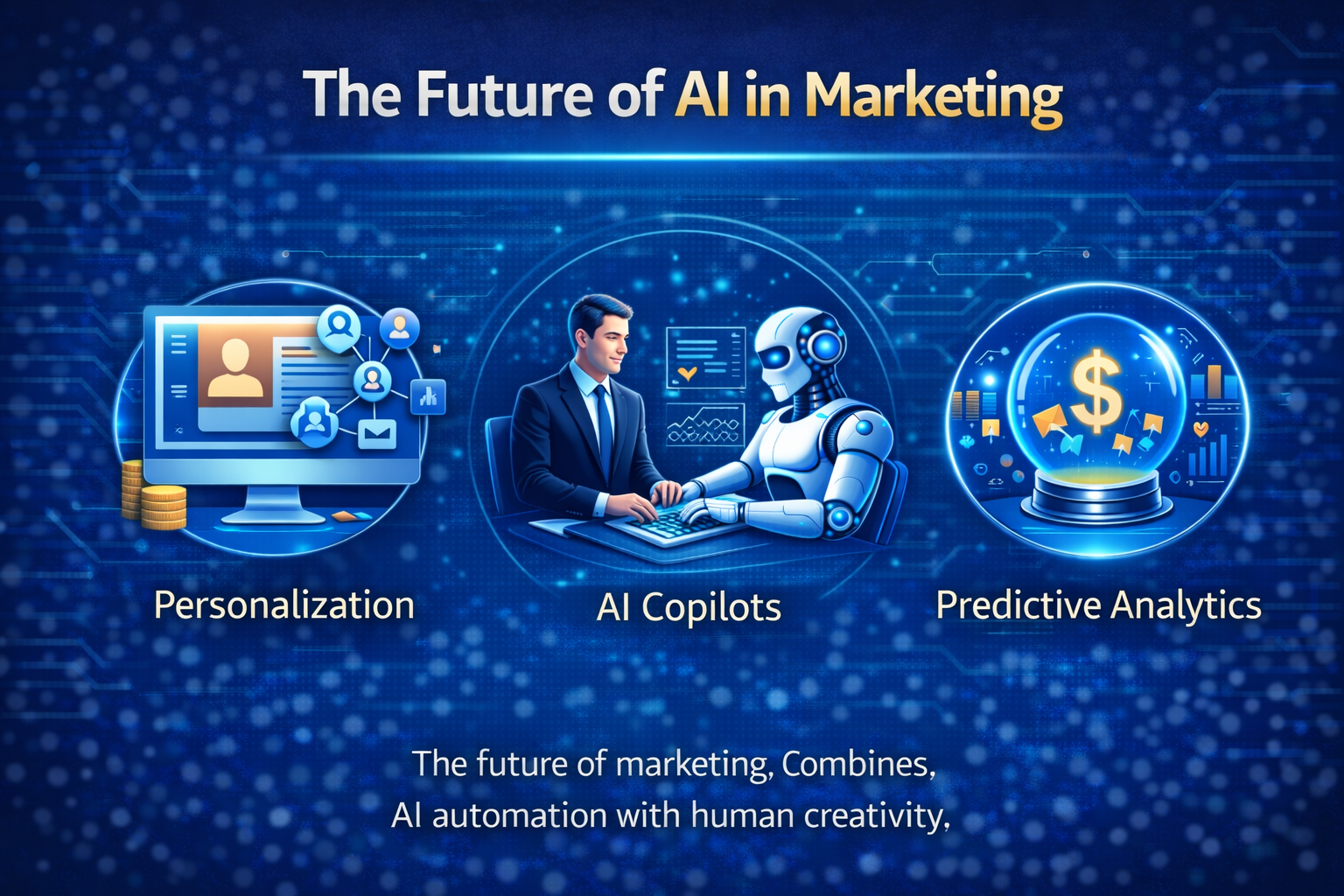
Looking ahead, AI in marketing will continue to evolve toward:
- hyper-personalization
- real-time optimization
- AI copilots for marketers
- hybrid systems combining learning and reasoning
These trends align with broader developments discussed in
👉 The Future of AI: Predictions for the Next 10 Years
How Beginners Should Think About AI in Marketing
If you’re new to AI:
- focus on understanding marketing fundamentals
- learn how AI supports decisions
- start small and experiment
- stay aware of ethics and limitations
Strong foundations matter more than tools.
Frequently Asked Questions About AI in Marketing
What is AI in marketing?
AI in marketing refers to systems that analyze data, personalize content, automate tasks, and optimize campaigns.
Is AI expensive for marketers?
Many AI tools are affordable and built into existing marketing platforms.
Can AI create marketing content?
Yes, but humans should guide, edit, and approve outputs.
Will AI replace marketing jobs?
No. AI replaces tasks, not strategic or creative roles.
Is AI marketing ethical?
It can be, when used transparently and responsibly.
Continue Learning — Build Your AI Foundation
To deepen your understanding:
- What Is Artificial Intelligence?
- Machine Learning Explained
- Deep Learning 101
- NLP Explained
- What Is Generative AI?
- The Future of AI
Conclusion
AI in marketing is transforming how brands connect with customers — not by removing humans, but by empowering them.
Marketers who understand AI, use it responsibly, and combine it with creativity and strategy will be best positioned for long-term success.
Understanding what AI can — and cannot — do is the key to using it effectively in modern marketing.