
Artificial intelligence is no longer a futuristic concept reserved for tech giants. Today, AI is actively transforming businesses of all sizes — from small startups to global enterprises.
Companies use AI to automate tasks, analyze data, improve customer experiences, and make smarter decisions faster than ever before. Importantly, AI in business is not about replacing humans — it’s about helping people work more efficiently and strategically.
AI in business refers to the practical use of artificial intelligence to improve operations, decision-making, customer experiences, and efficiency across organizations.
In this beginner-friendly guide, you’ll learn:
- what AI in business actually means
- how companies are using AI today
- real-world business examples
- the benefits and risks of business AI
- whether AI will replace jobs
- and how beginners and small businesses can get started
This guide is designed for beginners, business owners, professionals, and students who want a practical understanding of how AI is used in real businesses today.
No technical or business background required.
What Is AI in Business?
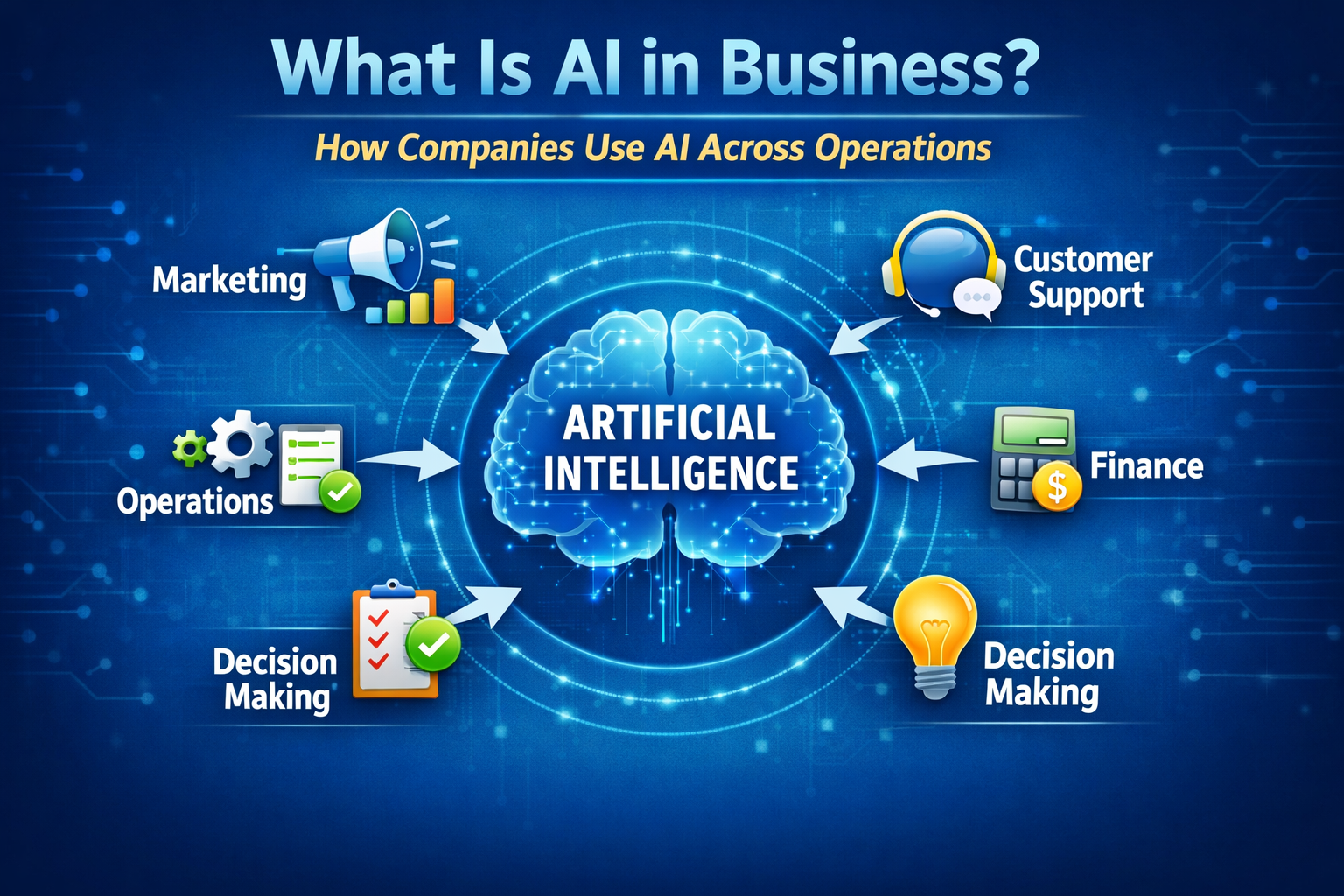
AI in business refers to the use of artificial intelligence systems to support, automate, or enhance business processes such as marketing, customer support, operations, finance, and decision-making.
Instead of relying only on human judgment, businesses use AI to analyze large volumes of data, identify patterns, make predictions, and optimize workflows.
Using AI Tools vs Building AI Systems
It’s important to distinguish between:
- using AI tools (most businesses today)
- building AI systems (advanced, technical teams)
Most companies simply use AI-powered software — they don’t build AI from scratch.
If you’re new to the topic, it helps to understand the fundamentals of how AI works overall in
👉 What Is Artificial Intelligence?
Why Businesses Are Adopting AI So Fast
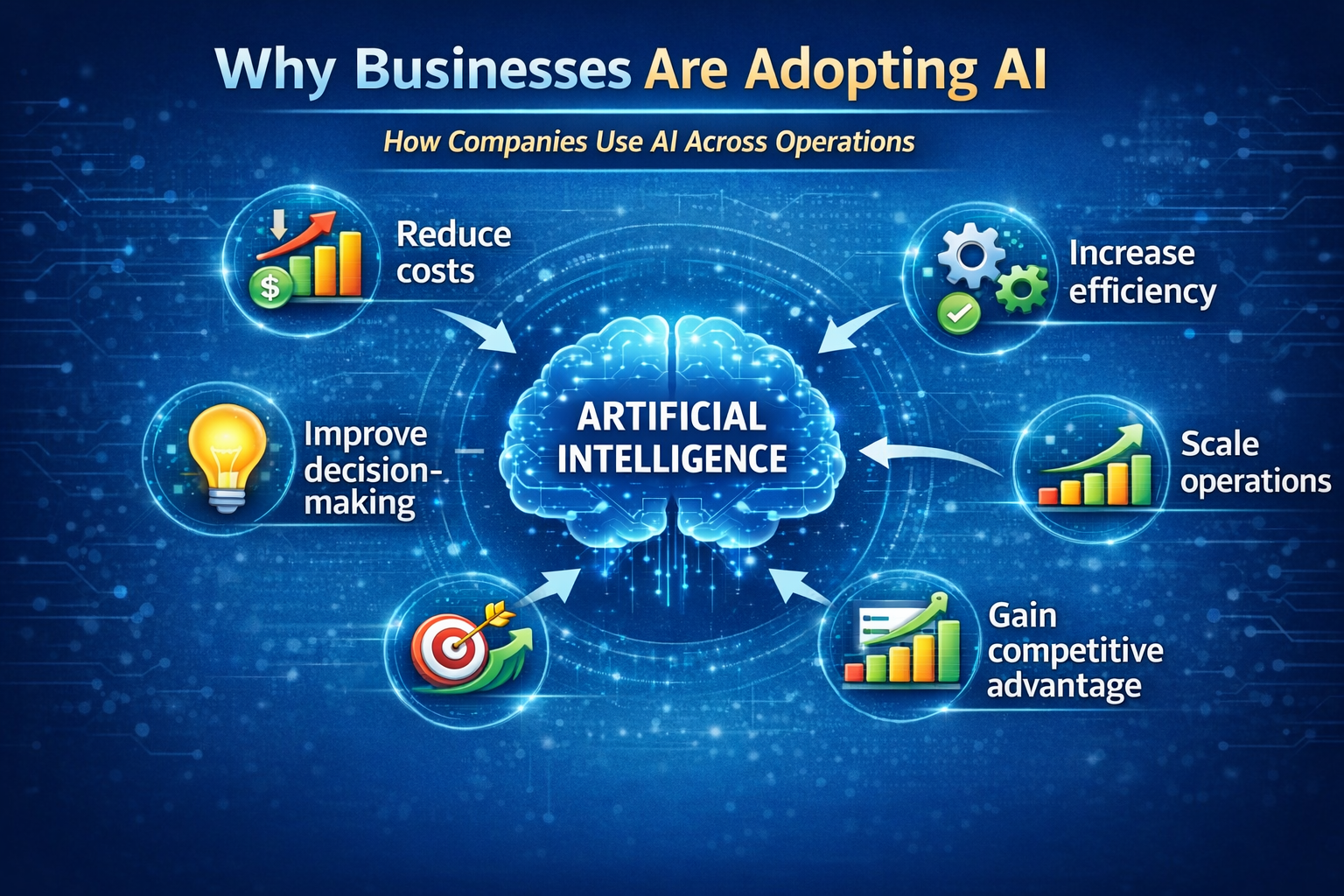
AI adoption in business has accelerated rapidly for several reasons.
Businesses use AI to:
- reduce costs
- increase efficiency
- improve decision-making
- scale operations
- gain competitive advantage
AI systems can process data faster than humans, operate 24/7, and adapt to changing conditions — making them valuable tools in modern business environments.
How Businesses Use AI Today (Real Examples)
AI is already embedded across many business functions. Below are the most common and impactful use cases.
AI for Marketing & Sales
Marketing and sales teams use AI to better understand customers and personalize experiences.
Common applications include:
- personalized product recommendations
- AI-generated content and ad copy
- customer segmentation
- lead scoring and targeting
- email and campaign optimization
For a deeper look at prediction, generative content, campaign measurement, privacy, and responsible targeting, continue to AI in Marketing.
For example, e-commerce companies use AI recommendation engines to increase average order value by suggesting products based on browsing behavior.
Many of these tools are powered by generative models. Learn more in
AI in Customer Support
Customer support is one of the earliest and most visible uses of AI in business.
AI-powered systems help with:
- chatbots and virtual assistants
- automated ticket routing
- sentiment analysis
- faster response times
These systems rely heavily on language understanding, which is explained in
AI for Operations & Automation
AI helps businesses streamline internal operations and reduce manual work.
Examples include:
- workflow automation
- demand forecasting
- inventory management
- scheduling and logistics optimization
These capabilities are driven by machine learning models that learn from historical data. To understand how that learning happens, see
AI for Finance & Decision-Making
AI supports financial decision-making by identifying patterns and risks humans might miss.
Use cases include:
- fraud detection
- financial forecasting
- risk analysis
- pricing optimization
(This area will be explored further in a future guide on AI in finance.)
Real-World Examples of AI in Business
AI in business is already being used across industries.
Examples include:
- retail companies using AI for recommendations and demand forecasting
- e-commerce platforms optimizing pricing and personalization
- SaaS companies automating onboarding and support
- logistics firms optimizing delivery routes
- HR teams using AI for resume screening and workforce planning
These systems scale human expertise while keeping people in control.
Key Benefits of AI in Business
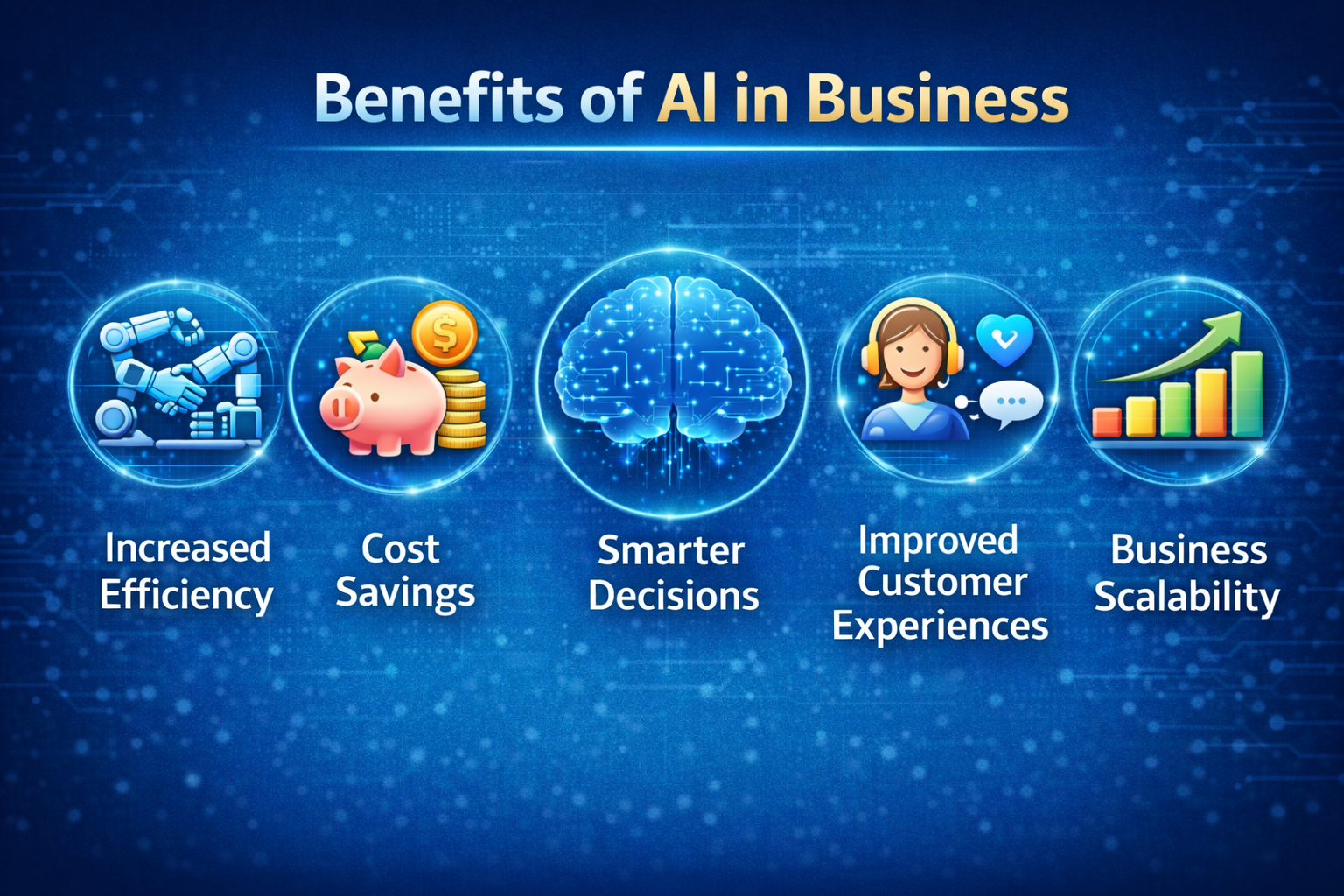
Increased Efficiency
AI automates repetitive tasks, allowing teams to focus on higher-value work.
Better Customer Experiences
Personalization and faster responses lead to improved customer satisfaction.
Smarter Decisions
AI analyzes large datasets to support more informed, data-driven decisions.
Cost Savings
Automation and optimization reduce waste and operational costs.
Business Scalability
AI enables companies to grow without increasing headcount at the same rate.
Risks & Challenges of AI in Business
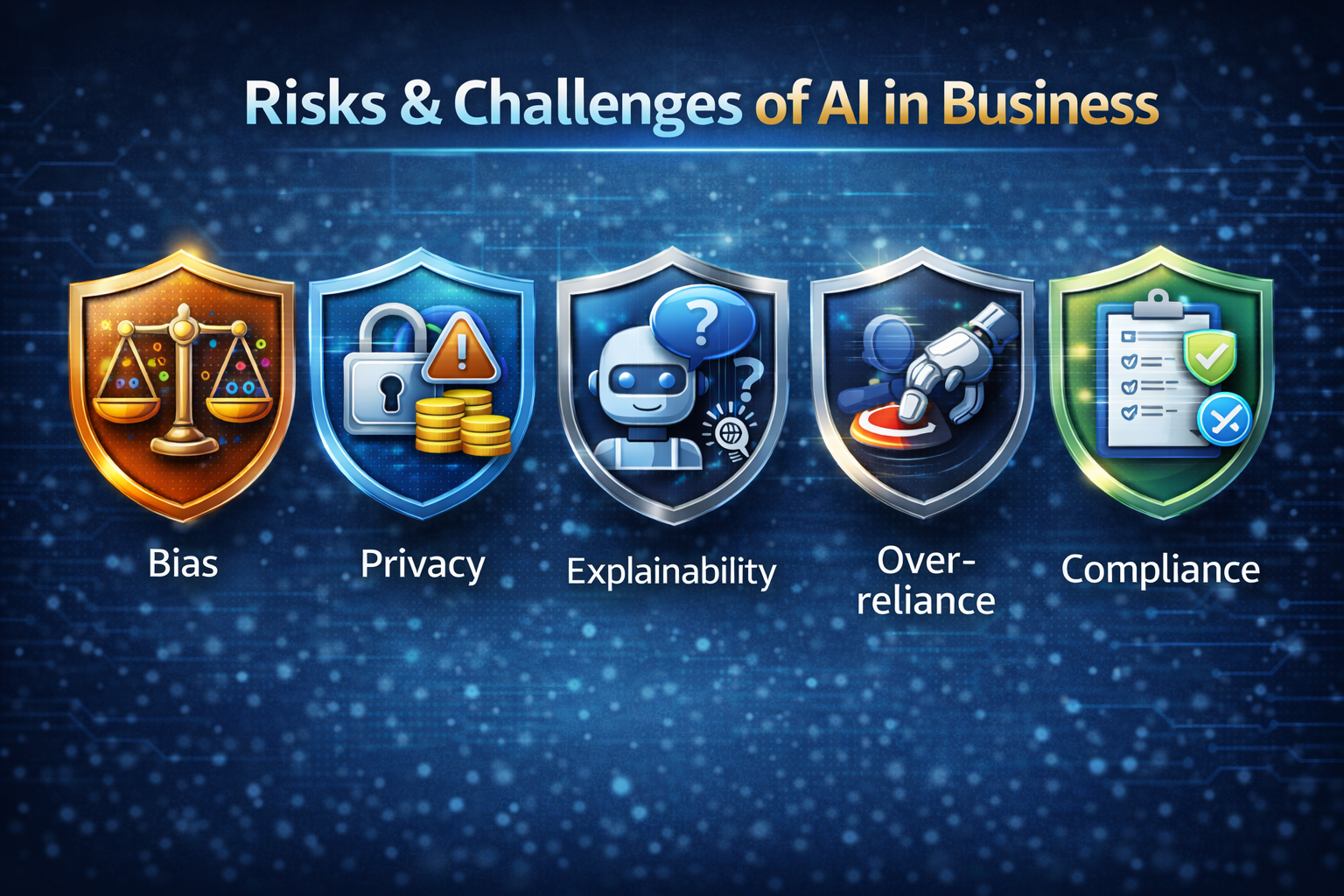
Despite its benefits, AI also introduces challenges businesses must manage carefully.
Data Quality & Bias
AI systems are only as good as the data they’re trained on. Poor or biased data can lead to unfair or incorrect outcomes.
Privacy & Compliance
Businesses must protect sensitive customer and employee data and comply with regulations.
Over-Reliance on Automation
AI should support human decision-making, not replace judgment entirely.
Explainability & Trust
Some AI models are difficult to explain, which can reduce trust and accountability.
This challenge is discussed further in
👉 Symbolic AI vs Neural Networks
Will AI Replace Business Jobs?
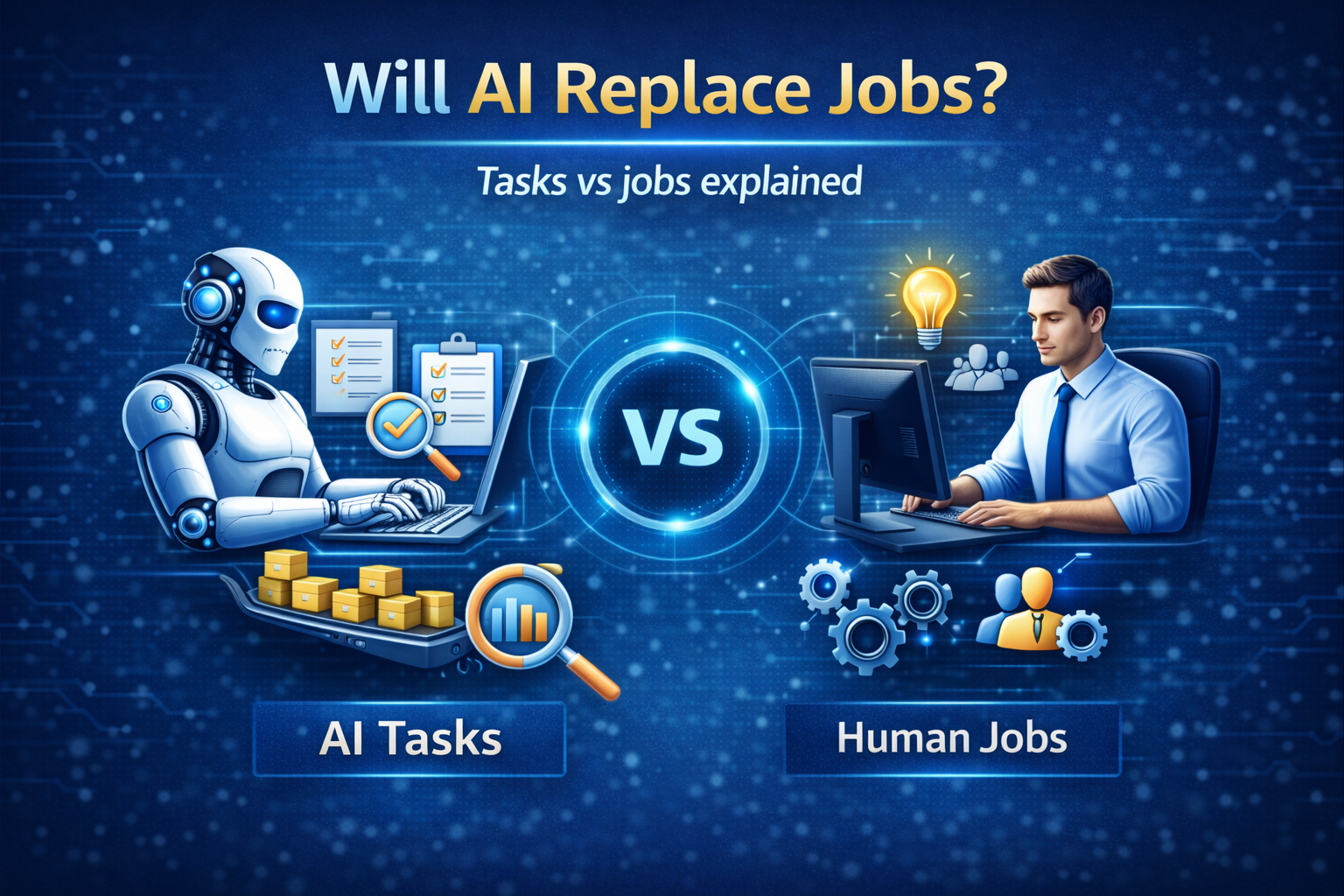
AI is unlikely to replace entire professions — but it will replace certain tasks.
The key idea is simple:
AI replaces tasks, not jobs.
Employees who learn to work alongside AI tools will be more valuable, not less.
How Small Businesses Can Use AI
AI is no longer limited to large corporations.
Small businesses can use:
- off-the-shelf AI tools
- no-code and low-code platforms
- AI-powered software-as-a-service tools
For many small teams, AI acts as a force multiplier, not a replacement.
The Future of AI in Business
Looking ahead, AI in business will continue to evolve toward:
- smarter automation
- personalized customer experiences
- AI copilots for employees
- hybrid AI systems that combine learning and reasoning
These trends align with broader developments explored in
👉 The Future of AI: Predictions for the Next 10 Years
How Beginners Should Think About AI in Business
If you’re new to AI, focus on:
- understanding business problems first
- learning how AI tools support decisions
- starting small and measuring impact
- considering ethics and limitations
Strong fundamentals matter more than chasing the latest tools.
Frequently Asked Questions About AI in Business
What is AI in business?
AI in business refers to systems that analyze data and automate or support business processes such as marketing, operations, finance, and customer support.
Is AI expensive for small businesses?
Many AI tools are affordable and available through subscription-based software.
Can AI replace managers or leaders?
No. AI supports decision-making but cannot replace leadership, judgment, or accountability.
Is AI safe for business data?
Safety depends on security practices, vendor reliability, and regulatory compliance.
What skills matter most in an AI-driven workplace?
AI literacy, adaptability, critical thinking, and domain expertise.
Continue Learning — Build Your AI Foundation
To deepen your understanding, explore these next:
- What Is Artificial Intelligence?
- Machine Learning Explained
- Deep Learning 101
- NLP Explained
- What Is Generative AI?
- Cognitive AI Explained
- The Future of AI
Conclusion
AI in business is transforming how companies operate, compete, and grow — not by replacing people, but by enhancing human capabilities.
Businesses that understand AI fundamentals, use tools responsibly, and focus on real problems will be best positioned for long-term success.
Understanding how AI works — and where its limits lie — is the key to using it effectively in business.