
Natural Language Processing (NLP) is the part of artificial intelligence that helps computers understand human language — the words we write, speak, and search every day.
It’s the reason tools like chatbots, voice assistants, and AI writers can:
- answer questions
- summarize long articles
- translate languages
- detect spam
- and understand what you mean, even when you phrase things differently
If you’re brand new to AI, don’t worry. This guide explains NLP in plain English, with simple examples and a quick breakdown of how it works.
Along the way, you’ll also see how NLP connects to machine learning, deep learning, and generative AI.
What Is NLP?
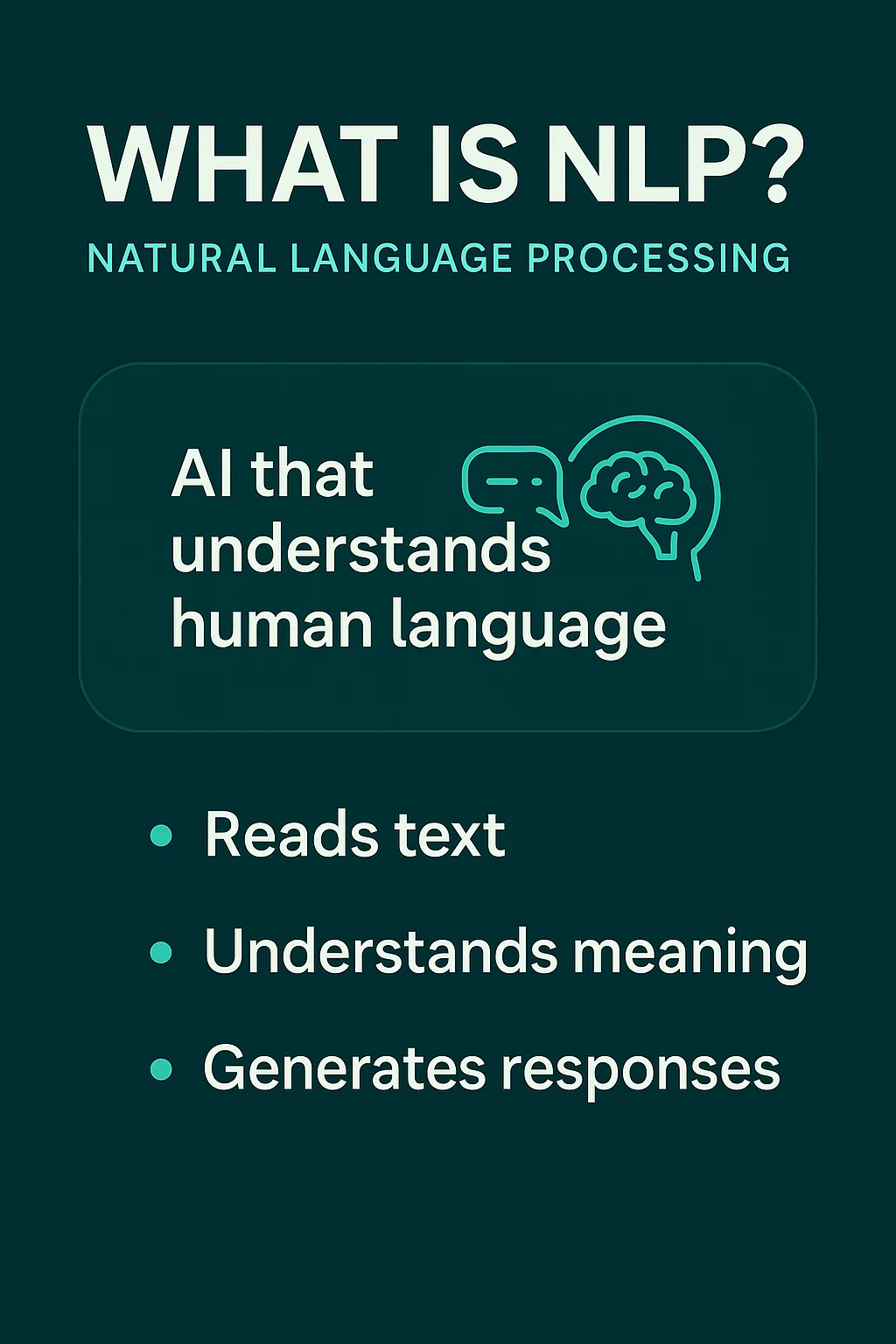
Natural Language Processing (NLP) is a branch of artificial intelligence focused on helping computers understand, interpret, and generate human language — and builds on concepts covered in Machine Learning Explained.
In simple terms:
NLP teaches machines how to work with words.
That includes tasks like:
- understanding meaning
- extracting important information
- classifying text
- generating responses
- translating between languages
NLP is everywhere — search engines, email filters, customer support chatbots, and AI assistants like ChatGPT all rely on it.
Why NLP Matters (And Where You See It Every Day)
Even if you’ve never heard the term “NLP,” you interact with it constantly.
Here are some everyday examples.
Search Engines
When you search for something like:
“best laptop for school”
Search engines use NLP to understand intent (not just keywords)
Modern search engines use NLP (like BERT and MUM) to understand meaning beyond keywords — helping match user intent with better results.
Spam Filters
Email services use NLP to analyze message content and detect spam, phishing attempts, and suspicious language patterns.
Autocorrect & Predictive Text
When your phone suggests the next word or fixes a typo, NLP is predicting language patterns based on context.
Translation Tools
Translation tools like Google Translate depend on NLP pipelines
Chatbots & AI Assistants
When you talk to customer support bots or use ChatGPT, NLP helps the system understand your message and respond naturally.
How Does NLP Work? (Simple Explanation)
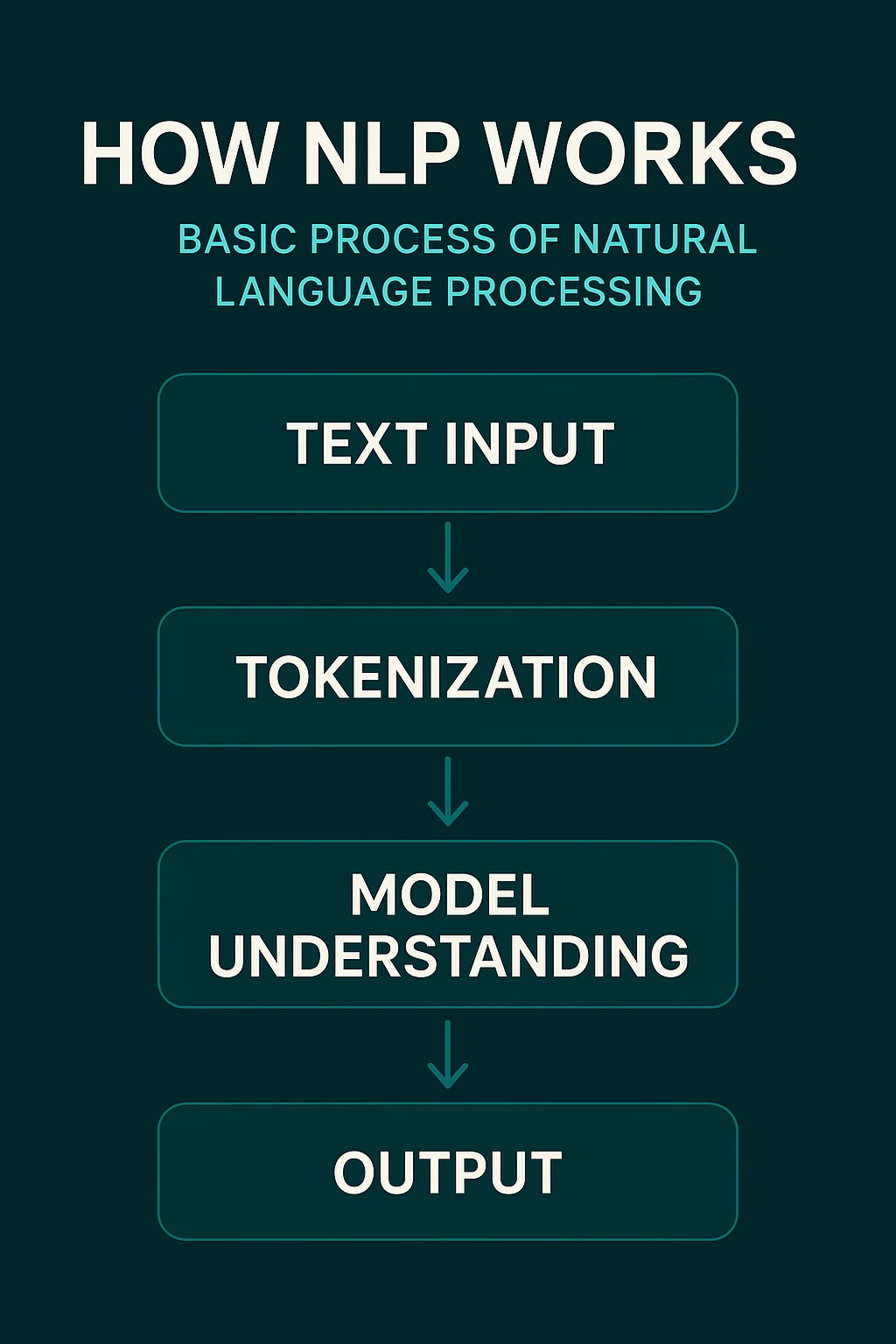
How NLP Works in 3 steps:
- Convert text to numbers (tokenization)
- Learn patterns (training on text)
- Predict or generate new text
Let’s break that down.
Step 1 — Text Becomes Numbers (Tokenization & Embeddings)
Computers don’t understand words directly — they understand numbers.
So NLP starts by:
- breaking text into pieces (called tokens)
- converting those tokens into numerical representations (called embeddings)
Embeddings capture meaning, not just spelling.
For example:
- “dog” and “puppy” end up close together
- “dog” and “car” end up far apart
This idea comes from deep learning, where neural networks learn relationships between data points.
(See Deep Learning 101 for a beginner breakdown.)
Step 2 — The Model Learns Language Patterns
Next, the model is trained on massive amounts of text, such as:
- books
- articles
- websites
- conversations
- documentation
From this data, it learns:
- grammar and structure
- how words relate to each other
- how meaning changes with context
This learning process is part of machine learning, where systems improve by finding patterns in data.
(See Machine Learning Explained for the foundation.)
Step 3 — The Model Predicts, Classifies, or Generates
Once trained, NLP models can:
- predict the next word in a sentence
- classify text into categories
- extract names, dates, or topics
- answer questions
- generate new text
That “predict what comes next” ability is the same core idea behind generative AI tools like ChatGPT.
The Main Types of NLP Tasks (With Beginner Examples)
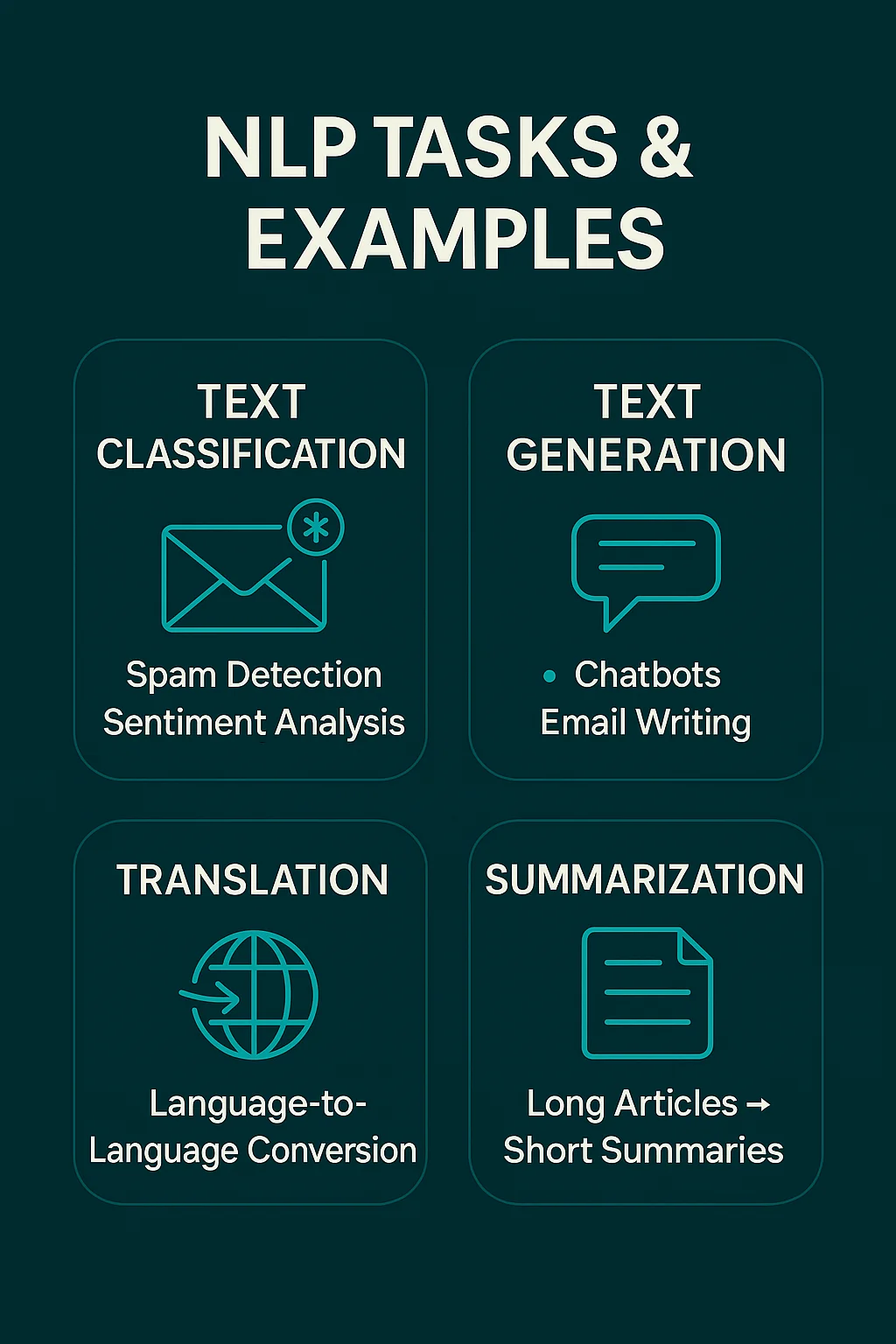
NLP isn’t just one thing — it covers many language tasks.
Text Classification
Label text into categories.
Examples:
- spam vs not spam
- positive vs negative sentiment
- topic classification (sports, finance, health)
Sentiment Analysis
Detect emotion or tone in text.
Examples:
- “This product is amazing” → positive
- “This was a waste of money” → negative
Named Entity Recognition (NER)
Extract important entities like:
- people
- companies
- locations
- dates
Example sentence:
“Elon Musk founded Tesla in the US.”
The model identifies:
- Person: Elon Musk
- Company: Tesla
- Location: US
Summarization
Turn long text into shorter versions.
Example:
- Summarize a 2,000-word article into 5 bullet points.
Machine Translation
Translate meaning between languages.
Example:
- English → Spanish
Question Answering
Answer questions using context.
Example:
- Given a paragraph, answer: “What year did the company launch?”
Text Generation (LLMs)
Generate new text based on prompts.
Examples:
- emails
- blog posts
- stories
- code explanations
This is where NLP overlaps most with generative AI.
NLP Models Explained (From Classic to Modern)
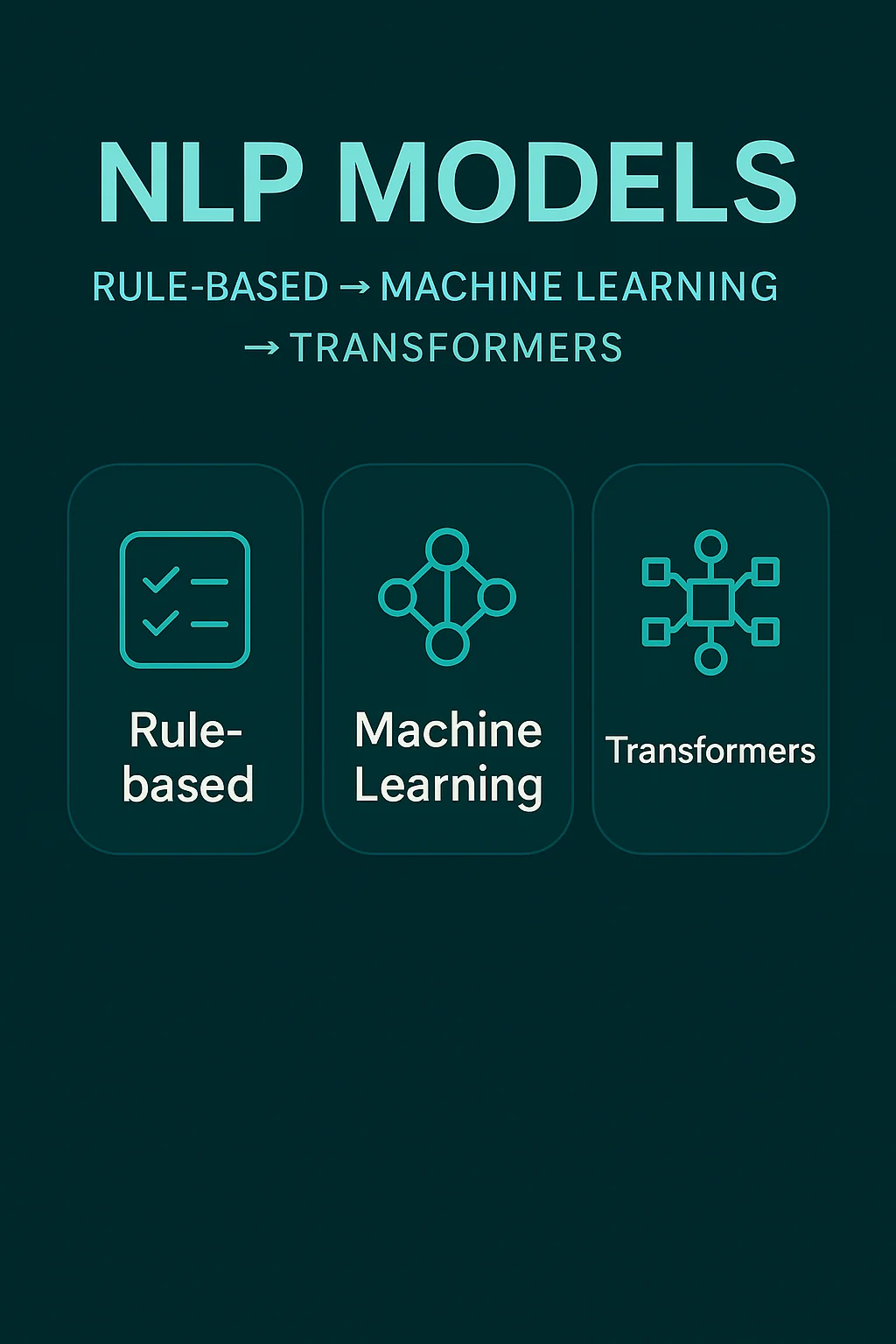
NLP techniques have evolved over time.
Rule-Based NLP (Old School)
Early NLP relied on hand-written rules.
Example:
- “If text contains ‘FREE $$$’ → spam”
This worked for simple cases but broke easily.
Machine Learning–Based NLP
Later systems used labeled data to learn patterns automatically.
Example:
- Train a model on thousands of spam and non-spam emails.
Deep Learning & Transformers (Modern NLP)
Today’s most powerful NLP systems use transformer models — the architecture behind large language models (LLMs).
Transformers are powerful because they:
- understand context
- handle long text
- learn relationships efficiently
This is the technology behind tools like ChatGPT and other AI assistants.
NLP vs Generative AI — What’s the Difference?
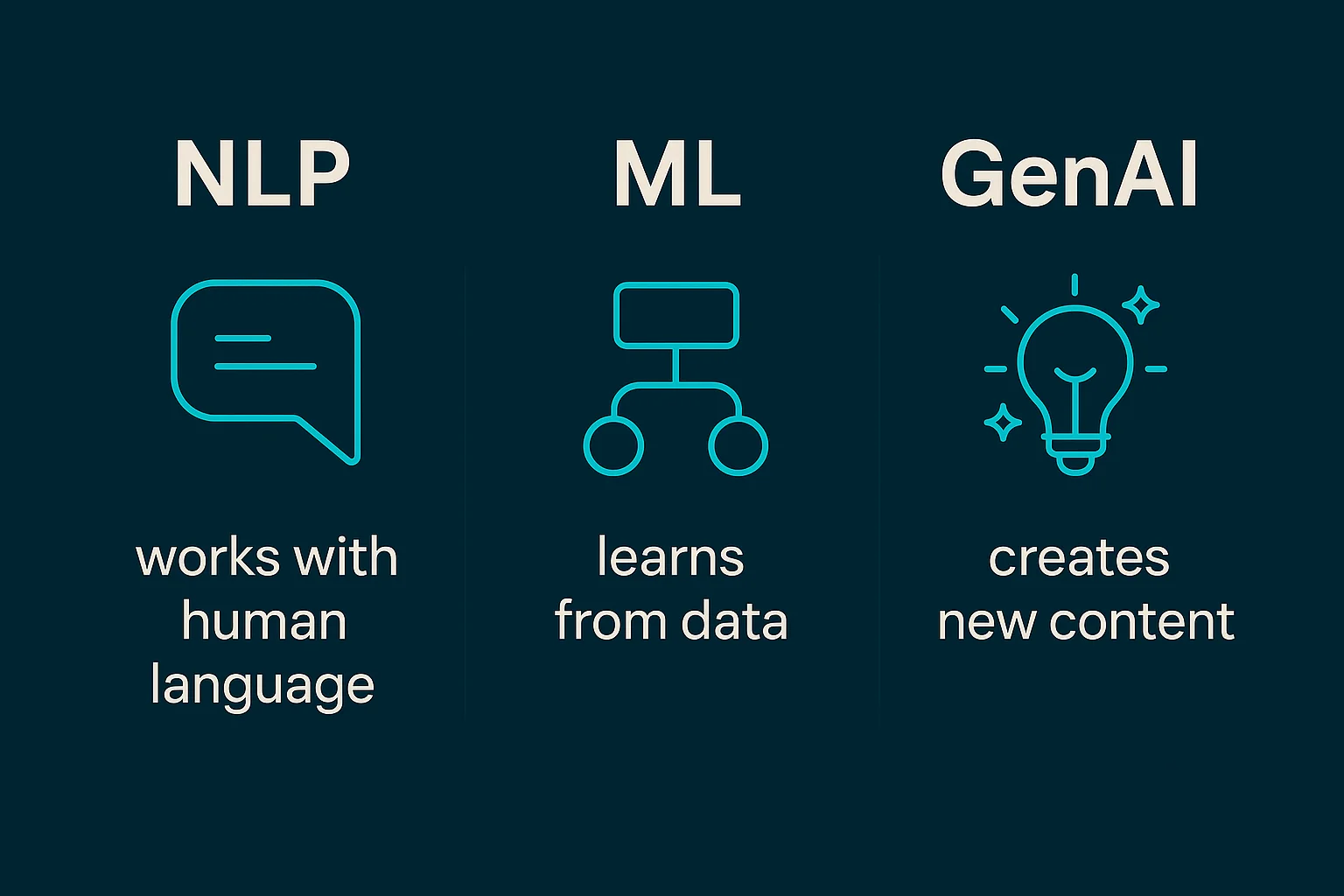
These terms are often confused.
- NLP is the broader field of working with language.
- Generative AI focuses specifically on creating new content.
Think of it like this:
NLP = the language toolkit
Generative AI = the content creation engine inside that toolkit
Not all NLP is generative, but most generative AI that works with text relies heavily on NLP.
Limitations & Risks of NLP
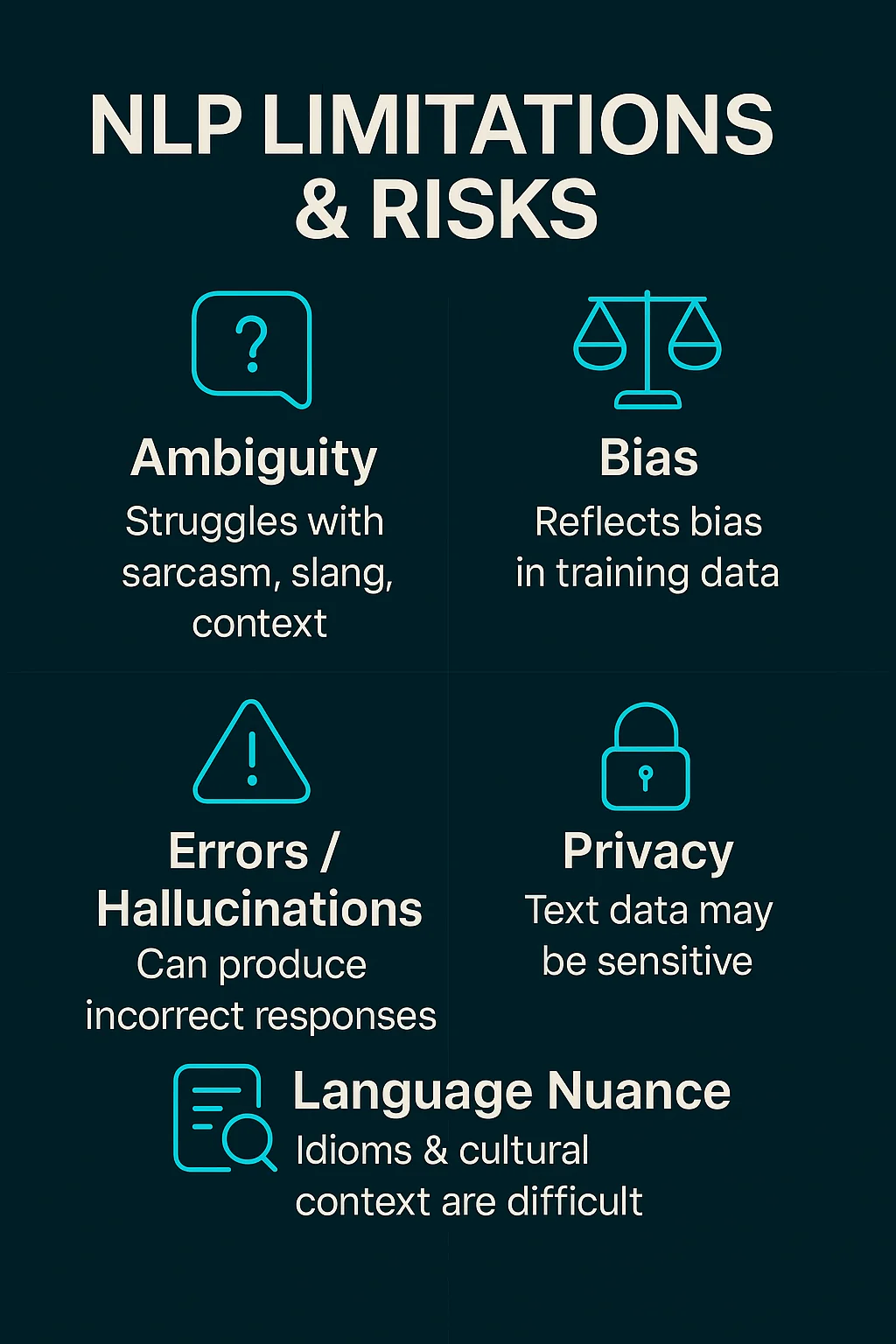
NLP is powerful, but it’s not perfect.
Misunderstanding Context or Sarcasm
Language can be subtle.
Example:
“Great… just what I needed.”
That might be negative, but the words alone sound positive.
Bias in Training Data
NLP models learn from human-created text, which can contain bias.
Hallucinations (For Generative Models)
Generative NLP models can produce hallucinations — convincing but incorrect answers.
Privacy Concerns
Text entered into AI tools may be stored or logged, depending on the platform.
How to Start Learning NLP (Beginner Path)
Step 1 — Learn the Foundations
Start with:
- Machine Learning Explained
- Deep Learning 101
Step 2 — Use NLP Tools Hands-On
Try:
- ChatGPT or Claude for summarization
- sentiment analysis tools
- translation tools
Step 3 — Practice With Small Projects
Examples:
- analyze sentiment in product reviews
- classify emails as spam or not
- summarize articles
Step 4 — Learn Prompt Skills
Prompting helps you get better outputs from NLP-powered tools.
FAQ
What does NLP stand for?
NLP stands for Natural Language Processing.
Is NLP the same as AI?
No. NLP is a subfield of AI focused specifically on language.
Is ChatGPT an NLP system?
Yes. ChatGPT uses NLP, specifically transformer-based large language models.
What’s the best way to learn NLP?
Start with machine learning basics, then deep learning, then practice with real text tasks.
Conclusion
Natural Language Processing (NLP) is the field of AI that helps computers understand and generate human language.
It powers search engines, spam filters, translation tools, and AI assistants like ChatGPT. By learning how NLP works, you unlock a deeper understanding of modern AI systems.
To keep building your foundation, explore: