
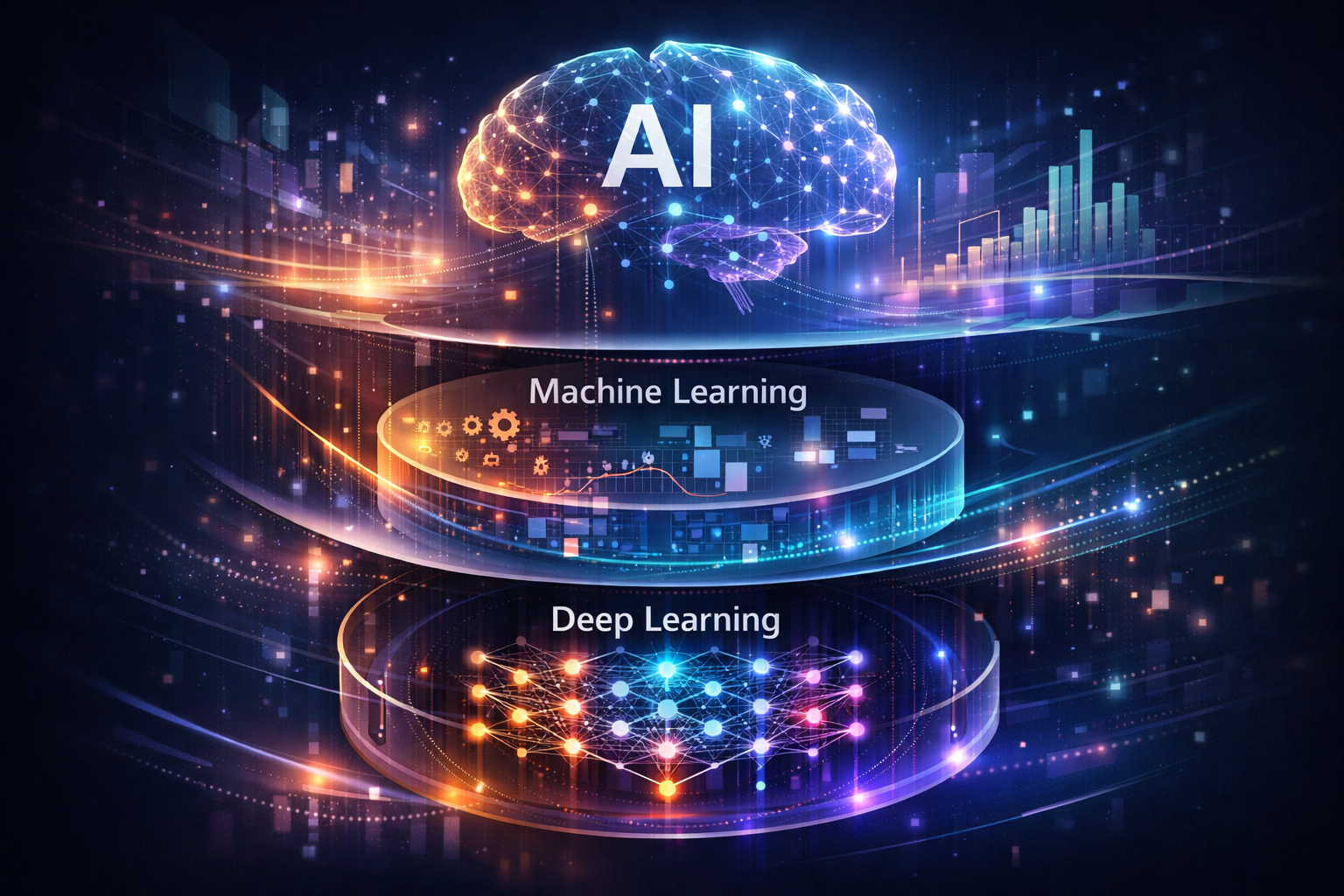
Artificial intelligence, machine learning, and deep learning are often used interchangeably — but they are not the same thing. Understanding the difference between AI vs machine learning vs deep learning is one of the most important foundations for anyone learning modern AI.
In this beginner-friendly guide, you’ll learn what each term means, how they relate to one another, real-world examples of each, and when one approach is used instead of another — without technical jargon or math.
Quick Summary
- Artificial intelligence (AI) is the broad goal of making machines intelligent
- Machine learning (ML) is a subset of AI that learns from data
- Deep learning is a subset of machine learning that uses neural networks with many layers
- Not all AI uses machine learning
- Not all machine learning uses deep learning
What Is Artificial Intelligence?
Artificial intelligence (AI) refers to computer systems designed to perform tasks that normally require human intelligence, such as reasoning, decision-making, perception, and language understanding.
AI is the broadest category and includes many different approaches — some that learn from data and others that follow predefined rules.
In simple terms, AI is the goal, not a single technology.
Examples of AI include:
- Rule-based expert systems
- Search and optimization algorithms
- Planning and decision-making systems
Learn more in our full guide:
Artificial Intelligence beginner guide
What Is Machine Learning?
Machine learning (ML) is a subset of artificial intelligence that allows systems to learn patterns from data instead of being explicitly programmed with rules.
Rather than being told exactly what to do, machine learning models improve their performance as they are exposed to more data.
Machine learning is especially useful when:
- Rules are hard to define manually
- Patterns exist but are not obvious
Common machine learning techniques include:
- Supervised learning
- Unsupervised learning
- Reinforcement learning
Learn more here:
Machine Learning beginner guide
What Is Deep Learning?
Deep learning is a subset of machine learning that uses artificial neural networks with many layers to automatically learn complex patterns from data.
Deep learning is particularly effective for unstructured data, such as:
- Images
- Audio
- Text
- Video
This approach powers many modern AI systems, including computer vision, natural language processing, and generative AI.
Read more:
Deep Learning 101 article
AI vs Machine Learning vs Deep Learning (Key Differences)
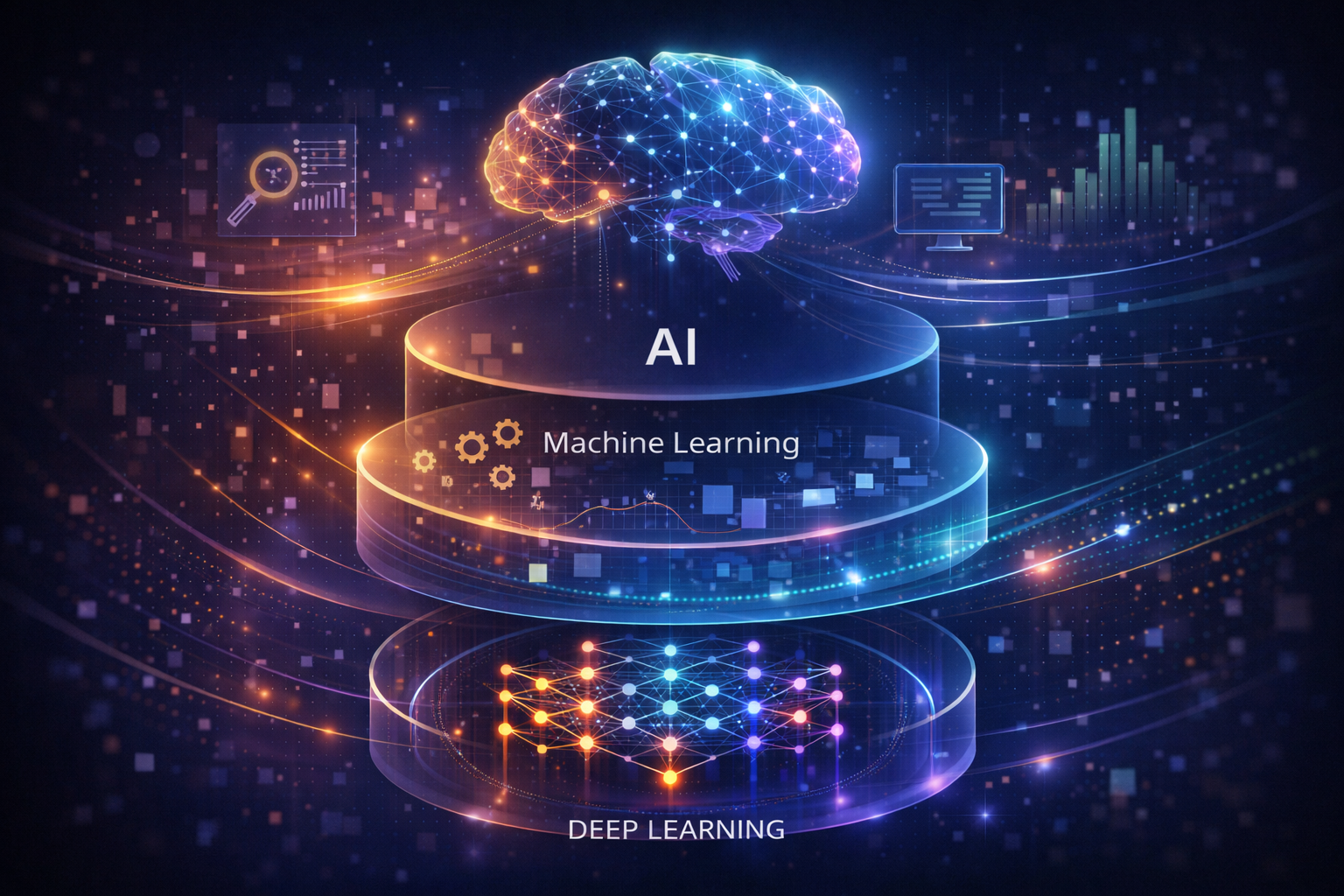
How They Relate
- Artificial intelligence is the overall goal
- Machine learning is one way to achieve AI
- Deep learning is a specialized form of machine learning
You can think of it like this:
If AI is the destination, machine learning is the path, and deep learning is a high-powered vehicle used on that path.
Key Distinctions
- AI may use rules, logic, or learning
- Machine learning relies on data to improve
- Deep learning relies on large datasets and neural networks
Real-World Examples
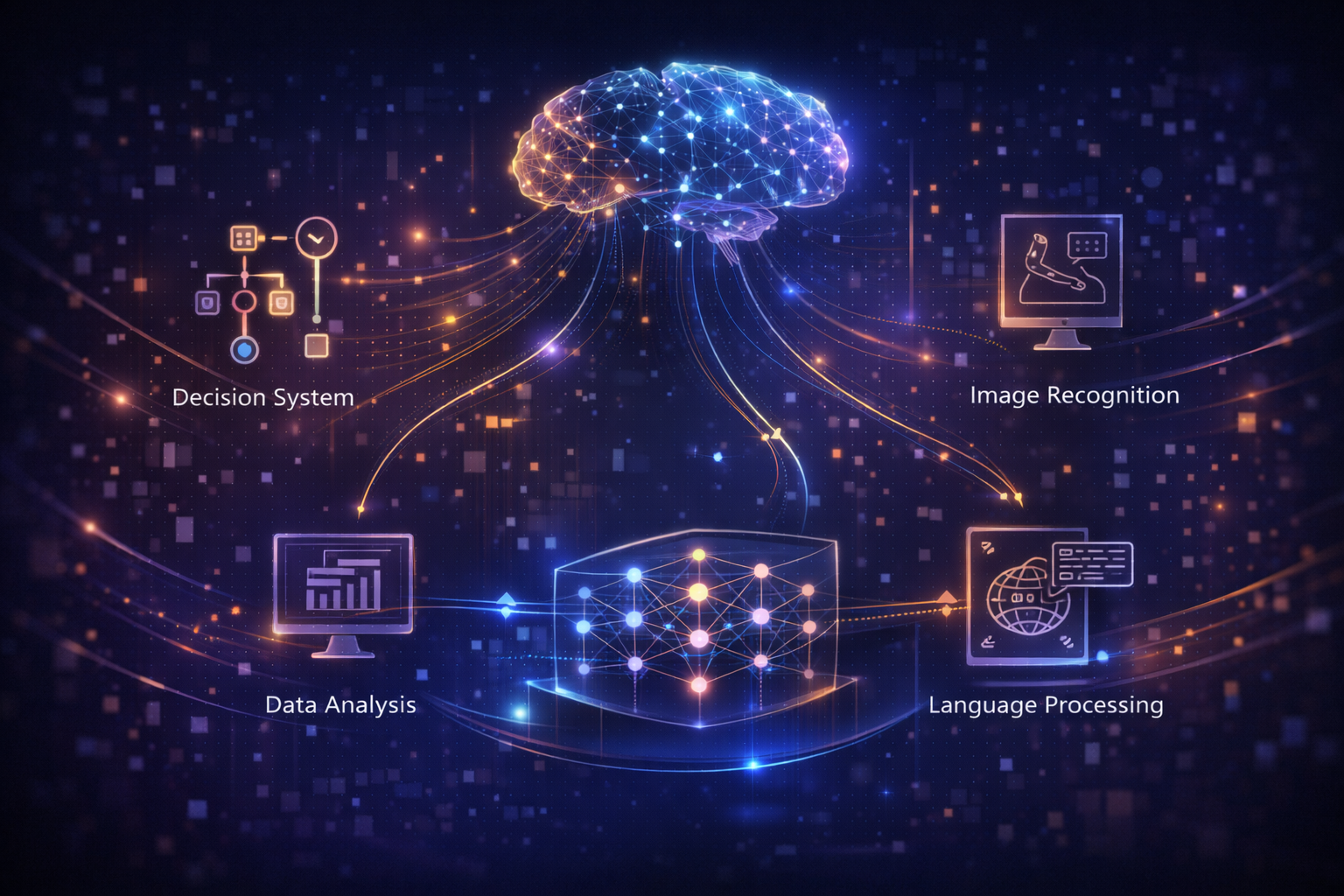
- AI: Chess-playing systems using search algorithms
- Machine Learning: Spam email detection
- Deep Learning: Image recognition and speech translation
In practice, many real-world systems combine AI, machine learning, and deep learning together.
When to Use AI, Machine Learning, or Deep Learning
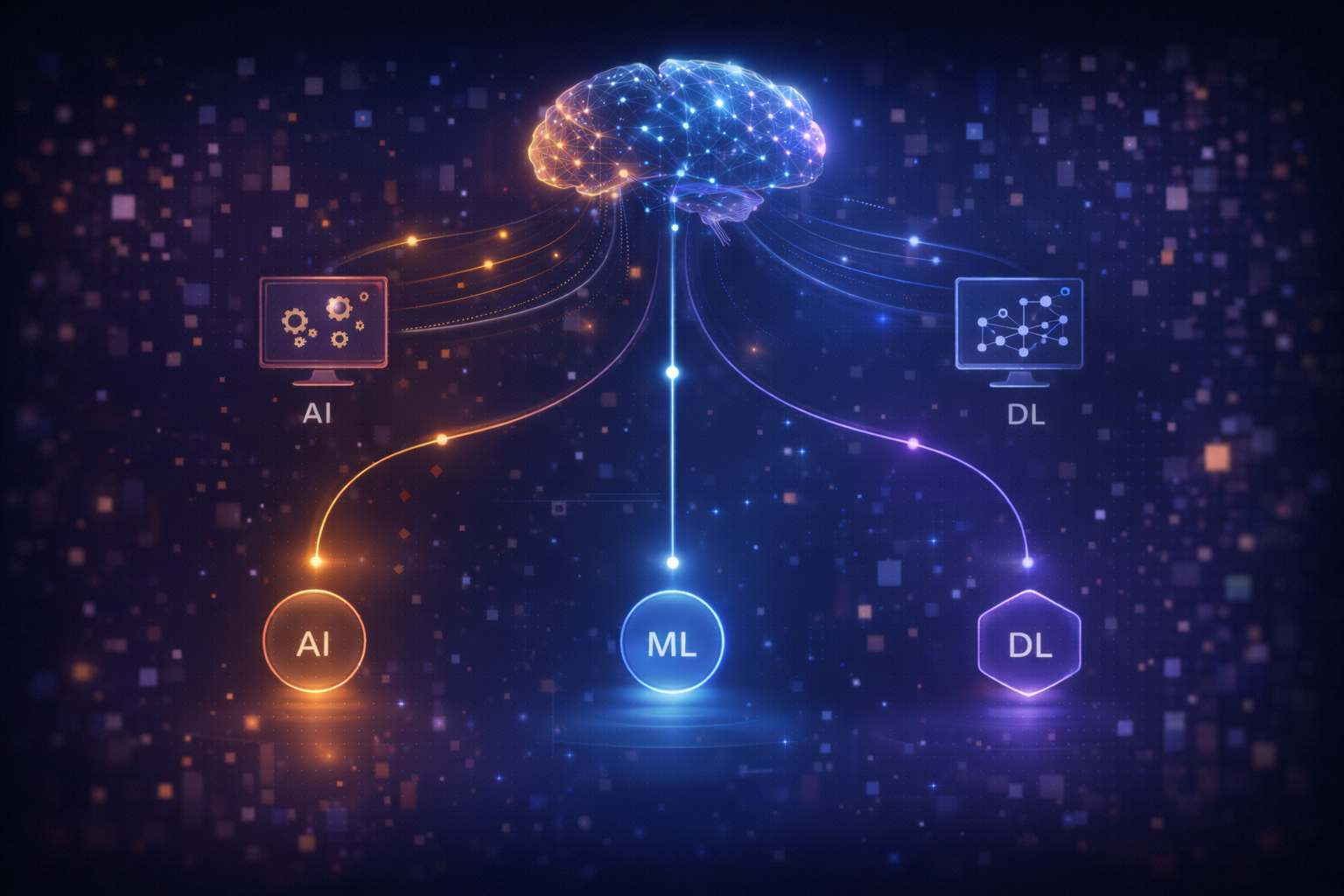
- Use AI for logic-based systems and rule-driven decision making
- Use machine learning when patterns exist in data and rules are hard to define
- Use deep learning for complex, unstructured data like images, language, and audio
Frequently Asked Questions
Is all AI based on machine learning?
No. Many AI systems use predefined rules, logic, or optimization techniques without machine learning.
Is deep learning better than machine learning?
Not always. Deep learning is powerful but requires more data and computing power. Simpler machine learning models are often more efficient for smaller problems.
Why is deep learning so popular today?
Advances in data availability, computing power, and neural network architectures have made deep learning far more practical and effective than in the past.
Final Thoughts
Understanding the difference between artificial intelligence, machine learning, and deep learning removes much of the confusion around modern AI.
These technologies build on one another and together power many of the intelligent systems we use today — from recommendation engines to generative AI.