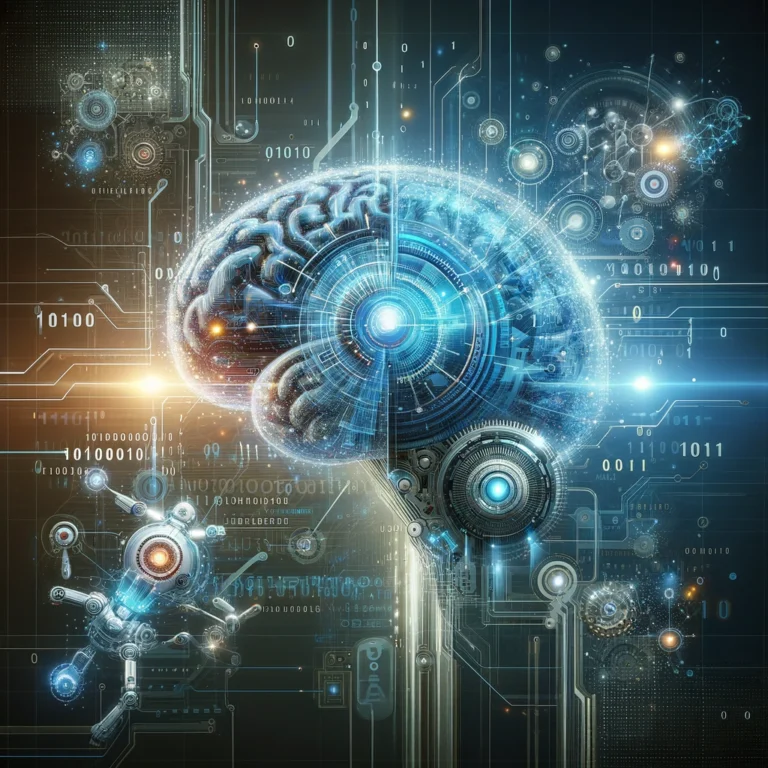
Futuristic hero image showing a multi-layer neural network representing deep learning.

Deep Learning 101 (Simple Beginner’s Guide to Neural Networks)

Introduction — Deep Learning in Plain English

Futuristic hero image showing a multi-layer neural network representing deep learning.

Deep learning is one of the most powerful parts of modern artificial intelligence. It’s the technology behind things like ChatGPT, voice assistants, AI image generators, self-driving car perception, and medical scan detection. If machine learning teaches computers to learn from data, deep learning takes that learning to a much higher level by using large neural networks that mimic how the human brain processes information.

In this Deep Learning 101 guide, I’ll explain deep learning in the simplest way possible. You’ll learn what deep learning is, how it works step-by-step, why it’s different from regular machine learning, and where it’s already shaping the world around you. By the end, you’ll have a solid beginner understanding of deep learning — no coding or math background needed.

What Is Deep Learning?

Deep learning is a type of machine learning that uses neural networks with many layers to learn from large amounts of data. Those layers allow the AI to recognize complex patterns — especially in things like images, speech, and language.

Simple definition:

Deep learning is machine learning with large neural networks that learn through multiple layers of pattern detection.

Here are a few deep learning examples you’ve probably seen:

  • ChatGPT-style AI assistants that write, summarize, and answer questions
  • AI image tools that generate art or recognize objects in photos
  • Voice recognition like Siri or Alexa understanding speech
  • Medical imaging AI spotting tumors or fractures in scans
  • Self-driving perception identifying roads, people, and signs

What makes deep learning special is that it can learn directly from raw data — without humans manually defining the rules.

How Deep Learning Works (Simple Breakdown)

Deep learning follows a pipeline similar to machine learning, but with deeper neural networks doing the learning.

Step 1 — Data Goes In

Deep learning needs a lot of data. The data can be:

  • Images (photos, X-rays, video frames)
  • Text (books, websites, chats)
  • Audio (speech, sound)
  • Sensor data (cars, factories, farms)
  • Video (sports footage, security cameras)

The more relevant examples it sees, the better it gets.

Step 2 — Neural Networks Learn Patterns Through Layers

A neural network is made of “layers” of connected nodes (like artificial neurons).
Each layer learns something slightly more complex than the one before it.

Simple visual of deep neural network layers learning patterns from inputs.

Example: training a deep learning model on photos of dogs.

  • Layer 1 learns basic shapes and edges
  • Layer 2 learns patterns like fur or eyes
  • Layer 3 learns whole features like snouts or ears
  • Final layers learn “this whole thing = dog”

    This multi-layer learning is why it’s called deep learning.

Step 3 — Backpropagation Improves Accuracy

Deep learning models learn by making guesses and correcting mistakes.

If the model predicts wrong:

1. It compares its guess to the correct answer

2. Measures how far off it was

3. Adjusts its internal weights

4. Tries again

This correction process is called backpropagation, but you can think of it as:

“learning through repeated feedback.”

Abstract feedback loop illustrating backpropagation and learning from mistakes.

Step 4 — The Model Predicts or Generates Output

Once trained, deep learning models can:

  • Classify (“this scan shows a tumor”)
  • Detect (“a pedestrian is crossing”)
  • Translate (“English → Spanish”)
  • Generate (“write a paragraph / create an image”)
  • Recommend (“you might like this video”)

So deep learning turns massive data into very strong predictions or creative outputs.

Infographic showing how deep learning works from data input through neural network layers, backpropagation, and output.

Deep Learning vs Machine Learning (Simple Difference)

People often ask: what’s the difference between deep learning and machine learning?

Here’s the easiest way to think about it:

Comparison infographic explaining deep learning vs machine learning.
  • Machine learning learns from data using a variety of algorithms.
  • Deep learning is a type of machine learning that uses large neural networks with many layers.

Key differences:

  • Deep learning works best on unstructured data (images, audio, video, text).
  • Deep learning usually needs more data and more computing power.
  • Deep learning often achieves higher accuracy in vision, speech, and language tasks.
  • Machine learning is easier to explain, while deep learning can feel like a “black box.”

When should you use each?

You’d usually pick machine learning when you have structured data (tables, numbers, clean records) and want predictions you can explain clearly — like forecasting sales or detecting fraud patterns.

You’d pick deep learning when the data is messy and human-like, such as images, audio, video, or language. That’s why deep learning powers facial recognition, voice assistants, and ChatGPT-style tools.

👉 Related Article: Machine Learning Explained (Simple Guide for Beginners)

Benefits of Deep Learning

Deep learning has major advantages — especially for complex real-world problems.

  • Handles messy, real-world data like images, audio, and text
  • Automatic feature learning (doesn’t need human rule-writing)
  • High accuracy in tasks like vision and speech recognition
  • Improves when given more data
  • Powers generative AI like ChatGPT, Midjourney, and AI video tools
  • Scales across industries from medicine to robotics

This is why deep learning is driving the biggest AI breakthroughs today.

Real Examples of Deep Learning in Action

Deep learning is already everywhere. Here are the most important deep learning examples:

Quick way to spot deep learning in real life:

If an AI system is working with images, speech, video, or natural language, it’s almost always using deep learning under the hood. These tasks involve patterns too complex for traditional algorithms to handle without multi-layer neural networks.

Infographic showing major real-world applications of deep learning.

Computer Vision

Deep neural networks let AI “see” and understand images/video.

Used for:

  • medical scan detection
  • security camera analysis
  • drones
  • factory inspection
  • self-driving perception

Speech Recognition

Deep learning models recognize speech and turn it into readable words.

Used in:

  • Siri / Alexa / Google Assistant
  • live captioning
  • call center automation
  • translation apps

Large Language Models (LLMs)

Deep learning powers ChatGPT-style systems that predict and generate language.

Visual of deep learning generating text and images from neural networks.

Used for:

  • chatbots
  • writing tools
  • search assistance
  • tutoring
  • coding assistants

Recommendation Engines

Deep learning predicts what you want next.

Used by:

  • Netflix
  • TikTok
  • YouTube
  • Spotify
  • Amazon

Self-Driving and Robotics

Deep learning helps machines interpret environments in real time.

Used for:

  • lane detection
  • object tracking
  • robotic navigation
  • industrial automation

Tools, Platforms, or Companies Using Deep Learning

Deep learning is built into most major AI platforms.

Examples of major deep learning leaders:

  • OpenAI: deep learning for large language models and AI assistants.
  • Google DeepMind: deep learning breakthroughs in vision and science (like AlphaFold).
  • NVIDIA: GPUs and platforms that power most deep learning training worldwide.
  • Tesla / Waymo: deep learning perception for autonomous driving.
  • Meta / Amazon / Netflix: deep learning recommendation systems at massive scale.

AI Assistants and LLM Platforms

  • ChatGPT-style AI assistants
  • Google Gemini-style systems
  • enterprise AI copilots

Image and Video AI Tools

  • AI image generators
  • AI photo enhancers
  • AI video tools

Major Tech Companies

  • Google and Meta use deep learning for recommendations and search
  • Amazon uses deep learning for retail forecasting and logistics
  • Tesla and Waymo use deep learning for self-driving perception
  • NVIDIA powers deep learning compute through GPUs

Deep learning is basically the “engine layer” inside most modern AI products.

Challenges and Limitations of Deep Learning

Deep learning is powerful, but it has real drawbacks.

  • Needs huge datasets to train well
  • Expensive computing power (GPUs, cloud training)
  • Hard to explain decisions (black-box problem)
  • Bias risk if training data is unfair
  • Hallucinations in generative AI
  • Overconfidence in wrong outputs

That’s why deep learning systems still require human oversight in high-stakes fields.

Future Outlook of Deep Learning (2025–2030)

Deep learning is moving fast. Here’s what’s coming next:

More Multimodal Models

Deep learning models that combine:
text + images + audio + video in one system will become standard.

Smaller Models on Devices

Instead of needing cloud GPUs, deep learning will run more on:

  • smartphones
  • laptops
  • cars
  • wearable tech

Better Reasoning and Agents

Deep learning will shift from just “answering” to doing tasks:

  • planning
  • booking
  • analyzing
  • executing workflows

Breakthroughs in Medicine and Science

Deep learning will accelerate:

  • drug discovery
  • medical imaging
  • climate prediction
  • materials research

The next 5 years will likely bring the biggest leap in deep learning yet.

FAQ: Deep Learning 101

What is deep learning in simple terms?

Deep learning is a type of AI that learns from data using neural networks with many layers. Those layers detect patterns and improve with experience.

Is deep learning the same as machine learning?

No. Deep learning is a type of machine learning that uses large neural networks.

Why is it called “deep” learning?

Because the neural networks have many layers, and each layer learns more complex patterns.

What is a neural network?

A neural network is a machine learning system inspired by brain connections. It learns patterns by adjusting weights between nodes.

Where is deep learning used today?

Deep learning is used in computer vision, speech recognition, ChatGPT-style AI, recommendations, robotics, and self-driving systems.

What are the biggest limits of deep learning?

It needs huge data, expensive compute, and can be hard to explain or biased if trained on bad data.

What should beginners learn before deep learning?

Start with the basics of AI and machine learning first. Once you understand how models learn from data, deep learning becomes much easier to grasp.

Is deep learning basically a neural network?

Deep learning uses neural networks — specifically large ones with many layers. So deep learning is built on neural networks, but not every neural network is “deep.”

Conclusion

Deep learning is one of the most important technologies powering modern artificial intelligence. By using neural networks with many layers, deep learning can recognize complex patterns in images, speech, and language — and even generate new content. It’s behind tools like ChatGPT, AI image generators, and self-driving perception.

Because deep learning is advancing so quickly, understanding the basics gives you a huge advantage in today’s AI-driven world.

For more beginner-friendly AI guides, check out:
👉 Related Article: Machine Learning Explained (Simple Guide for Beginners)

Similar Posts

Leave a Reply

Your email address will not be published. Required fields are marked *